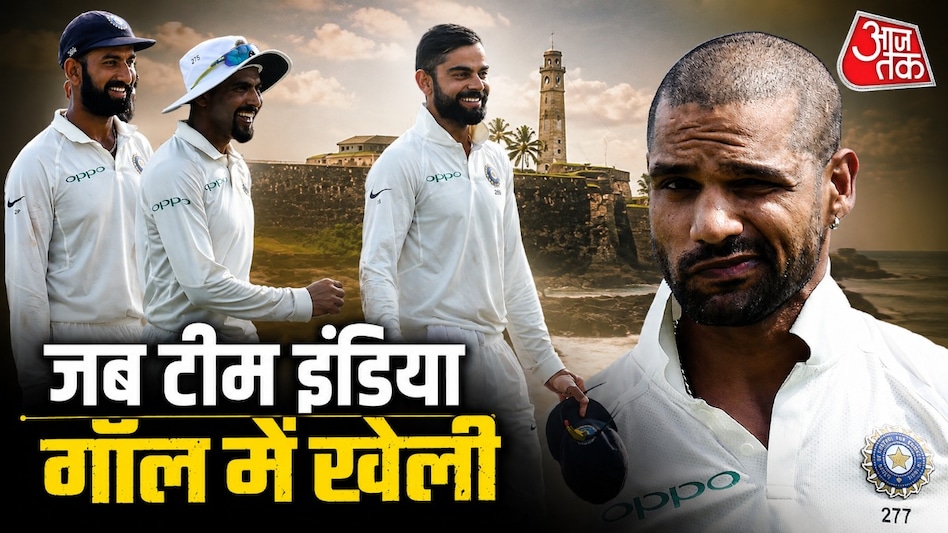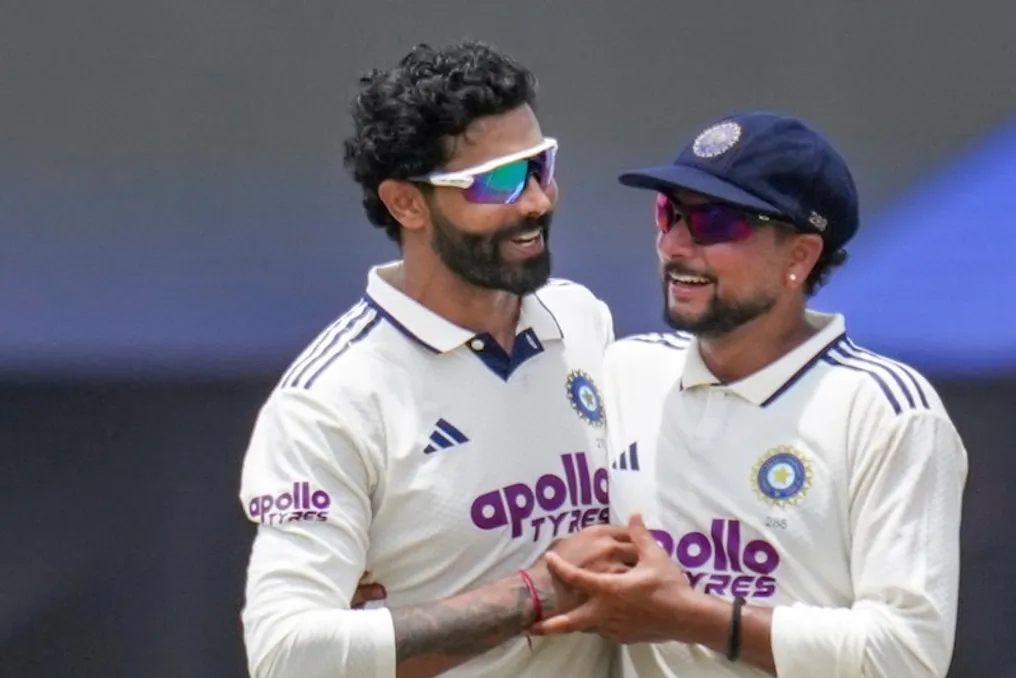
Changes may occur in the Indian team before the Colombo match: replacement of Kuldeep Yadav with Saransh Jain is being discussed
Read more
Aaj Tak
www.aajtak.in

Changes may occur in the Indian team before the Colombo match: replacement of Kuldeep Yadav with Saransh Jain is being discussed

The second match of the test series between India and Sri Lanka will take place on August 23rd at the SSC stadium in Colombo. Following a convincing victory in Galle by 165 runs, the Indian team has gained a 1-0 advantage in the two-match series and is now aiming for a win in Colombo.

The composition of the Indian team is actively being discussed ahead of the second Test, particularly regarding the spin combination. Information has emerged that Saransh Jain, a 33-year-old all-rounder from Central Province Madhya Pradesh, might debut in the starting lineup. There is a high probability that he will be included in the squad for the next match.

However, there is an important nuance here: Saransh Jain specializes in off-spin, whereas Kuldeep Yadav is a left-arm wrist spinner. Therefore, simply replacing Kuldeep with Saransh based solely on his performance in Galle would not be a direct or natural change for the Indian team. The Indian team may consider different roles for both bowlers. Furthermore, the Sri Lankan team will also have to change its squad due to injuries to several players.

In the Galle match, Kuldeep Yadav could not exert the expected influence. In the game where India defeated Sri Lanka by 165 runs, Kuldeep took only one wicket. He secured this wicket in the first innings, but was unable to succeed in the second innings. His statistics for the match were 25 overs, 0 maidens, 103 runs conceded, and 1 wicket. In the first innings, he bowled 14 overs, conceding 65 runs and taking 1 wicket, while in the second innings, he bowled 11 overs, conceding 38 runs.

Conversely, young Indian spinner Manav Sutar demonstrated outstanding play in the debut Test, collecting a total of 10 wickets. Ravindra Jadeja also took four crucial wickets in both innings. Thus, a comparison based on spin figures is natural, but it does not mean that Kuldeep will be directly replaced by Saransh.

If the pitch in Colombo proves favorable for spin, the Indian team may consider bringing in an extra spinner. In such a case, Saransh Jain might be given a chance. Saransh's bowling style is off-spinning, while Kuldeep troubles batsmen with his left-arm wrist spin. The roles of these two bowlers are different, so the team management is unlikely to take the risk of dropping Kuldeep based solely on the statistic of one wicket.

India already possesses two left-arm spin options in Jadeja and Manav Sutar. When forming the squad, Saransh's contribution to the batting can also be considered, as he is an all-rounder. Currently, India leads the series 1-0. The Galle match was also the 600th Test for the Indian team, which was made memorable by the victory.

Saransh Jain, born on March 31, 1993, in Indore, debuted in T20 cricket in 2014. Cricket was previously represented in his family; his father Subodh Jain also played for Madhya Pradesh in the Ranji Trophy tournament. Subodh Jain himself wanted to play for India, but his career did not reach the desired level. After that, he began focusing on his son Saransh's cricket career.

Saransh honed his cricket skills at Vijay Club in Indore. During this time, he also played with Rajat Patidar, who later played for India and captained Royal Challengers Bangalore, as well as Madhya Pradesh.

Saransh made his mark in the 2021-22 Ranji Trophy when Madhya Pradesh achieved a historic championship victory. He participated in crucial matches such as the quarter-finals, semi-finals, and final. In the playoffs, Saransh collected a total of 13 wickets. His contribution was vital in the final against Mumbai, where he played a crucial innings of 57 runs, allowing Madhya Pradesh to win the Ranji Trophy title for the first time by defeating Mumbai.

Subsequently, in the 2022-23 Ranji season, Saransh enhanced his all-round capabilities. He scored 360 runs and took 35 wickets. For this outstanding performance, he was awarded the Lala Amarnath award for the best all-rounder of the Ranji Trophy.

Thanks to consistent performances in domestic cricket, Saransh gained recognition. In 2024, he was included in the India A team for a series against England Lions. In this series, he demonstrated his batting prowess, scoring a half-century in both innings. Then, in 2025, Saransh strengthened his credentials in the Dilip Trophy tournament. Playing for Central Zone, he took 16 wickets in just two matches. Moreover, he scored a half-century in the semi-final and the final. For this all-round performance, he was named player of the series.

His brilliant performances continued in the Ranji Trophy: he scored 518 runs at an average of 57.55 and took 30 wickets at an average of 20.43. This shows that Saransh Jain's statistics are not limited to bowling; he is capable of strengthening the team in the batting department as well. This is why, at the age of 33, he has reached the threshold for selection into the Indian Test team.
Similar stories

Five Key Challenges for India in the Upcoming Sri Lanka Match in Galle
Read more
www.aajtak.in

Five Key Challenges for India in the Upcoming Sri Lanka Match in Galle

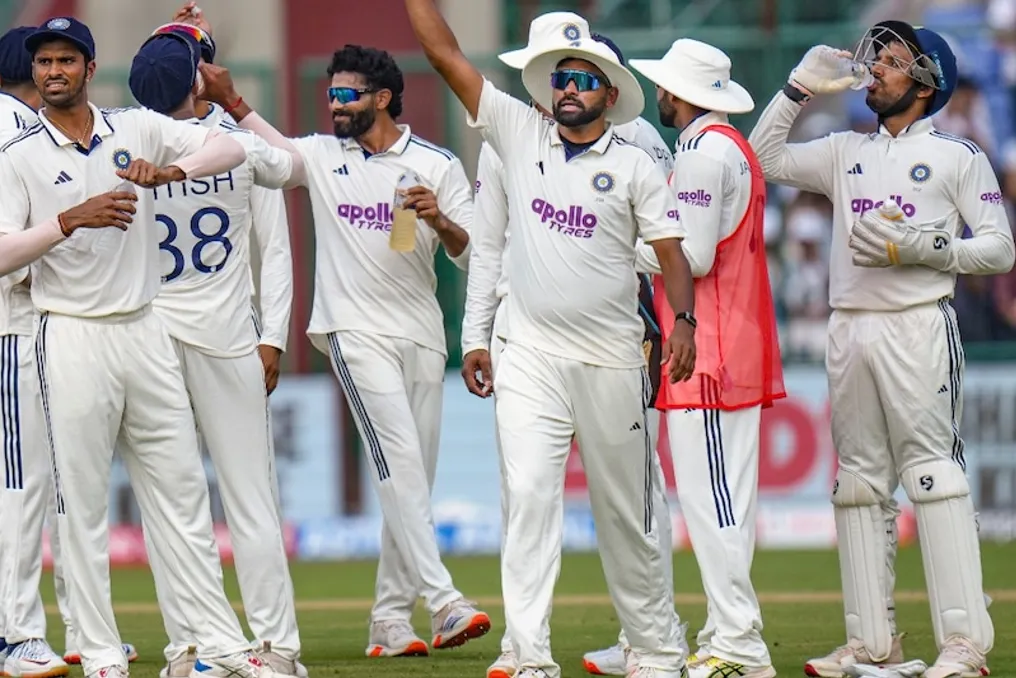
The Indian team has arrived in Sri Lanka and is preparing for the first test match, which will take place at the Galle International Stadium on Saturday, August 15. The Indian team faces challenges that go beyond simply confronting Sri Lanka's spin bowling; conditions, ball behavior, players' physical fitness, and the ability to maintain pressure over a long period will play a decisive role.

This first test, starting on August 15 in Galle, is highly significant for the World Test Championship (WTC) campaign. The team is currently ranked fifth in the WTC, and recent home results have increased the pressure on the squad.

Although Indian players are familiar with Sri Lankan conditions, the high temperature and humidity coming from the sea in Galle cannot be ignored. India's bowling coach, Morne Morkel, cited this as the most serious challenge before the match. Due to the proximity of the ocean to the Galle stadium, there is considerable stuffiness. Players felt this during training sessions on Thursday.

In such weather conditions, long bowling spells become difficult. Fast bowlers will have to exert more influence in fewer overs, while batsmen will find it hard to stay on the field for extended periods. According to Morkel, skills alone are not enough in this tour; players must quickly analyze the conditions and adapt their strategy.

The second major challenge for India is the red Kookaburra ball. In India, SG balls are typically used in Test matches, whereas Sri Lanka plays with the Kookaburra ball. This machine-made ball loses its seam relatively quickly over time, and the ball itself softens fairly rapidly. Morkel believes the ball softening probability will occur around 20-25 overs. This means fast bowlers will have limited opportunity to make an impact with a new ball. Consequently, taking wickets early will be extremely important. If bowlers fail to create opportunities at the start, it will be difficult to trouble the batsmen with an old ball. Here, the 'street smarts' of Indian bowlers will be tested: they need to quickly decide when to bowl short, when to use the field line, and when to change the attack.

Another issue for India is the lack of red-ball format matches. The first match against Sri Lanka will be India's second red-ball game in 2026. The previous Test against Afghanistan in June lasted only two and a half days. This means Indian players lacked the opportunity to maintain consistent pressure in prolonged Test match conditions in recent months. One good start is not enough in Test cricket; bowlers must constantly pitch the ball into the right area throughout the day, and batsmen must spend many hours on the field.

Perhaps the biggest area for improvement for India is batting. During the last WTC series against South Africa, Indian batting failed to put sustained pressure on the opposition. Only once across two Tests did India manage an innings longer than South Africa's. In Guwahati, both Indian innings lasted 83.5 and 63.5 overs, while South Africa's first innings continued until 151.1 overs. A similar mistake could prove costly in Sri Lanka. If Indian batsmen fail to score a large total in the first innings, it will place constant pressure on the bowlers. Therefore, it is important for the team not only to score runs but also to occupy time to tire out the opposition bowlers.

The old and rough outfield in Galle can wear down the ball quickly, creating potential for reverse swing with an old ball and presenting a new weapon for India's fast bowlers. However, rain complicates the picture. Recent rains have made the outfield softer, which may slow down the ball's reverse movement. Morkel clearly stated that in such conditions, fast bowlers must deliver the ball with full energy in short spells. Furthermore, there is a significant question regarding team selection. Despite injuries to Nitish Reddy and Washington Sundar, India has four fast bowlers and four spin options. Considering the history and Galle's conditions, the option of three spinners looks strong. Ravindra Jadeja and Kuldeep Yadav are part of the squad, and Manav Sutar and Saransh Jain are competing for the third spinner spot. Sutar demonstrated impressive form with 6/33 in his debut Test against Afghanistan. He also impressed in practice against SLC XI in Colombo. But there is a problem: like Jadeja, he is a left-arm spinner. On the other hand, Saransh Jain is a right-arm off-spinner who can also bat. He was included in the Test squad for the first time instead of Washington Sundar. Both completed long spells in practice on Thursday.

2
India to play test matches in Sri Lanka after 9 years; only three players have experience playing there
Read more
www.aajtak.in

India to play test matches in Sri Lanka after 9 years; only three players have experience playing there

Two test matches are scheduled between India and Sri Lanka, starting on August 15th. The Indian team is visiting Sri Lanka for the first time in nine years. Previously, in 2017, India won a series of test matches in Sri Lanka with a clean sweep of 3-0 under Virat Kohli's leadership.

Shubman Gill is the captain of the current Indian squad. Notably, only three players in the fifteen-member Indian squad have experience participating in test matches on Sri Lankan soil. The other twelve athletes are going on this tour for the first time.

Among the experienced players who have played in Sri Lanka, Kel Rahul, Ravindra Jadeja, and Kuldeep Yadav stand out. Kel Rahul has the most experience, having played five test matches in Sri Lanka, where he scored 268 runs at an average of 33.50, including one century and two half-centuries.

Ravindra Jadeja participated in two test games in Sri Lanka, where he earned 85 runs and took 13 wickets with the ball. Kuldeep Yadav played only one test match during the 2017 tour and took 5 wickets.

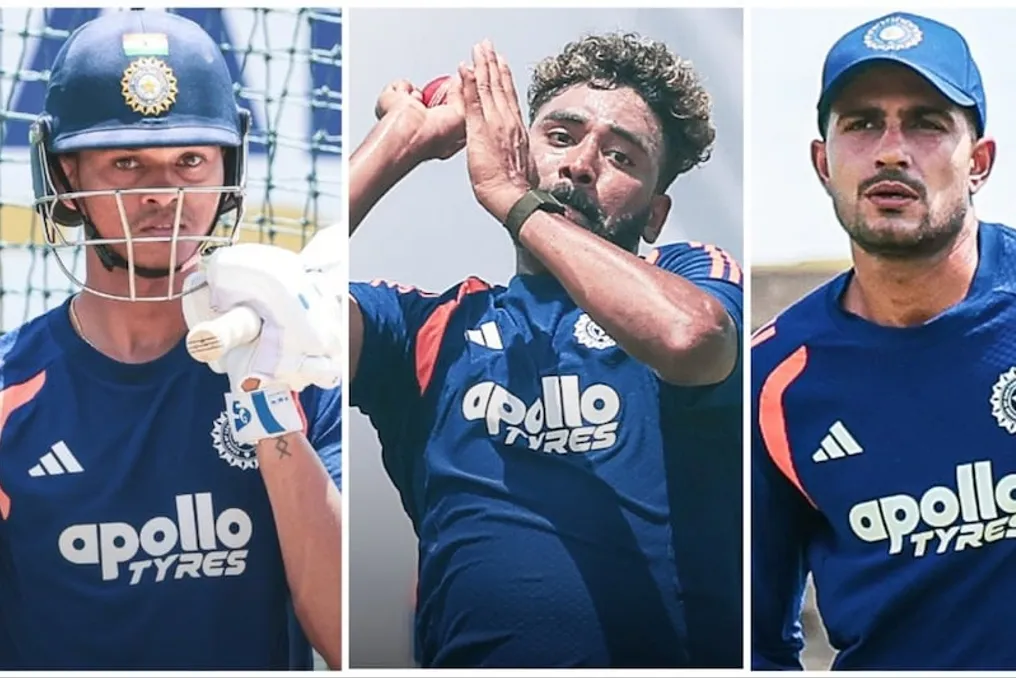
Many players, such as Shubman Gill, Rishabh Pant, Mohammed Siraj, Guruonur Baar, Manav Chatur, Saransh Jain, Akib Nabi, Prasidh Krishna, Sarfaraz Khan, Dhruv Jurel, Devdutt Padikkal, and Yashasvi Jaiswal, will take to the field in test matches against Sri Lanka for the first time.

Despite India's impressive past performances in Sri Lanka, the team composition has changed significantly this time. The question is not about the availability of talent in India, but how quickly the new generation can adapt to the challenging conditions of Sri Lanka. This series of test matches, starting on August 15th, is considered extremely important for Shubman Gill and the Indian team's WTC cycle.

History of Five India Matches in Galle: Analysis of Test Match Results Over 16 Years
Read more
www.aajtak.in

History of Five India Matches in Galle: Analysis of Test Match Results Over 16 Years

The Test history of the Indian team in Galle, where the first match between India and Sri Lanka is scheduled, began in 2001, and the last test was played here in 2017. A total of only five Test matches have been held between the two countries during this period. The overall statistics of India's performance at this venue show mixed results.

The first match between India and Sri Lanka in Galle took place on August 14 and concluded on August 17. In this match, which was under the captaincy of Saurav Ganguly, India lost by 10 wickets. The Indian team scored 187 runs in the first innings and was completely bowled out, with Dilhara Fernando taking five wickets. Sri Lanka responded by scoring 362 runs, thanks to the performances of Sanath Jayasuriya (111) and Kumar Sangakkara (105). Although it seemed that the Indian team could counterattack in the second half, the entire Indian team eventually scored 180 runs, and Sri Lanka won the match by only 6 runs in the second half.

The second Test, played in July 2008, resulted in an Indian victory in Galle. Virender Sehwag was the main hero for the Indian team, scoring 201 runs in the first innings and 50 runs in the second, allowing the Indian team to win by a margin of 170 runs. India scored 329 runs in the first innings and 269 in the second, while Sri Lanka managed to score 292 runs. The target for Sri Lanka in the second half was 307 runs, but they could only manage 136.

It is worth noting that in the match where India first achieved a victory in Galle, the Indian team's head coach, Gautam Gambhir, scored 56 runs in the first innings and 74 in the second. Anil Kumble was the captain of the Indian team in that match.

The third Test between the two countries took place in July 2010 and was also held in Galle. Sri Lanka won by 10 wickets. Sri Lanka first scored 520/8 runs in the first innings. The Indian team first scored 276 runs and was completely bowled out, after which they had to bat in the reserve. Then the Indian team scored 338 runs, but Sri Lanka won by scoring 96 runs without losing composure. Lasith Malinga was named player of the match.

In August 2015, the Indian team, under the leadership of Virat Kohli, took the field in Galle for the fourth Test. This match was won by the Sri Lankan team by a margin of 63 runs. Sri Lanka first scored 183 runs, with Ravichandran Ashwin taking 6 wickets. After this, India scored 375 runs thanks to the performances of Shikhar Dhawan (134) and Virat Kohli (103). Sri Lanka scored 367 runs in the second half, with Dinesh Chandimal playing a knock of 162 runs. India needed to score 176 runs, but they could not overcome Rangana Herath, who took 7 wickets in the match. Only Shikhar Dhawan (28) and Ajinkya Rahane (36) managed to score runs in the second half.

The last Test between India and Sri Lanka in Galle ended with an Indian victory by a margin of 304 runs in July 2017, when Virat Kohli was still the captain. India first scored 600 runs in the first innings, thanks to outstanding innings by Shikhar Dhawan (190) and Cheteshwar Pujara (153). Sri Lanka first scored 291 runs. Then India declared the second innings at 240/3. The target for Sri Lanka was 550 runs, but they could only manage 245.

Thus, the statistics of the Indian team in Galle are mixed: out of five matches played, India won two and lost three.

Match Results in Galle:

  • 2001: Sri Lanka defeated India by 10 wickets.
  • 2008: India defeated Sri Lanka by 170 runs.
  • 2010: Sri Lanka defeated India by 10 wickets.
  • 2015: Sri Lanka defeated India by 63 runs.
  • 2017: India defeated Sri Lanka by 304 runs.

Popular