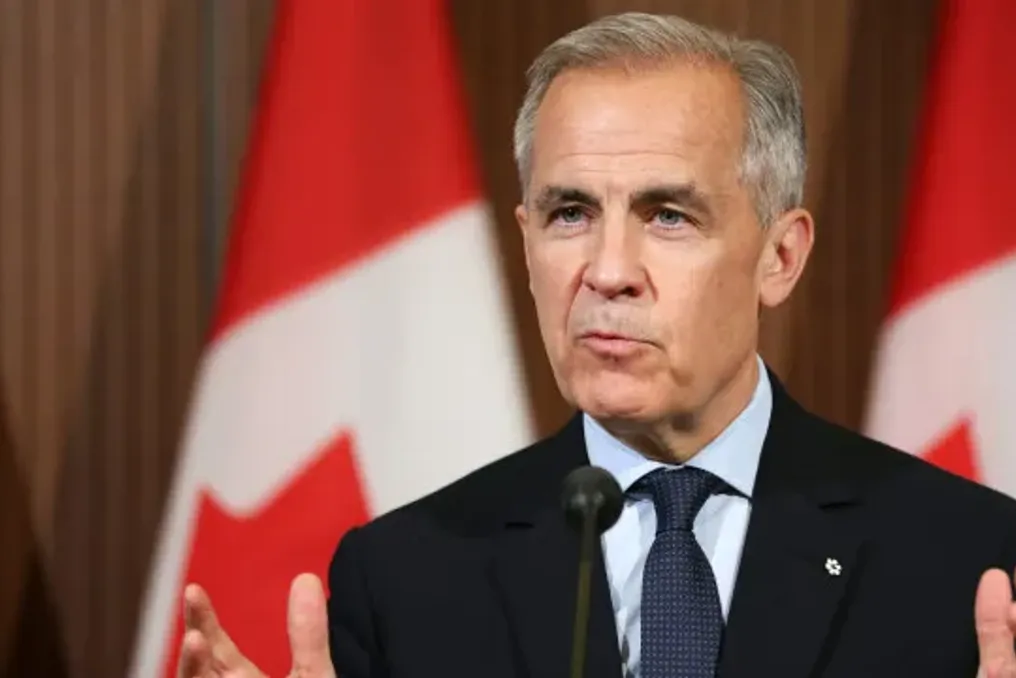
The office of the Canadian Prime Minister announced that Carney and Sheinbaum held a phone analysis regarding current developments impacting North American trade. They emphasized the urgent need to renew the United States-Mexico-Canada Agreement (USMCA) to provide greater stability for employers and businesses.
This ongoing bilateral pact between Washington and Ottawa aims to reduce certain customs barriers implemented by the Donald Trump administration. Furthermore, Carney and Sheinbaum highlighted advancements in bilateral trade between Canada and Mexico, considering that close collaboration between the two nations is crucial for security and prosperity in the northern region of the continent.
The Canadian Prime Minister also expressed gratitude to Sheinbaum for sending over 400 firefighters and support personnel during the summer to assist in combating wildfires in Canada.
Meanwhile, the Canadian Minister of Trade, Dominic LeBlanc, and the US trade representative, Jamieson Greer, are participating in the second consecutive day of discussions in Washington to seal a bilateral agreement.
Canadian sources indicate that the proposal under review includes reducing US tariffs on vehicles manufactured in Canada from 25% to 15%, and decreasing taxes applied to Canadian steel and aluminum from 50% to 25%, with a quota system established for steel.
In return, Washington seeks concessions from Canada, such as easier access for American products to the Canadian market and the removal of provincial restrictions on the sale of alcoholic beverages produced in the United States.
Dominic LeBlanc stated that an agreement is 'very close' after speaking with Greer. He added, upon leaving the meeting venue: 'We are making progress and will remain here to do the necessary work until we reach an agreement.'
US President Donald Trump had announced on Tuesday that he would suspend the entry into force of the 50% tariffs scheduled for Wednesday on imports from Canada, ensuring that the two countries had reached a consensus pending formalization.
Trump told journalists at the White House: 'I had a very good conversation with the [Canadian] Prime Minister last night [Tuesday] and we reached an agreement with Canada. As you know, generalized 50% tariffs against Canada were set to take effect today; they called yesterday and accepted the points we demanded. It is a very fair deal for both parties.'
Although Trump acknowledged that 'everything is subject to the formalization of documents,' he expressed confidence that there would be a definitive agreement with the neighboring country, thus avoiding the application of customs impositions. The American president added: 'I believe it is a very good deal for both parties. It is excellent for our farmers; they will no longer be harmed, since Canada was causing them great damage.'
For his part, Mark Carney described 'significant progress' in the negotiations and favorable conditions for Ottawa. Carney stated on social media: 'Canada initiated these negotiations with the best general trade conditions. Now, we are moving towards an agreement that reinforces this Canadian advantage, including guaranteeing the best conditions in each of the country's most important strategic sectors and providing greater security for our future trade relationship.'