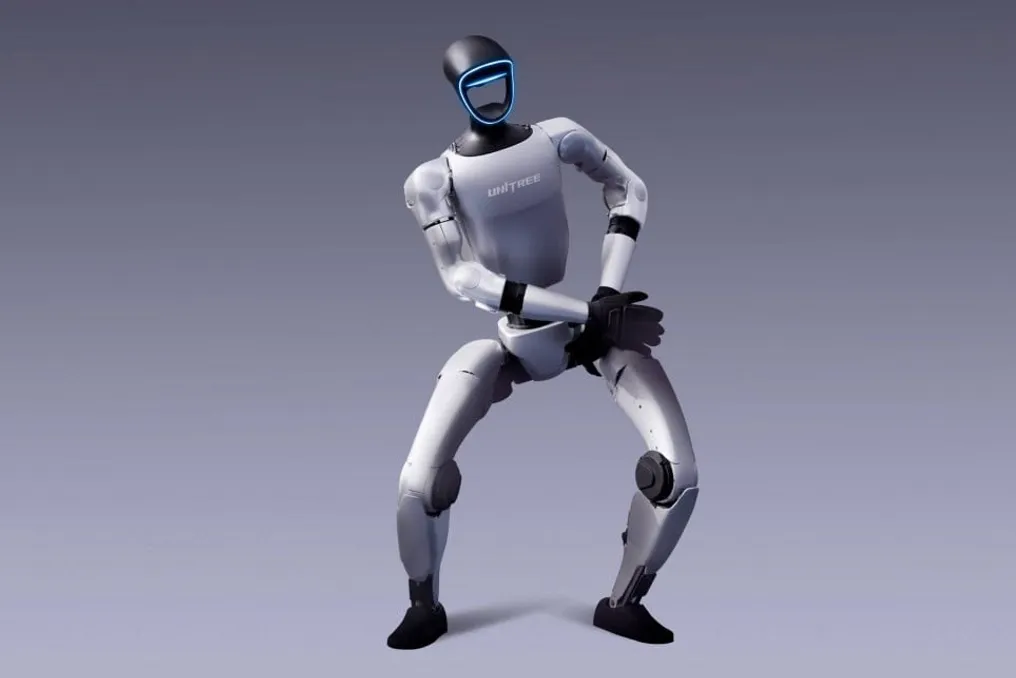
At the World Robot Conference 2026, held in Beijing, China, robots demonstrated various functionalities, ranging from fighting and acrobatic dancing to baggage transport, facility inspection, surgical assistance, and household chores. The event took place between August 19th and 23rd and gathered over 300 companies, exhibiting more than 2,000 items and presenting over 150 new releases.
The vast range of exhibited machines illustrates the scale of the Chinese robotics industry. According to the International Federation of Robotics (IFR), China accounted for 54% of global industrial robot installations in 2024, totaling 295,045 units. Furthermore, the country held the world's largest stock of operational industrial robots that year, amounting to 2.027 million.
China's leadership is also notable in the humanoid sector. According to the consultancy Smart Analytics Global, approximately 19,100 humanoid robots were shipped globally in the first half of 2026, with Chinese manufacturers responsible for over 97% of this volume. During the same period, the companies AgiBot and Unitree concentrated about 75% of international shipments.
LimX Luna
Humanoids attracted significant attention during the conference. Unitree, for instance, presented machines in Beijing capable of participating in boxing, dancing, and table tennis demonstrations, integrating movements that require balance, coordination, and varied body control. This performance is not new for the company; in 2025, Unitree humanoid models competed in boxing, showcasing attacks, defenses, and recovery after falls.
The LimX Luna model, from LimX Dynamics, focuses more on performances. Standing at 1.60 meters tall and having 27 degrees of freedom, it executes jumps and splits, combining these physical skills with voice interaction, gestures, and movement imitation. The platform allows for the coordination of over 200 robots for simultaneous performances, featuring distinct choreographies or synchronized movements. The company has also created a tool that integrates dance, movement, voice, and vision to create shows without the need for individual programming of each action.
Kengo, from Galaxea, stands at 1.40 meters and has a bipedal structure. Developed for high-dynamic movements, the robot can replicate actions of greater complexity. In addition to demonstrations, Galaxea aims to apply Kengo in industrial, commercial, entertainment, and companionship contexts. An external source mentioned that robots are evolving from basic tools to form the real-world workforce.
Another humanoid highlight is the MagicBot X1, from Magic Atom. This model features 31 degrees of freedom and was designed to walk, handle objects, interact, and operate in various environments. Intended uses include inspection, manufacturing, logistics, security, reception, and entertainment. The X1 was also seen in demonstrations exceeding simple walking, such as playing table tennis, dunking in basketball, and performing fencing moves.
The fair demonstrated that Chinese robotics is not limited to humanoids capable of mimicking human actions. There are also robots created for specific functions, where factors such as size, safety, or mobility are more relevant than aesthetics.
RealBOT S2
The RealBOT S2, from RealMan, was specifically designed for small-space logistical and industrial environments. It has the capability to lower its body to about 30 centimeters from the ground, allowing it to pick up items on the floor and access low areas. The design also prioritizes locomotion in narrow corridors and between close structures.
In another example, the Kirin, from Kepler Robotics, is a large quadruped intended for cargo transport and outdoor activities. This robot can support a load of nearly one ton, operate for up to eight hours under weight, and navigate inclined terrain, overcoming ramps up to 45 degrees.
Concerns about hazardous environments are highlighted by machines built for inspection. One of the quadrupeds presented at the conference features an explosion-proof design and is made to operate in oil and gas facilities, petrochemical plants, and other locations where a spark or inadequate equipment poses a danger.
Firefighting machines were also shown. One of these models is designed to advance in buildings, warehouses, confined spaces, and debris areas, carrying equipment to locations with high temperatures, toxic substances, or risk of collapse. Additionally, there are more niche applications, such as robots for checking electrical installations, maintaining structures, and moving loads. The logic here differs from initial humanoids: each machine is adapted to the working conditions, rather than trying to replicate the human body.
Specialization extends to healthcare. The ROPA6, from Beijing Changmugu Medical Technology, was developed for various areas of orthopedic surgery, covering hip, knee, unicameral procedures, spine, trauma, and sports medicine. The system received Class III medical device registration in China in 2026. The company also presents it as an integrated platform for multiple orthopedic procedures, rather than isolated equipment for each type of surgery.
In the educational field, UBTECH introduced the TutorC, a robot designed to function as a school assistant. This machine can participate in explanations, presentations, Q&A sessions, and interactive activities with students, in addition to assisting with standardized tasks. The proposal ensures that the teacher maintains control over the activities, being able to interrupt, modify the content, or take over operation while the system executes actions predefined by the class instructor.
In the domestic sphere, variety is also growing. The Vbot, from Vita Dynamics, was created to understand commands and the environment, performing tasks such as picking up and putting away objects, tidying surfaces, and operating appliances. The company also foresees its use in daily care, interaction with the elderly and children, and remote assistance.
Another example is the Simbot, from Beijing Shenpu Intelligent Technology. Unlike having legs, this robot uses a wheel-based base attached to articulated arms. Its purpose is to manage household tasks involving picking up, transporting, depositing, and manipulating objects. The Simbot has 23 degrees of freedom in its body and seven in each arm, along with vision, tactile, force, and language capabilities, aiming to adapt the machine to different residential activities.
The diversity of domestic projects suggests that there is no single concept of a residential robot; there are machines focused on manipulation, others on interaction, companionship systems, and equipment for assisting in specific tasks.
A less visible aspect of the fair includes equipment that does not have the shape of a complete robot, such as robotic hands, sensors, 3D cameras, LiDARs, motors, encoders, articulation modules, actuators, chips, and software. The Linker Hand O30, for example, is a robotic hand with 20 active and independent degrees of freedom. Such components are crucial for tasks requiring finger precision, force control, and varied object manipulation.
There are also perception-dedicated technologies, such as depth cameras, tactile sensors, and measurement systems, which help robots recognize objects and understand their surroundings. These technologies are what allow a command or visual information to be converted into a physical action. Embodied Artificial Intelligence (Embodied AI) is another important front, seeking to link AI models to the physical capabilities of machines. The exhibition gathers platforms for data collection, simulation, training, and movement development, alongside systems that combine vision, language, and control.
The quantity of technologies gathered in Beijing demonstrates that the industry transcends the dancing or fighting humanoid. There is a complete chain behind these machines, involving companies that work on components, software, perception systems, movement, and specific applications. In this landscape, China holds an extremely strong position, being the world's largest market for industrial robots and responsible for the largest share of global humanoid shipments registered in the first half of 2026. The World Robot Conference serves as a showcase for this breadth, displaying robots to attract attention, but also machines designed for factories, hospitals, airports, schools, homes, and hazardous environments.