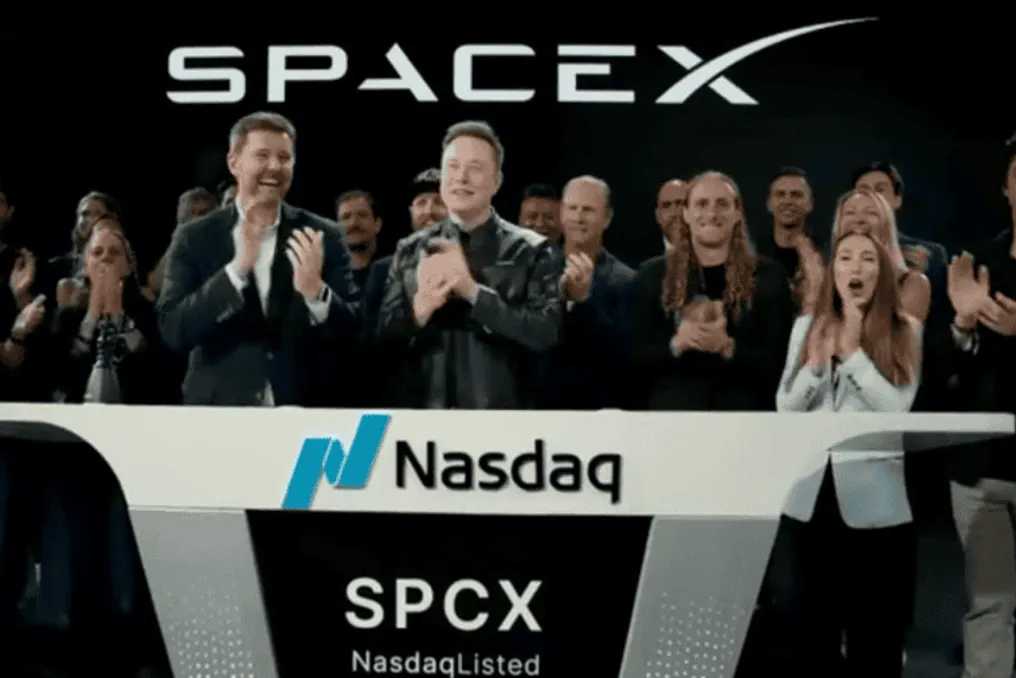
SpaceX has strengthened its presence in Washington, even while facing periods of greater instability in the stock market. The company, which specializes in rockets and artificial intelligence (AI) and is led by Elon Musk, secured billions of dollars in contracts from the United States government this year. These contracts are intended for the construction and launch of military satellites, running parallel to the initiatives of President Donald Trump's administration, which aims to reduce regulatory requirements for the space sector.
Additionally, the company obtained permission to disregard certain wireless network regulations, while the government works to mitigate environmental assessments associated with rocket launches.
Todd Harrison, a defense analyst at the American Enterprise Institute, commented to The Wall Street Journal that there was a strong focus on contract gains, adding that the regulatory benefits have significant systemic and long-term implications for the company's business model.
SpaceX's capability to place payloads into orbit has consolidated it as a fundamental partner for various U.S. intelligence and military agencies. In an investor conference call held in August, Gwynne Shotwell, CEO of SpaceX, highlighted the company's recent successes in the national security satellite segment, expressing great optimism about government business.
Just over a year ago, sources close to the negotiations indicated that Pentagon leaders intended to contract SpaceX for a crucial part of the Golden Dome project, conceived by Trump. This program aimed to use satellites capable of monitoring enemy missiles and aircraft, with the potential to move billions of dollars.
However, the prospect of a single corporation taking such a relevant share of a national security program for several years generated apprehension among some members of parliament, who pushed for greater participation from other suppliers. The U.S. Space Force opened a period for more companies to submit proposals. Despite this, the highly specific criteria and the challenging timeline ended up deterring potential competitors, leading some companies to withdraw their participation.
At the beginning of this year, SpaceX closed a contract worth approximately $4.2 billion (equivalent to about R$ 22.8 billion) to develop hundreds of satellites focused on tracking aerial threats. Subsequently, the Space Force contracted three other companies to integrate into the program, offering up to $615 million (approximately R$ 3.3 billion) in contracts.
A Space Force spokesperson clarified that the program requirements were not created to benefit a specific supplier, but rather that the acquisition strategy aimed to foster competition and meet military demands. The Space Force also stated that no resources were allocated to any company before the completion of open and complete competitive processes.
SpaceX's business expansion in Washington aligns with the closeness between Musk and Trump. The businessman supported the president in the last election, served as an advisor in the White House, and plans to invest at least $100 million (about R$ 542 million) to support Republican candidates in the upcoming midterm elections.
Nevertheless, SpaceX also maintains ties with legislators from both major political parties in the United States, contributing to political campaigns and generating thousands of jobs in various regions of the country. In a document presented before its IPO, the company warned that its business could be affected by changes in Congress or the Presidency. This caution coincides with the deregulation efforts promoted by the Trump administration, after SpaceX previously advocated for less restrictive rules.
Musk had already expressed dissatisfaction with the environmental assessments imposed by the federal government on projects related to Starship rockets. In July, federal transportation authorities suggested reducing environmental oversight on space activities. This proposal aims to exempt launches and the development of spaceports from laws requiring federal agencies to assess environmental impacts and alternatives to projects.
A Department of Transportation spokesperson reported that this initiative would benefit all innovators in the American space sector in the competition with China for orbital leadership.
SpaceX has also made progress with the U.S. Federal Communications Commission (FCC). In May, the agency approved the company's plan to acquire spectrum usage rights in a $17 billion operation (about R$ 92.1 billion), intended to connect mobile phones directly to satellites. By approving the deal, the FCC waived a rule that required the spectrum holder to maintain terrestrial infrastructure to ensure certain levels of cellular service nationwide.
The agency justified that maintaining such a requirement would be an obstacle for SpaceX and that the company's network would help boost U.S. leadership in connectivity. In January, SpaceX obtained another regulatory waiver from the FCC, aiming to prevent satellite interference in lower orbits with equipment operating at greater distances, while the agency reviewed related rules.
Currently, the FCC is evaluating a SpaceX proposal to put up to one million AI satellites into orbit, which is seen as essential for the company's goal of expanding its AI operations. The FCC Chairman, Brendan Carr, criticized a SpaceX competitor for requesting the rejection of this project.
Amazon, which has its own satellite network, asked the FCC to veto the SpaceX project, classifying it as vague and speculative. Carr retorted on X that Amazon should focus on its own FCC-defined satellite goals instead of wasting time and resources filing petitions against companies deploying thousands of satellites into orbit. An Amazon spokesperson declined to comment, while an FCC representative stated that the space sector is in a growth period that will bring benefits to consumers.
SpaceX's success in Washington has also begun to raise concerns among lawmakers about the government's increasing dependence on a single company for critical projects. Senator Jack Reed, a Democrat from Rhode Island and minority leader on the Senate Armed Services Committee, raised during a hearing the 'old concern about SpaceX's near-monopoly position in launches and distributed satellite constellations.'
In August, the Space Force announced the inclusion of five other companies in a satellite program for military data transmission, with a division of $60 million (about R$ 325 million) for technological demonstration. However, months earlier, SpaceX had won a contract to provide the 'backbone' of this network, an agreement valued at nearly $2.3 billion (about R$ 12.5 billion).