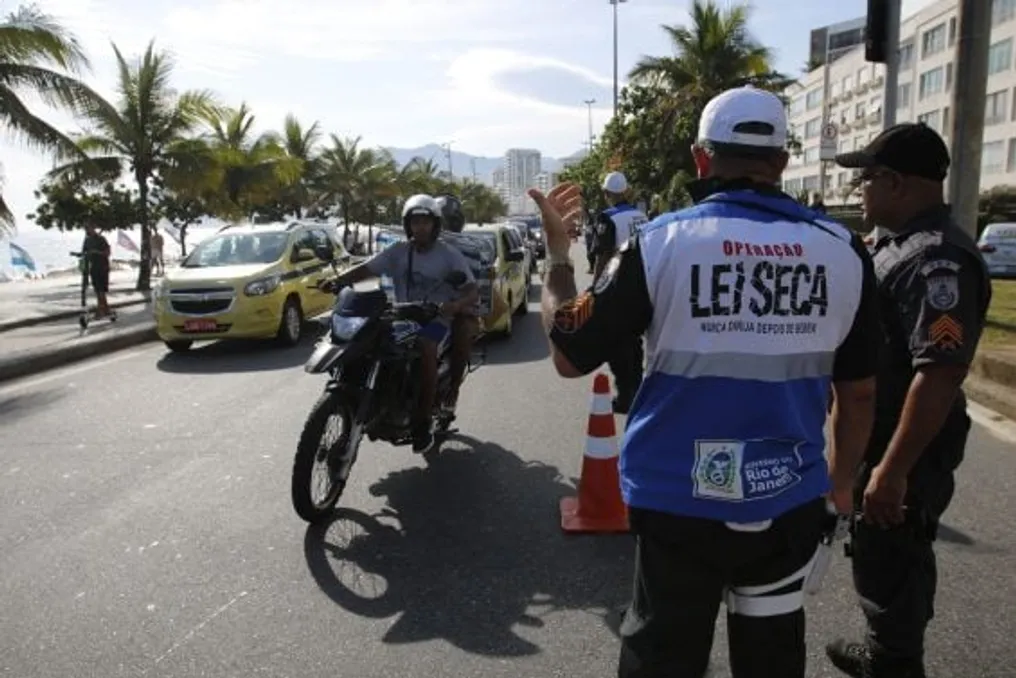
The National Traffic Council (Contran) sanctioned new regulations for enforcing the 'Dry Law' in Brazil. These changes introduce preliminary screening phases, establish guidelines for identifying psychoactive substances, and make tests mandatory in cases of serious accidents. It is important to note that the resolution details operational procedures for traffic agents but does not modify the penalties or fine amounts already defined in the Brazilian Traffic Code (CTB).
Although the change has already been approved, the implementation of the new inspection tests will depend on the certification of the equipment and procedures. Therefore, those stopped during a blitz on the day of approval will not see these modifications yet. However, the changes related to inspection forms and infraction classification codes will have a 60-day period to be effective.
During this transition period, the various bodies that make up the National Traffic System need to adjust their computerized systems, maintaining the use of currently valid codes until full implementation.
What changes during a blitz with new 'Dry Law' rules?
The most significant modifications during inspections focus on the screening phase, the new devices used, and specific protocols.
Rapid screening and pre-test for alcohol consumption
Resolution 1.031/26 institutes an initial screening stage, which covers:
- Pre-test or passive test: Agents can use breathalyzer detection equipment to signal possible alcohol consumption.
- Guidance nature: The result of this screening does not constitute an infraction or generate a fine by itself; its function is only to suggest the need for confirmation through the conventional breathalyzer.
- Breathalyzer: The ethanol meter continues to be used normally in alcohol checks.
- Subsequent procedures: If the result is positive, it is mandatory to proceed with the procedures provided in the regulation to validate the situation.
Detection of drugs and psychoactive substances
In addition to the initial test, new guidelines have been created regarding the instruments used to detect both alcohol and other substances:
- Identification of other substances: The new legislation authorizes the use of specific equipment to identify the use of psychoactive substances.
- Certification required: Devices intended for drug detection must obtain certification from Inmetro through the Brazilian Conformity Assessment System (SBAC). There is no imposition of a single model or immediate obligation for use at all inspection points.
- Signs of alteration: The assessment of psychomotor capacity remains valid as an inspection method.
- Qualitative analysis: These tests only point to the existence of the substance, without determining its concentration.
- Double proof: The mere presence of residues (such as medications) does not result in automatic ticketing; the traffic agent must obligatorily record at least two visible signs of altered psychomotor capacity.
- Breathalyzer: The ethanol meter maintains its standard use in alcohol inspections.
Residual alcohol and retesting
The text updating the 'Dry Law' also establishes procedures for handling situations that could influence test results:
- False positives: Consumption of food or products containing residual alcohol in the mouth (such as liquor chocolates, sliced bread, or mouthwash) will require a new test before any conclusion about the infraction.
- Retesting: Repeating the procedure will also be done if technical or operational factors prevent obtaining a valid result.
Accidents and refusal to test
Regarding accidents, there are specific determinations:
- Fatal accidents: It is compulsory to perform alcohol and other substance tests on drivers involved in incidents with fatal victims.
- Refusal rule: Refusing the test continues to be a very serious infraction. The new rule prevents simultaneous application of tickets for refusal and driving under the influence during the same stop.
Refusing to take the breathalyzer test during a 'Dry Law' blitz remains a very serious infraction, even if the driver does not show signs of intoxication. The driver will be subject to the following consequences:
- Fine: R$ 2,934.70, corresponding to ten times the value of a very serious infraction.
- Driver's License Suspension: For a period of 12 months.
- License Confiscation: The document may be seized during the inspection.
- Vehicle Retention: The vehicle will be held until a duly licensed driver takes control.
- Recidivism: If the driver commits the same infraction again within a 12-month period, the fine will be doubled, reaching R$ 5,869.40.
Validity periods
The norm comes into force on the date of its publication in the Official Gazette of the Union, granting a 60-day period for traffic bodies to adapt their classification codes and computerized systems. The practical application of psychoactive substance tests will occur progressively, depending on the certification and availability of the equipment.