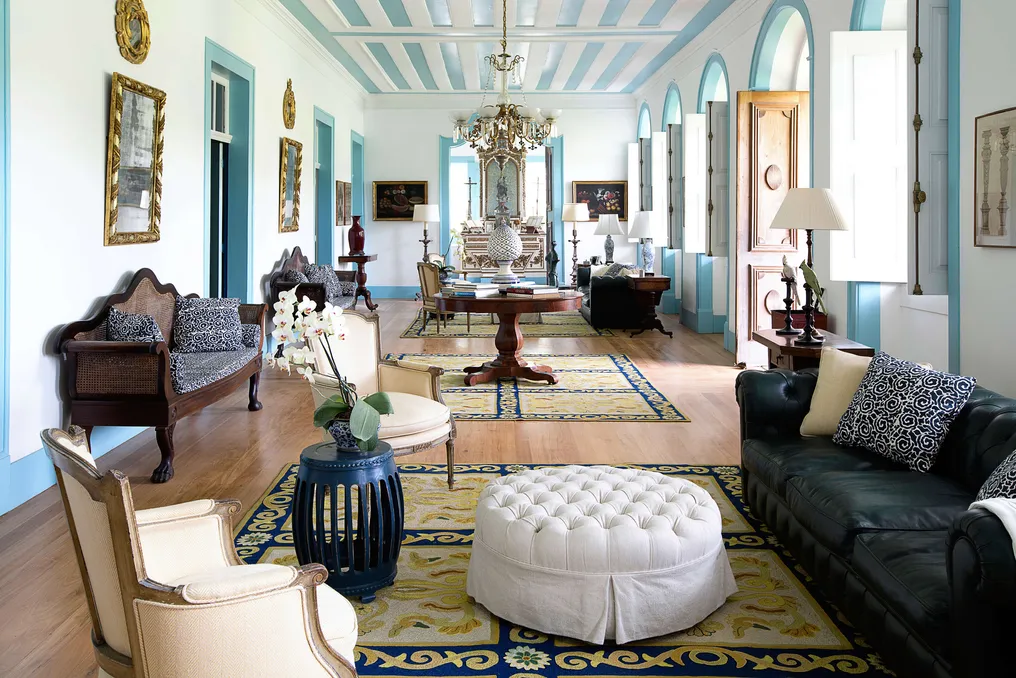
In the Coffee Valley, located in the interior of Rio de Janeiro, several old farms are transitioning from mere vestiges of the coffee era to tourist attractions. A notable example is Fazenda das Palmas, in Vassouras, a century-old property that combines hospitality, art, nature, and cuisine, while also housing a distillery dating back to 1855, where Pindorama cachaça is currently produced.
The farm was acquired in 2012 by banker Antônio Carlos de Almeida Braga, known for being one of the country's biggest sports supporters. Management remains with the family, who has dedicated great care to preserving the mansion and all its original architectural elements. The structure offers six suites and two rooms with bunk beds on the ground floor, intended for children, and the entire headquarters can also be rented out for more exclusive experiences for groups and families.
The farm's concept transcends simple lodging. Its garden features bronze sculptures, while the chapel and common areas encourage moments of contemplation. The infrastructure includes a tennis court, a golf course, horses, and a lake suitable for boat and rowing excursions. To complete the amenities, there is a heated pool, steam sauna, and massage room.
The distillery, built in 1855, had been inactive for many years but retained an old English boiler, which was imported from Germany in the early 20th century. The family decided to restore this structure and restart sugarcane cultivation, thus revitalizing the artisanal production of cachaça.
Pindorama was born from this effort, an initiative of Luiza Konder, her daughters, and son-in-law Rafael Daló. Currently, visitors can follow the entire process at the distillery, from sugarcane cultivation on the property to the final served product. The focus goes beyond tasting; the visitor understands the place of manufacture and the link between the product and the territory. The silver version of this beverage was recognized as the second-best cachaça in Brazil by the Cachaça Summit.
The gastronomic experience at the farm is also a strong point, prioritizing organic food and connecting the guest to the origin of the ingredients. Syntropic agriculture practices are applied around the distillery, dispensing with the use of pesticides or chemical fertilizers. This reinforces the connection with the land, complemented by the reforestation of native Atlantic Forest species and the planting of non-GMO corn, which is also used for soil conservation. The sugarcane bagasse is utilized to generate energy.
At Fazenda das Palmas, experiencing the history and culture of the Coffee Valley can be done in several ways: staying in a historic mansion, walking among sculptures, horseback riding, tasting local products, and visiting an operating distillery. The farm offers something deeper than a rural stay, inviting visitors to understand the origin of the flavors, narratives, and methods that define the region's identity.