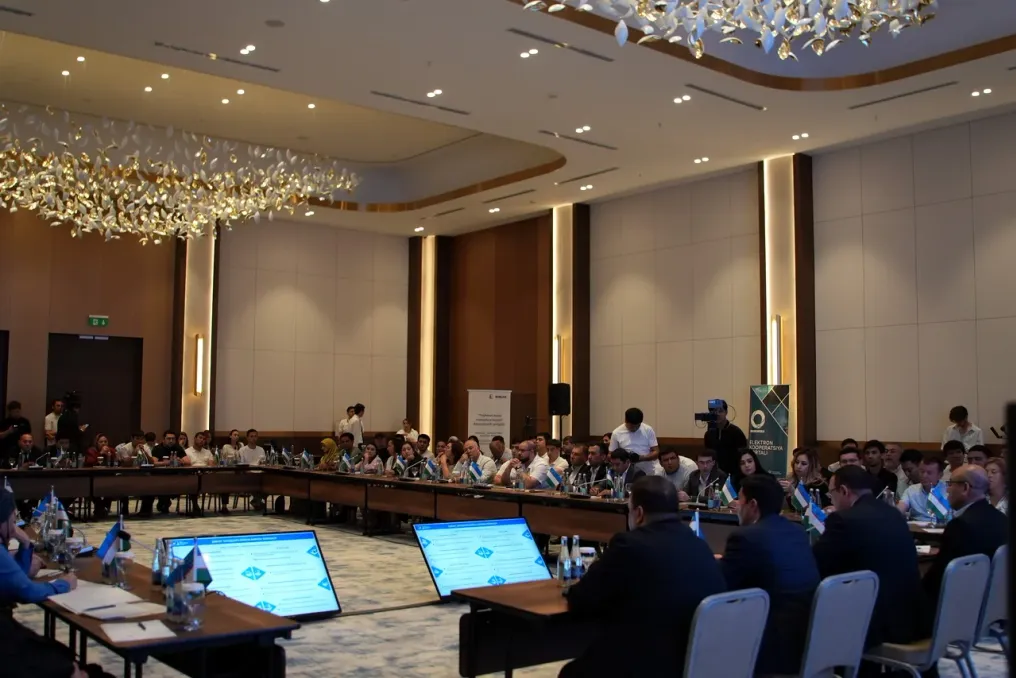
The State Agency for Industrial Cooperation and Public Procurement of Uzbekistan is actively working to change access conditions for businesses, as public procurement is one of the key factors for the country's economic growth, capable of either stimulating local production or becoming an obstacle with inefficient management.
This agency has become a central link in this ecosystem, and its activities demonstrate a new level of development towards 2026. A representative of the Association of Public Procurement Participants noted that they are closely monitoring the sector's transformation, questioning the agency's achievements since the beginning of the year, its history, and future reforms that may await businesses.
Institutional Foundation: An Inside Look
The structure coordinating industrial cooperation and public procurement in its current form has been operational for a relatively short time. Its institutional base was created as part of large-scale administrative reforms in recent years. According to an expert, the agency was established with a clear strategic goal: to unite localization chains and transparent mechanisms for distributing government orders under unified management. This allowed for a direct link between domestic state demand and the capabilities of local factories and production facilities.
Since the beginning of 2026, the agency has focused its efforts on two areas: market digitalization and establishing systematic direct dialogue with enterprises.
Large-Scale Procurement and Budget Savings
During the first six months of 2026, the total volume of public procurement in Uzbekistan reached 188.4 trillion soms. Of this amount, about 113 trillion soms were obtained through transparent competitive procurement, which ensured a saving of 7.8 trillion soms for the state budget. These figures illustrate the significant size of the market that domestic companies aim to capture.
Unprecedented Regional Coverage
The agency has expanded its activities beyond offices by implementing a mechanism of systematic 'Open Dialogues.' During these meetings with producers, events were held in all 208 districts and cities of Uzbekistan, gathering 2710 entrepreneurs. Specialized industry sessions were also organized for agriculture, food and light industry, and pharmaceuticals. The Association notes that 20 out of 30 most pressing issues were resolved on-site. 155 out of 447 problems raised by businesses have been promptly settled across the country, while strict monitoring has been established for the remaining issues.
Launch of Preference Package
According to Presidential Decree No. UP-17 dated February 4, 2026, the agency introduced a number of support measures that, according to the association, are evaluated very positively. Price preference means that a local company automatically receives a price advantage of 8% to 15% when competing with a foreign supplier. Within the benefits based on rating, producers with high and medium sustainability indicators receive a 50% discount on trade platform intermediary fees and are exempted from providing additional collateral. Furthermore, local auctions have been launched where participation is restricted exclusively to domestic companies. For goods with a localization level of at least 30%, the possibility of advance payment proportional to the localization level is provided.
Strategic Plans: What's Next
Despite the progress made, the agency's leadership and the association agree that there is significant untapped potential within the system. Statistics confirm this: out of 646,000 active business entities, only half—344,000—are registered in electronic public procurement systems. Of these, only 126,000 actually participate, and only 36,000 companies win tenders and sign contracts.
For the second half of 2026 and beyond, the following steps are planned. The agency is preparing a large-scale educational program for all regions to increase entrepreneurs' digital literacy and train them on using electronic trading platforms. The overall goal is to double the number of active suppliers among small and medium-sized businesses.
Eliminating Barriers and Payment Delays
Based on requests collected from the regions, the agency is systematizing systemic problems faced by businesses. Regulatory amendments are being prepared to establish strict liability for state customers who artificially delay payments under contracts or set unreasonably high requirements in tender documentation.
Legislative Reform
Together with relevant ministries, the agency is working on a package of changes to procurement legislation. The task is to automate the moderation of goods on electronic platforms and simplify certification requirements for local producers.
Developing Domestic Cooperation
The practice of creating long-term supply chains based on the 'customer - local producer' model will continue. Under this approach, large state holdings guarantee advance purchases of products from local enterprises.
Market Expectations: Looking Ahead
The Uzbek business community holds high hopes for the agency. The main expectation is that it will maintain and strengthen its status as an open state institution that regularly consults with market participants and experts before introducing regulatory changes. Transparent feedback will allow the government to make balanced and thoroughly analyzed decisions.
As an expert, the author considers it fundamentally important that future reforms are based not on mechanically copying foreign models, but on a thorough analysis of actual statistical data, the history of the domestic market, understanding the mentality of local businesses, and the specifics of conducting business in the regions of Uzbekistan, as well as on a fair balance of the interests of the state, large customers, and small manufacturing enterprises.
In conclusion, in the author's opinion, the State Agency for Industrial Cooperation and Public Procurement of Uzbekistan is gradually transforming from a regulatory body into a service-oriented institution for businesses. The shift from solving individual problems to implementing systemic legislative changes is exactly what the domestic market has been waiting for.
The Association of Public Procurement Participants is ready to provide comprehensive expert support. Continued cooperation between the agency, analysts, and the enterprises themselves can make Uzbekistan's procurement system fairer, more transparent, and more efficient.