
South Africa's hospitality sector surpasses gender equality target for 2030
Read more
Getaway
getaway.co.za

South Africa's hospitality sector surpasses gender equality target for 2030

South Africa's hospitality sector is demonstrating progress, exceeding the set gender equality target for 2030. Currently, women from certain groups hold 47.3% of leadership positions in accommodation and food service, surpassing the employment target of 46.1%.

This places hospitality among a few sectors that have already achieved their 2030 goal at the senior management level, alongside the healthcare, education, and real estate sectors.

Nevertheless, significant work remains to be done at the executive management level. Women from certain groups account for 36.2% of top leadership roles, which is below the sector's 2030 target of 38.1%.

Starting September 1st, over 800 employers in South Africa's accommodation and food service sector, representing nearly 200,000 employees, will for the first time undergo an assessment of their progress toward employment equality goals. Last year's reports focused on workforce numbers as employers were only beginning to implement their five-year employment equality plans. This year's assessment will be based on annual targets set in individual plans, which should ultimately align with industry goals for 2030.

Figures in the hospitality industry indicate substantial progress in promoting women to leadership positions. However, reaching the next level will require continuous investment in training, mentorship, and career development.

Sandra Kneibuhler, Managing Director of Radisson Hotel Group for Sub-Saharan Africa, notes that hotel groups in the region have skillfully utilized the potential of female leadership. She emphasizes that in South Africa, they are close to an even distribution between women and men at the general manager level, and department head positions are equally divided.

She attributes this progress to flexible working conditions for mothers, development programs, and work environments that consider women's input. Last year, Radisson Hotel Group filled 40% of vacancies with internal candidates and currently has 31% women in leadership roles, aiming for 50% by 2030.

According to Kneibuhler, achieving this goal begins long before anyone takes on a leadership role. She argues that development is critical for the sector, as they hire many employees from the grassroots level and train them from scratch. Halting this process would lead to a huge skills deficit, impacting guest experience and, ultimately, commercial results. Development must be viewed as an investment, not an expense.

This investment also involves identifying future leaders among those who are not obvious candidates. Alison Mackie, General Manager of Radisson Collection Hotel, Waterfront Cape Town, began her hotel management career with a strategic background rather than through a traditional operational path. Her own career trajectory influenced her approach to talent development.

She says that due to her unconventional path, she tries not to confuse experience with potential, as some of the most capable people do not always show initiative or fit the preconceived image of a future leader.

Elmarie Fritz, General Manager of Radisson Blu Hotel, Port Elizabeth, progressed through various operational roles in different properties, including revenue management, before moving into general management. Her experience shaped her approach to identifying and developing talent. Fritz states that career advancement should not only be available to those who put themselves forward, and she is passionate about early talent identification, as she herself benefited from leaders who recognized and invested in her potential.

However, for women balancing a career in hospitality with family responsibilities, professional development is only part of the solution. Duduzile Nksumalo, General Manager of Park Inn by Radisson Polokwane, moved from the reception department to her first leadership position in about five years. She notes that the unpredictable nature of hospitality makes traditional notions of work-life balance particularly challenging. She explains that hospitality jobs are not limited to a nine-to-five schedule, and sudden large conferences can require presence at six in the evening, which is difficult to reconcile with home duties.

Roshell Schonken, Country Sales Director in South Africa, points to flexibility, mentorship, and supportive leadership as crucial factors in retaining women in leadership roles within hospitality. She believes that flexibility, where operationally possible, strong mentorship, and leaders who support work-life integration are vital.

Although South Africa's hospitality sector is already ahead of the 2030 target for women from certain groups at the senior management level, executive leadership figures show that the work is not yet complete. The next step for the industry is not just increasing the number of women in hospitality careers, but ensuring clear career paths to leadership. Kneibuhler expresses confidence in achieving this goal, given that they have the necessary programs and people.

Similar stories

Statistics show progress and persistent challenges in the fight for equality by South African women over 70 years
Read more
iol.co.za

Statistics show progress and persistent challenges in the fight for equality by South African women over 70 years

South Africa is marking 70 years of the struggle for women's equality, and data analysis demonstrates both significant changes and areas where progress has not yet been achieved. Currently, women constitute 65.4% of university graduates, with the number of female graduates exceeding that of men in almost all qualification types, except for doctoral degrees.

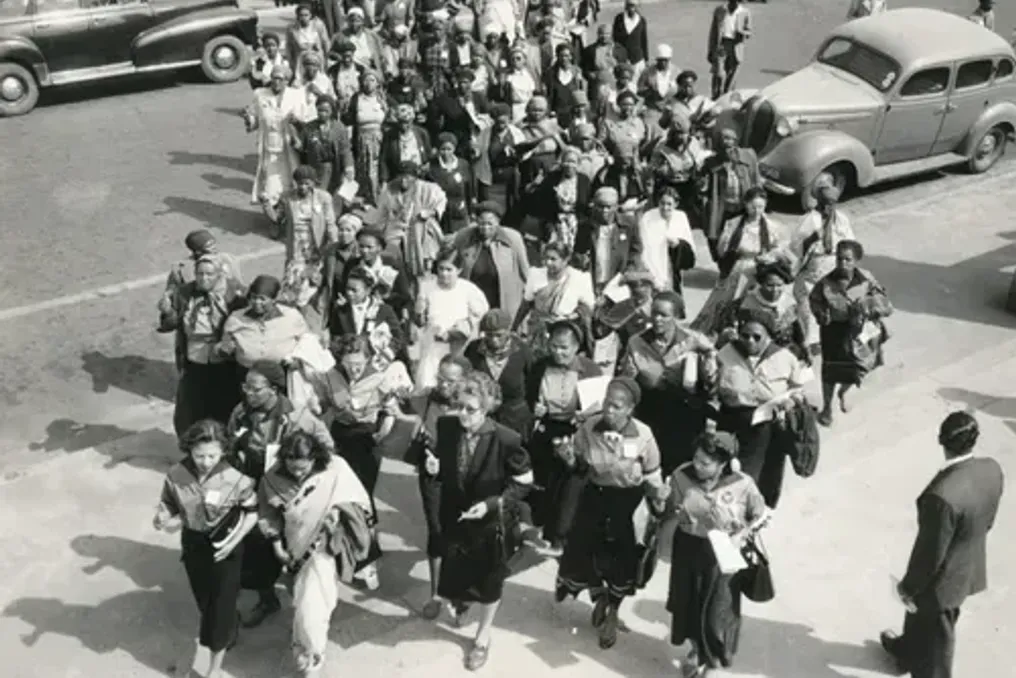
More than 20,000 women marched to the Union Buildings on August 9, 1956, to protest the expansion of pass laws for women. This march was organized by the Federation of South African Women and included women of various races. The leaders of the procession were Lillian Ngoyi, Helen Joseph, Rahima Musa, and Sophia Williams-De Bruyn, who presented a petition to the government of Prime Minister J. G. Strijdom.

The women's demands went beyond pass laws. Previously, they appealed to the Congress of the People for childcare, housing, education, equal pay, and equal rights regarding property, marriage, and child custody. On the day of the demonstration, the women stood silently for 30 minutes, performing the anthem Nkosi Sikelel’ iAfrika and the protest song Wathint’ abafazi, Strijdom!

The current government press secretary, Nomonde Mnquka, noted that along with countless ordinary women, they realized that political freedom would remain incomplete until women had equal opportunities to participate in the nation's economic, social, and political life.

Education: A Fundamental Achievement

One of the most obvious changes has been the development of the education sector. Women now make up 65.4% of university graduates, surpassing men in the number of graduates in almost all fields of study, with the exception of doctorates.

The Chairperson of the National Assembly, Thoko Didiza, emphasized that women hold 43% of legislative seats in Parliament and 45% of ministerial positions, and they also lead several key constitutional institutions. According to her, the successes since 1994 are reflected in the growing participation of women in politics, the judicial system, business, academia, and leadership.

Gender studies from Stats SA have also shown a long-term increase in women's participation in the labor market. The female labor force participation rate increased from 50.9% in 2014 to 55.8% in 2024, although it remains below the male rate. Furthermore, women's labor force participation is uneven.

Financial Independence

Progress in education and labor market participation is reflected in the growing financial autonomy of women. Anchor Capital reported that women have moved beyond simply inheriting wealth to actively creating it through careers, entrepreneurship, investments, and property ownership.

An investment manager noted that women have become 'central architects of family well-being,' with many prioritizing financial independence, long-term security, and the transfer of capital to future generations. The property market also indicates an increase in women's prosperity. BetterBond Home Loans reported that in 2024 and 2025, over 43,000 women applied for mortgages, more than half of whom were first-time buyers.

Home Ownership

The proportion of women applying as primary borrowers increased by 18% between 2024 and 2025; these women spent an average of R1.3 million on housing. Women buying as spouses spent R1.9 million. Mary Lindemann, COO of BetterBond, explained that this growth reflects greater financial self-sufficiency. She stated: 'As more women assert their financial independence and utilize their purchasing power, we are seeing strong activity in this market segment.'

Lindemann also noted that more women under 35 are purchasing homes independently. 'Women marry later, if at all, and many postpone starting a family. They do not wait for a ring or a spouse to buy property.'

Stats SA data showed that the median age of women in civil unions increased from 31 in 2014 to 34 in 2023.

Households

The shift in women's financial roles coincided with significant transformations in household structure. Stats SA census data showed a substantial long-term increase in the proportion of female-headed households, which approached half of all households.

The proportion of women aged 15 and older who have never been married rose from 44.7% in 1996 to 57.1% in 2022, while the proportion of married women decreased from 38.8% to 25.6%. This has changed the financial responsibilities of many women, as they increasingly make decisions about housing, household expenses, and dependents independently.

Corporate Governance

The growing presence of women in education and the economy has also led to increased representation in corporate leadership, although figures decrease higher up the career ladder. In 2025, women held 38% of board seats and 27.4% of executive positions in the top 40 JSE companies, which is higher than 35% and 25% respectively in 2023. Nine companies from the JSE top 40 achieved or exceeded gender parity on their boards, including Bidvest with 64%, British American Tobacco with 56%, and Impala Platinum with 54%.

The situation was significantly different at the CEO level. Only three companies from the JSE top 40 had a woman as CEO—Bidvest, Clicks, and FirstRand—while six had a woman on the board. BDO stated: 'South African women make up 46% of the country's economically active population but remain consistently underrepresented in leadership and underpaid compared to their male counterparts.'

The World Economic Forum's 2025 Global Gender Gap Report found that women outperform men in higher education globally, but they account for only 29.5% of senior managers with higher education.

Labor Market Gap

Recent Quarterly Labour Force Survey data showed that the progress made has not translated into equal employment outcomes. In the second quarter of 2026, women accounted for 50.3% of the 42.3 million working-age population, but their official unemployment rate was 37.5% compared to 30.3% for men. The female labor force participation rate reached 54.9% versus 64.4% for men, and the absorption rate—the proportion of the working-age population actually employed—was 34.3% for women and 44.9% for men.

Young women were also more likely than young men to be Not in Education, Employment, or Training (NEET), with a rate of 38.2% compared to 34.6% for young men. Women were less likely than men to hold managerial positions—managers comprised 7.1% of female employment compared to 10% of male employment—and were more likely to work in clerical and domestic sectors.

Fayaz Mohammed, head of BDO's International Offshore Centre, advised a young woman starting her career: 'Raise your hand more often. Do not assume the answer will be no before you ask the question.' Mohammed added that 'confidence is often built after you take the step, not before it. And when you reach the next level, don't climb alone. Help someone else rise.'

Pay Gap

The increasing participation of women in education, property ownership, and leadership has also not eliminated income disparities. BDO estimates the average gender pay gap in South Africa at approximately 30%, while Stats SA's long-term gender analysis showed that the median income of women in 2022 matched 80% of the median income of men.

In a country celebrating 70 years since marches by thousands of women demanding equal treatment, statistics have shown significant changes but have also revealed unequal economic conditions for women. Nomonde Mnquka stressed that the true measure of democracy will not only be the rights guaranteed by the Constitution but also the opportunities created by society.

Mnquka concluded: 'When every girl has access to quality education, every woman can realize her ambitions without discrimination or fear, every entrepreneur can compete on equal terms, and every citizen contributes to advancing gender equality, South Africa will honor the legacy of Charlotte Maxeke, Lillian Ngoyi, Albertina Sisulu, Winnie Madikizela-Mandela, and the women of 1956.'

Seventy Years After the Women's March, The Fight for Gender Equality in South Africa Continues
Read more
iol.co.za

Seventy Years After the Women's March, The Fight for Gender Equality in South Africa Continues

Seventy years after the 1956 Women's March, South African women continue to face challenges related to poverty, unemployment, gender-based violence, and unequal opportunities. The article asserts that achieving genuine gender equality requires broader economic empowerment, education, leadership opportunities, and more decisive action against gender-based violence.

Every August, South Africa commemorates the legacy of over 20,000 women who marched to the Union Buildings in Pretoria on August 9, 1956. This act of resistance is considered one of the most significant in the country's history. These women of various races, many carrying infants on their backs, protested against pass laws that regulated not only their movement but also their dignity. They carried petitions, chanted, and declared with unwavering confidence: 'Wathint' Abafazi, Wathint' Imbokodo.'

The 1956 march serves as a powerful reminder of the sacrifices made for freedom and the long-standing demand for equality even before it was enshrined in law. It highlighted that unity is the strongest counter to division, demonstrating the remarkable achievements possible when women unite.

Women of the past faced immense hardships and overcame countless obstacles, transforming their darkest days into a brighter future for coming generations. Their courage, resilience, and determination paved the way for the rights and opportunities many enjoy today.

The Unfinished Journey to Equality

Today, 70 years later, their footsteps still resonate in our national consciousness. Although the country has made significant strides in advancing women's rights since the advent of democracy, many women continue to encounter systemic barriers to full participation in society and the economy. They are disproportionately affected by poverty, unemployment, gender-based violence, unequal access to opportunities, and underrepresentation in critical sectors. These issues serve as a stark reminder that the fight for gender equality is far from over and requires a collective commitment from all sectors of society.

Economic Empowerment is Crucial

At the heart of women's transformation lies economic empowerment. Despite numerous policy measures, unemployment, income inequality, and limited access to economic opportunities continue to disproportionately affect women. Many women-owned businesses still struggle to secure funding, procurement opportunities, and established supply chains. Therefore, it is necessary to strengthen support mechanisms that enable women to fully participate in the economy through greater access to capital, markets, skills development, technology, and entrepreneurial support. Economic empowerment means much more than just earning higher wages; it signifies increased autonomy, independence for women, and their ability to influence economic outcomes.

Combating Gender-Based Violence

The government also recognizes that violence against women violates their dignity, safety, and constitutional rights, and hinders their full participation in societal life. Thus, combating gender-based violence has become a national priority. To demonstrate this commitment, President Cyril Ramaphosa recently established the first legislative National Council on Gender-Based Violence and Femicide in South Africa, marking a major step forward in the country's fight against GBV. The Council will lead national initiatives aimed at strengthening prevention, supporting survivors, reinforcing law enforcement, and coordinating actions between government and civil society.

Education and Skills Open Doors

Education and skills development are equally vital in advancing women's empowerment. Quality education opens doors to employment, entrepreneurship, and leadership positions. More needs to be done to encourage girls and young women to study science, technology, engineering, and mathematics, as well as to expand access to vocational and digital skills. Through the Human Resources Development Council, we focus on gender-inclusive economic growth and skills development to combat unemployment, which disproportionately affects women. We address gender gaps through technical education, digital skills, and training in in-demand professional fields. However, policy measures alone will not suffice for long-term change. South African society must confront deeply rooted patriarchal attitudes and stereotypes that continue to shape the experiences of women.

Shifting Mindsets and Increasing Representation

Gender inequality is often rooted in homes, schools, workplaces, and communities where discriminatory beliefs and practices are normalized. To achieve significant transformation, cultural attitudes must shift with a greater emphasis on equality, mutual respect, and the fair distribution of roles and responsibilities between men and women. It is equally important to involve boys and young men as partners in promoting gender equality and building a society that respects both women and men. Furthermore, significant efforts are needed to increase the representation of women in leadership and decision-making roles. While progress has been made in political representation, women remain underrepresented in corporate leadership, entrepreneurship, and strategic economic sectors. Various organizations must also actively invest in mentorship, leadership development, and succession planning to ensure that more women occupy positions where they can influence policy, institutions, and economic outcomes.

Supporting Women Beyond the Workplace

The transformation of women also requires acknowledging the disproportionate burden of unpaid care work, which women often shoulder while balancing professional and caregiving duties without adequate support. Key measures include improving access to childcare, implementing family-friendly workplace policies, and ensuring a fairer distribution of caregiving responsibilities to allow women to participate in education, employment, and leadership. As a government, we are also addressing systemic barriers through targeted allocation in public procurement, specialized financial funds, and multi-sectoral partnerships. Key interventions include implementing a target of 40% preferential procurement for the public sector, utilizing special financing schemes such as the Isivande Women's Fund, and creating structured market fairs. Moreover, the EmpowerHer Market trade fair has been established to promote women-owned businesses, expand market access, and foster investment linkages. This initiative provides women with tangible pathways to enter supply chains, scale their businesses, and transform their communities.

The Work Continues

However, the story of women's transformation does not end here. Aluta continua. Real change is a process, not an event, and the path to full equality requires sustained and active participation. Government, business, civil society, traditional leaders, religious organizations, communities, and families all play a role in creating an environment where women can thrive. Ultimately, we must measure success by the degree to which every woman can live with dignity, safety, equality, and the freedom to realize her full potential. Only then will the vision of the women who marched in 1956 be fully realized.

Women Transforming the Hospitality Industry in South Africa
Read more
getaway.co.za

Women Transforming the Hospitality Industry in South Africa

Women are increasingly playing a significant role in South Africa's hospitality sector. Women's Month in South Africa serves as an occasion to reflect on women's achievements since the historical march of 1956, when around 20,000 women took to the streets outside the Union building to protest apartheid pass laws.

Today, this legacy is visible in workplaces across the country, including the tourism and hotel industries. Women hold positions ranging from chefs and lodge managers to hospitality instructors and trainers, building careers, leading teams, and creating opportunities for the next generation.

Below are the stories of six women who demonstrate what this journey looks like.

After finishing school, Jessica Mkhlanga could not afford higher education. However, with the support of a mentor, she applied for a public selection at Singita Culinary School. Among thousands of applicants, she made it into a group of ten and became the youngest participant.

Jessica currently works as a sous chef at one of the private villas in Shiwiko Kruger. Her culinary specialties include traditional dishes such as potjie beef tails and mangvinya—a South African branch that she once prepared with her mother to help the family.

For Jessica, working at a private villa means more than just cooking delicious food. She notes: 'As a mother and chef, being in the villa setting is one of my favorite things in Shiwiko! The villa format allows you to understand your guests, build relationships, anticipate needs, and know them for who they are.'

At Tonga Beach Lodge, chef Nomazulu Ndlovu spent most of her career working in kitchens traditionally dominated by men. Her love for peanut sauces stemmed from family meals, and collecting mussels with her parents during low tide was another link between food, family, and place.

Nomazulu says she enjoys the hard work associated with professional kitchen life, from learning new recipes to ensuring her guests leave satisfied. She wishes: 'I just want everyone to be happy, enjoying food cooked with love, and spreading that happiness.'

A safari trip may seem effortless to guests, but a huge amount of work happens behind the scenes. Anna Mugabe knows this better than many. As a lodge manager at Tsowa Safari Island, she was sometimes the only woman on a team primarily composed of men.

She learned to combine toughness with care, taking on a leadership role, but noted that the dynamic changed after the addition of a spa and more women joining the team. Anna emphasized: 'The energy has changed. The presence of more women on the team has brought new ideas and a caring approach.'

Anna also points out the often invisible labor required for a safari lodge to function. She explains: 'Guests only see the final product. They don't see the 05:00 wake-ups, the coordination of five teams, and the problem-solving behind the scenes. It is 90% logistics so that the 10% they experience seems easy.'

At Cape Woolcher Lodge, HR Manager and Lodge Manager Lerato Maseko believes that leadership extends far beyond a job title. She was involved from the beginning in creating both the operational side of the lodge and the corporate culture among employees. For Lerato, one of the most significant parts of this role was observing how her decisions affected the people around her. She shares her thought: 'It became real when I realized that my decisions influenced not only the success of the lodge but also the confidence and growth of the people I work with. As women, we often underestimate our impact. True leadership is about lifting others up while you grow yourself.'

Creating Opportunities for the Next Generation

For some women in hospitality, the greatest impact lies in helping others find their path in the industry. At Rhino Ridge Senetamba (Sne) Mankele in the Safari Lodge, she teaches computer literacy through the Isibindi Foundation, helping local residents develop skills that can open new prospects.

Lessons start with the basics—even how to use a computer mouse. Sne asserts: 'If you cannot use a computer in university, you fall behind. We give them basic skills so they don't struggle.'

One of Sne's proudest moments was watching a 52-year-old local woman progress from struggling with the basics to confidently using a desktop computer. For Sne, this served as a reminder of the importance of education in the community.

Monique Souls knows what it's like to have a hospitality career delayed by circumstances beyond her control. Her ambitions were put on hold until a scholarship in 2014 allowed her to study at the South African College of Tourism (SACT). From there, she progressed from intern to customer relations manager at Drostdi Hotel. In 2025, she returned to SACT as a customer relations facilitator, teaching students on the same floor of the hotel where she once mastered the profession.

Looking back, she says every stage of her career contributed to where she is today. Monique notes: 'Looking back on my journey, I am proud of how far I have come. Starting as a hospitality student, every role contributed to my growth.'

Now Monique sees something similar to her younger self in the students. She wants them to understand: 'When I look at my students, I see myself as a young person. I want them to understand that where you start does not determine where you end up.'

Popular