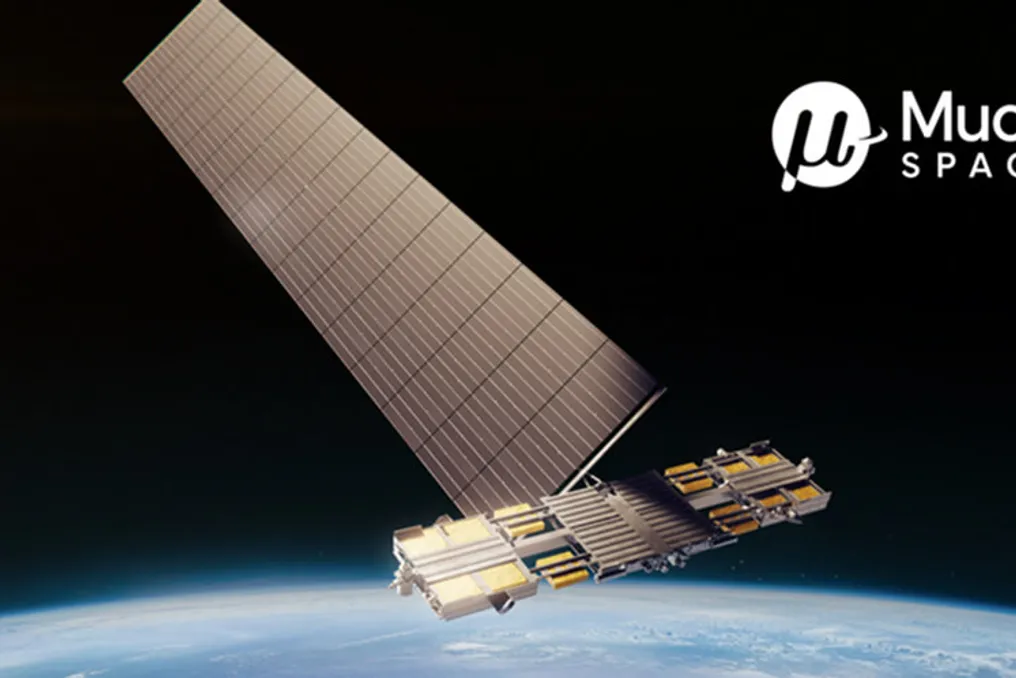
Muon Space has raised $250 million in a Series C round to implement a model that will allow it to scale up satellite production and view space infrastructure similarly to cloud infrastructure. This change allows for the reduction of procurement cycles from a potential 18 months.
Instead of creating unique spacecraft, Muon has developed a factory model it calls 'Mission Foundry.' This system includes standardized high-performance satellite platforms that can be adapted for various tasks. The same basic hardware can perform tasks in climate science, defense intelligence, and commercial Earth observation without the need for redesign; only the software and payload need to be replaced.
To realize this vision, Muon opened a 130,000 square foot facility in San Jose. This factory is automated and designed for mass production. The company's goal is to reach a rate of 500 satellites annually by 2027, representing a tenfold increase over previous output.
The $250 million raised will be used to finance this expansion. The round was led by Eclipse Capital, with strategic investors including Google, Salesforce Ventures, Galvanize, and Wellington Management. The company's total equity financing now exceeds $386 million.
Investors commend Muon's achievements, noting that the company has successfully launched 11 satellites across six missions without any failures, and this equipment is operating in real networks. One key project is FireSat, which was created in collaboration with Google Research and the Earth Fire Alliance. This group is designed to detect forest fires in their early stages, when they are still the size of a classroom, to provide timely alerts before the fire spreads.
Muon's hardware is now integrated into national security infrastructure. The company has secured multi-million dollar contracts with the U.S. Space Force and the Missile Defense Agency to supply dual-use platforms used for both environmental monitoring and defense needs.
The new capital will also be used to solve two bottlenecks. First, implementing artificial intelligence on board the satellites to instantly analyze images directly in space. Second, integrating SpaceX Starlink communication for real-time, high-throughput data streaming with minimal latency.
Space has ceased to be merely a laboratory experiment; it has become an integral part of the modern economy, providing weather data, defense services, communications, and climate information. The startup asserts that such functions cannot be realized with custom-built equipment. A production line is necessary to ensure volume, reliability, and rapid iteration. With the new factory and funding, Muon aims to become the AWS equivalent in the space industry: providing standardized platforms, deploying them at scale, and continuously updating them.