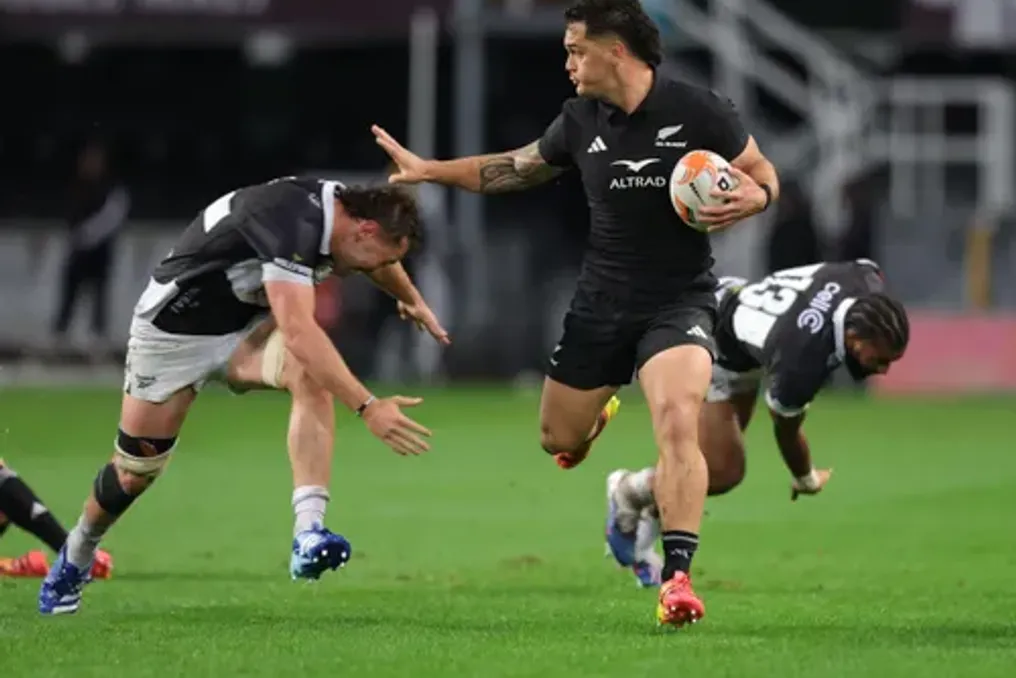
Five key confrontations that could determine the outcome of the first match between Springboks and All Blacks
Read more
IOL
iol.co.za

Five key confrontations that could determine the outcome of the first match between Springboks and All Blacks

In the largest rugby rivalry, which will take place in the first test match between the Springboks and the All Blacks, attention is focused on several individual clashes capable of influencing the course of the game.

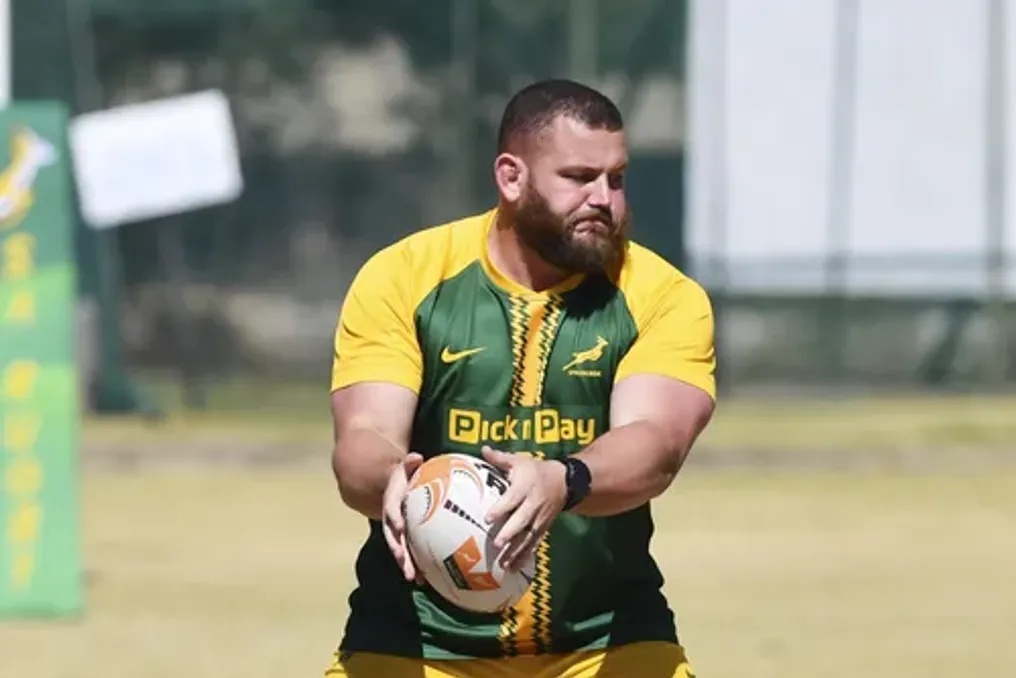
Tighthead Wilco Louw is expected to lead the Springbok charge against the All Blacks in the opening match of this great rivalry, set for Saturday. As team lineups are no longer state secrets, all attention is now directed towards the first confrontation between the Springboks and the All Blacks, which will take place at Ellis Park in Johannesburg (starting at 17:00 local time).

This debut match is expected to set the tone for the entire series, and among the general battles, several individual duels could play a decisive role in the development of the game. The publication IOL Sport has examined five such duels that could prove to be turning points during the clash of these two heavyweights in Johannesburg.

Rugby Rivalry

The battle for the tighthead position promises to be one of the most intense at Ellis Park. Strong Wilco Louw will face All Blacks player Ethan de Groot, who specializes in scrum disruption. Louw's power and experience will be crucial as the Springboks aim to establish dominance in the scrums, especially considering the additional physical challenge posed by the altitude.

Meanwhile, De Groot is an aggressive scrummager who will seek to test the Bok lineup early. If the All Blacks can disrupt the Springboks' platform in the scrum, it could put pressure on the home side's attack. For Louw, a victory in this battle could lay the foundation for everything that follows.

Another important matchup is the confrontation between Juan Northe and Fabian Holland. Northe faces a tall Holland in a potentially gripping battle in the out-line. Northe possesses extensive experience in the out-line, physical strength, and growing influence in the Springboks squad, while Holland has quickly established himself as a mobile and athletic forward for the Kiwis.

The battle in the out-line will be particularly significant as both teams strive to disrupt the opponent's possession in the scrums. Northe is also expected to be actively involved in play across the field, and if he demonstrates physical strength, the Boks will gain an extra player capable of carrying the ball. Who prevails could give their team valuable control over the pace of the game.

Another highly anticipated match is the meeting between Jasper Wiese and Ardie Savea. The Springboks' number 8 has transformed into a reliable ball carrier, known for his tireless work rate and presence in the ball contest. He will be the one the Boks rely on for forward momentum, especially after the initial set piece and in pick-and-go attacks. However, Wiese will face one of the most versatile forwards in modern rugby, and Savea's ability to influence the game from anywhere makes him a constant threat. Both players are expected to be heavily involved in the ball contest, defense, and carrying the ball; this could be the main battle in this major confrontation.

The duel between Sacha Feinberg-Musengu and Ruben Law may bring much intrigue, especially because both players are capable of injecting unpredictability into the game. Feinberg-Musengu will be responsible for managing the Springboks' attack and overcoming the pressure associated with facing the All Blacks' defense. Law, in turn, possesses speed, attacking instinct, and the confidence to punish any defensive error from his opponents. Both players are relatively new to the international arena, and the outcome of the confrontation may depend on who handles the pressure and the moment better.

They will have dangerous attackers outside of them, so their decisions on releasing these players could be crucial.

Midfield Battle Between Damian de Allende and Jordie Barrett

The midfield battle between de Allende and Barrett has all the ingredients for a fierce confrontation. De Allende, playing his 101st test match, brings physical power and defensive solidity that have made him a valuable asset in the Springboks' midfield, while Barrett offers the All Blacks a powerful combination of size, skill, and attacking intelligence.

De Allende's ability to win collisions and close space will be tested by Barrett's running lines and ball distribution. Conversely, the Springboks' midfield will attempt to pressure the All Blacks through direct ball carrying and searching for a 'soft shoulder' to create space. In a match where the difference can be measured in centimeters, this midfield confrontation could play a huge role.
Similar stories

New Trophy Concept for the Springboks vs. All Blacks Match Series
Read more
iol.co.za

New Trophy Concept for the Springboks vs. All Blacks Match Series

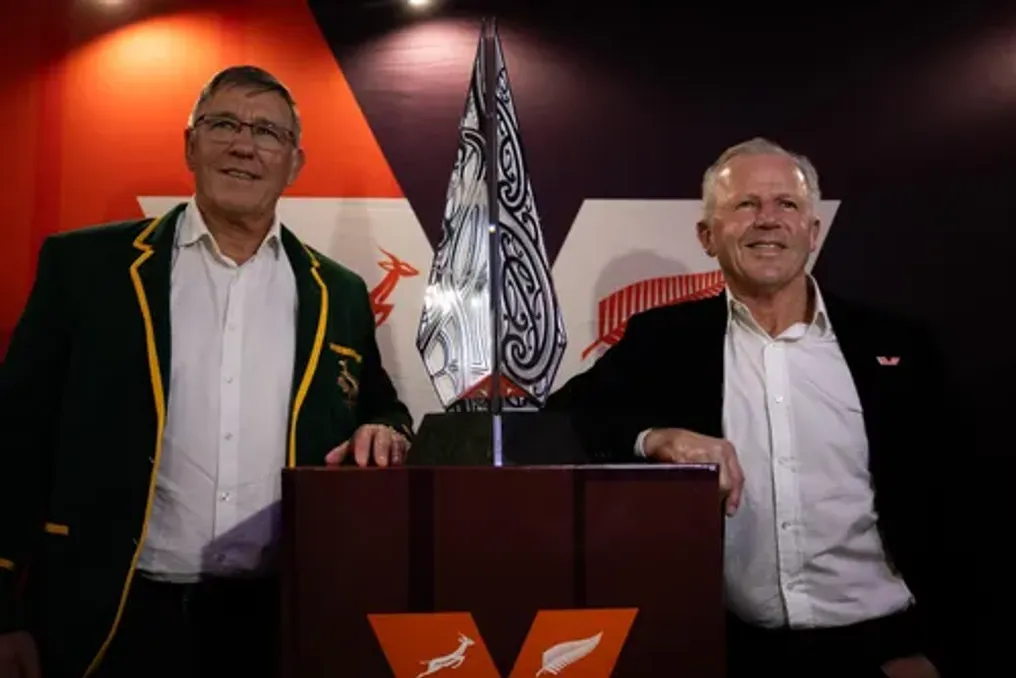
The series of matches between the Springboks and All Blacks, titled 'Rugby's Greatest Rivalry,' unveiled an unusual trophy in Johannesburg on Wednesday. This trophy consists of two half-trophy elements connected by hidden magnets.

The trophy concept is designed to reflect the nature of the relationship between the two national rugby teams: they are characterized by strong independence and pride in their distinct identity, yet they are inextricably linked by one of the greatest rivalries in sports.

The trophy was presented by the captains of the 1996 series—Springboks standout Gary Tahimann and All Blacks legend Sean Fitzpatrick.

The winners of the four-match tour will take both half-trophy elements after the final match, which will take place in Baltimore on September 12th. If the series ends 2–2, each country will retain one half-trophy element.

SA Rugby CEO Rian Oberholzer noted that the decision to divide the trophy was partly due to the possibility of a draw in the series. He stated that the agencies' task was to create a unique trophy that conveys the essence of the rivalry.

Oberholzer added that the development included the premise of dividing the trophy into two parts to symbolize the two sides of the rivalry, or that each nation could keep one half in case of an equal outcome. He also emphasized that since this is the eighth of twelve tours, comprising four matches, it seemed inappropriate to determine a winner based on an arbitrary criterion if each team won two matches.

This trophy is also a tribute to history, as the first two tours between the Springboks and All Blacks, held in 1921 and 1928, also ended in a draw.

The trophy itself is shaped like a blade of grass, symbolizing the experience of every athlete who has participated in this confrontation. It consists of two separate blades of grass: one represents South Africa, and the other represents New Zealand. Each blade separately demonstrates the uniqueness of the culture and history of the two countries, but together they form a single trophy.

Each blade, standing 65 cm tall, is made with high precision from solid aluminum and weighs 7 kg. The base, weighing 9.5 kg, is made from two different stones: black Pakoche from Aotearoa-New Zealand and green Verdite from South Africa. Artistic embellishments from artists from both countries are also placed on the blades.

The South African half is decorated with a work by Bonolo Chepape, whose layered patterns refer to community, culture, and shared experience, reflecting the idea that sporting greatness is never achieved alone. The New Zealand blade features a piece by Kereama Taepa, inspired by the Māori myth of the creation of Tane and Wiremu, two brothers striving for the same goal through different paths.

The design and creation of the trophy took a year, and it will participate in the competition for the first time when the Springboks and All Blacks meet at Ellis Park on Saturday.

Springboks vs. All Blacks rivalry remains the greatest in rugby after 105 years
Read more
iol.co.za

Springboks vs. All Blacks rivalry remains the greatest in rugby after 105 years

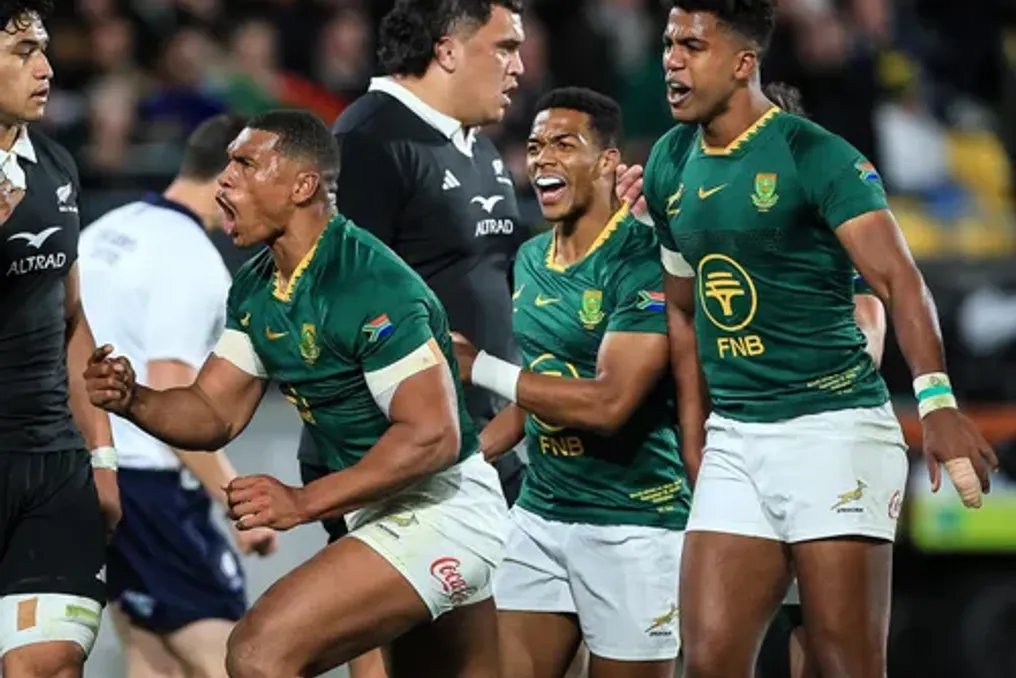
After 105 years, the rivalry between the Springboks and the All Blacks continues to be considered the most significant in world rugby. When the 'Greatest Rugby Rivalry' tour between New Zealand and South Africa was first announced, some critics dismissed the title as arrogant. However, it is difficult to surpass the unending drama that has existed between these two teams for over a century.

Although there are long-standing and exciting confrontations, such as England versus France or New Zealand versus Australia, the uniqueness of the All Blacks and Springboks matches lies in the fact that since their first meeting in 1921, both teams have regularly competed for the title of world champion—first unofficially, and then officially.

History of the Rivalry

When the Springboks first visited New Zealand in 1921, the series of three matches ended with one win and one draw. Since then, both teams have consistently been among the world's best, often occupying the No. 1 or No. 2 positions in world rankings. As early as 1928, series in South Africa were positioned as a contest to determine the best team in the world. This was true in subsequent series in 1937, 1949, 1956, 1960, 1965, 1970, 1976, and 1981. Even the Cavaliers sporting tour from New Zealand to South Africa in 1986 pitted the two strongest teams in the world against each other.

After South Africa emerged from international isolation in 1992, the countries played 37 matches since 1921. The Springboks won 20, the All Blacks won 15, with two draws. Then came the era of the World Cup, which began in 1987 and was created to determine the best rugby team on the planet.

The All Blacks won the first World Cup, but the Springboks did not participate due to South Africa's sporting isolation. When the Boks finally entered the tournament in 1995, they won the Webb Ellis Cup in their first appearance. Over the past 10 World Cups since 1987, Australia has won twice, England once, and the remaining titles have been shared by the Springboks (four) and the All Blacks (three).

Recent Dynamics of the Rivalry

There were only one or two periods when the balance of power in this rivalry could be reasonably questioned. Between 2001 and 2006, New Zealand defeated South Africa eight times in a row. Later, in 2016 and 2017, the All Blacks scored 57 points against the Boks twice. However, after Rassie Erasmus started working with the Springboks, the balance of power changed drastically. South Africa won five of the last six encounters, including the epic 2023 World Cup final in Paris. And in the latest match in 2025, the rugby world was stunned by how the Springboks defeated the All Blacks 43–10 on home soil in Wellington.

Interestingly, throughout the entire 105-year history of this confrontation, New Zealand traditionally held an advantage when visiting South Africa. However, the situation is changing this year. For the first time, the Springboks are playing a series against the All Blacks at home as clear favorites, expecting four matches as part of the 'Greatest Rugby Rivalry' tour.

Preparation for the first match at Ellis Park next Saturday, August 22nd, promises to be thrilling. Questions arise: can the tight five of the All Blacks withstand the fierce physical power of the Springboks? Does New Zealand possess sufficient squad depth to remain competitive over four matches, especially considering expected injuries? Can the All Blacks find a way to overcome the suffocating defensive system of the Boks? And can South Africa cope with the high-tempo attack presented by New Zealand's athletic backline?

These questions will soon receive answers. The opening chapter of a new era is set to be written into the folklore of a rivalry that has defined the highest standards of international rugby for over a century. Calling it arrogance is your right. But the history of 105 years proves that the title of 'Greatest Rugby Rivalry' between the Springboks and All Blacks is deserved.

All Blacks demonstrated their readiness for any conditions to the Springboks during the great rivalry
Read more
iol.co.za

All Blacks demonstrated their readiness for any conditions to the Springboks during the great rivalry

After two matches on South African soil, the All Blacks showed the Springboks that they are ready to adapt to any challenges posed by the great rugby rivalry.

In the first match, the teams secured a tight victory over the Stormers in Cape Town. However, on Tuesday, they displayed a completely different level of play, achieving a convincing 54-0 victory over the Sharks in Durban, despite extremely difficult weather conditions.

This result highlighted the team's ability, under the guidance of Dave Rennie, to adapt to circumstances. Despite the rain and slippery surface, the team maintained its attacking potential and also demonstrated an ability to win using a more pragmatic approach.

These actions did not go unnoticed by the Springboks' head coach, Rassie Erasmus, and his coaching staff, who closely studied the All Blacks' game ahead of the first test match next Saturday at Ellis Park stadium.

In the wet conditions, New Zealand's attacking power was not suppressed; their passing game was particularly impressive, as they repeatedly found space behind the Sharks' defense. The team's ability to recognize opportunities and change tactics in difficult situations will be another warning for the world champions.

The third and final match against the United Rugby Championship team will take place on Saturday when the All Blacks face the Bulls at Loftus Versfeld in Pretoria. This match presents a different challenge, as the altitude will test the visitors after they have faced contrasting conditions in Cape Town and Durban.

Loftus, located at an altitude of approximately 1,350 meters above sea level, will provide the All Blacks with a final test before traveling to Johannesburg for the first test match. If they can overcome the effects of altitude and show another convincing performance, the New Zealanders will conclude an impressive three-match cycle against top South African teams in the URC.

More importantly for the Springboks, the All Blacks demonstrated across three very different environments that they are not preparing for the great rivalry using only one style of play. Although they intend to dominate the Bokke through their polished technique and high-tempo style, they can easily switch to a more measured approach when the situation demands it.

Regardless of the conditions awaiting them at Ellis Park, Erasmus will know that they will likely be prepared after these three encounters.

Popular