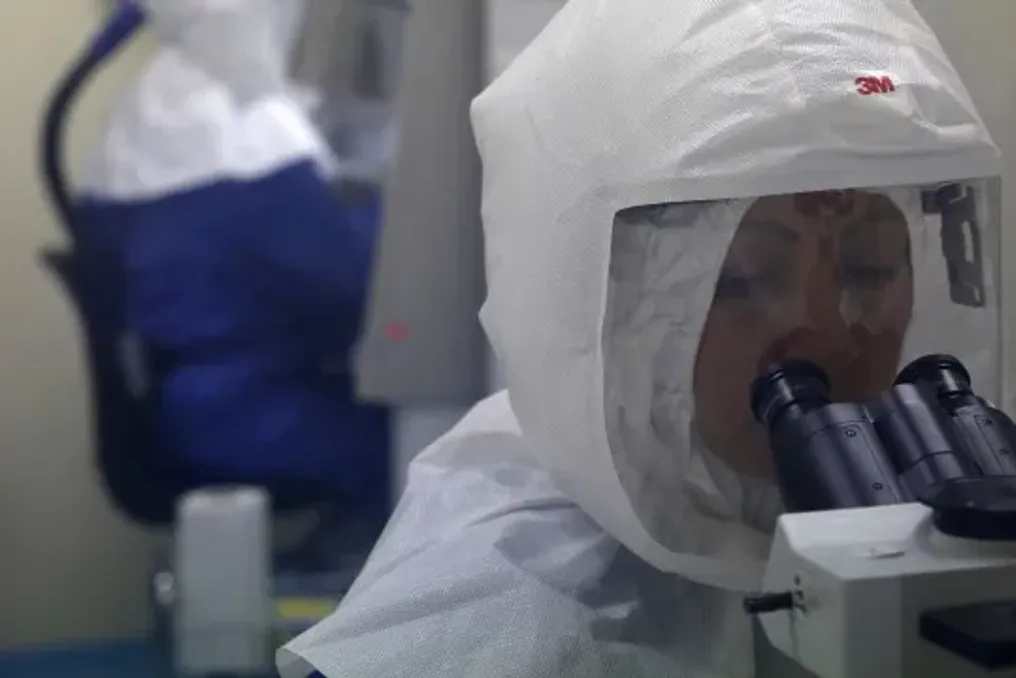
WHO makes 70,000 doses of Ervebo vaccine available to combat Ebola outbreak
Read more
Noticias ao Minuto
noticiasaominuto.com

WHO makes 70,000 doses of Ervebo vaccine available to combat Ebola outbreak

The World Health Organization (WHO) announced the availability of 70,000 doses of the Ervebo vaccine. This batch includes 20,000 doses designated for a Phase 3 clinical trial, aimed at analyzing the vaccine's effect against the Bundibugyo virus, and 50,000 doses reserved for healthcare professionals and frontline workers.

Although there is no confirmation yet that the Ervebo vaccine, which was specifically approved for the Zaire strain of the Ebola virus, can protect against the Bundibugyo virus, initial data obtained in laboratories and animals indicate that it may offer some protection.

The epidemiological situation in the Democratic Republic of Congo (DRCongo) is serious, with the outbreak having already caused 2,476 deaths and recorded 5,208 confirmed cases, according to data released today by the government of Kinshasa. This establishes this Ebola outbreak as the deadliest ever documented.

In a meeting of the Emergency Committee, convened under the International Health Regulations to assess the epidemic, the WHO Director-General, Tedros Adhanom Ghebreyesus, warned that the epidemic is far from being controlled. He stressed that the risk of wider dissemination within the DRCongo and to other nations remains high.

Adhanom Ghebreyesus stated three months ago that the epidemic caused by the Bundibugyo virus in the DRCongo constituted a public health emergency of international concern. He added that since then, the disease has spread rapidly, keeping the risk of national and international propagation high.

According to recent WHO information, the Ebola virus began circulating in the eastern region of the DRCongo in February. However, a study published in the journal Science at the end of July hypothesized that the first infections might have occurred even earlier, possibly in January.

After the declaration of the epidemic in the Ituri province, the virus spread to neighboring Uganda. This country had declared itself Ebola-free on July 28, after recording 20 confirmed cases, 15 of which were classified as imported from the DRCongo, including two deaths.

The current epidemic is linked to the Bundibugyo strain, characterized by a fatality rate ranging between 30% and 50%. The WHO reports that there is no authorized vaccine or specific treatment for this strain.

The Ebola virus is transmitted through direct contact with the body fluids of infected individuals or animals and manifests with severe hemorrhagic fever, vomiting, diarrhea, and internal bleeding.
Similar stories

Ebola deaths in the Democratic Republic of Congo reach 1,887
Read more
noticiasaominuto.com

Ebola deaths in the Democratic Republic of Congo reach 1,887

According to the latest report released by the Congolese Ministry of Communication, with data collected until Thursday, the number of Ebola-related deaths has risen to 1,887. This figure represents an increase of 37 confirmed deaths compared to what was announced on Friday by the United Nations High Commissioner for Refugees (UNHCR).

The Congolese Government also reported that the number of infected individuals has grown, reaching 4,120 people, an increase from the 4,053 recorded on Friday. The fatality rate, calculated as the proportion of deaths relative to the total number of sick people, rose to 45.8%, slightly up from the 45.7% previously reported by the Government.

The Congolese Ministry of Communication detailed that 721 patients are in isolation or hospitalized, while 810 people have recovered from the disease. Furthermore, the contact tracing rate was registered at 83.7%.

So far, five Congolese provinces have been affected by the Ebola epidemic: Ituri, which is the epicenter of the outbreak; North Kivu, South Kivu, and Haut-Uele, located in the east, in addition to Tshopo, situated in the north-central region, according to the Government.

The Congolese ministry specified that the epidemic remains concentrated in 53 health units distributed across these five provinces, with Ituri being responsible for 86.5% of the accumulated cases.

On Friday, the current epidemic was classified as the second largest outbreak in recorded history and the largest in terms of infections in the DRC. This scenario surpasses the outbreak that occurred in the eastern part of the country between 2018 and 2020, which resulted in 2,299 deaths and 3,481 cases, as reported by the Spanish agency Efe.

According to the same source, this mark represents the seventeenth epidemic to affect the DRC and has the fastest documented growth rate of infections, according to the World Health Organization (WHO).

Although the current epidemic was declared on May 15th in Ituri (a border province with South Sudan and Uganda), it still does not compare to the worst in history, which occurred in West Africa between 2014 and 2016, causing approximately 11,000 deaths and 28,000 infections, according to Efe.

The epidemic in question is associated with the Bundibugyo strain, whose fatality rate fluctuates between 30% and 50%. The World Health Organization clarifies that there is no authorized vaccine or specific treatment for this strain.

The Ebola virus is transmitted through direct contact with body fluids of infected humans or animals and can cause severe hemorrhagic fever, vomiting, diarrhea, and internal bleeding.

Popular