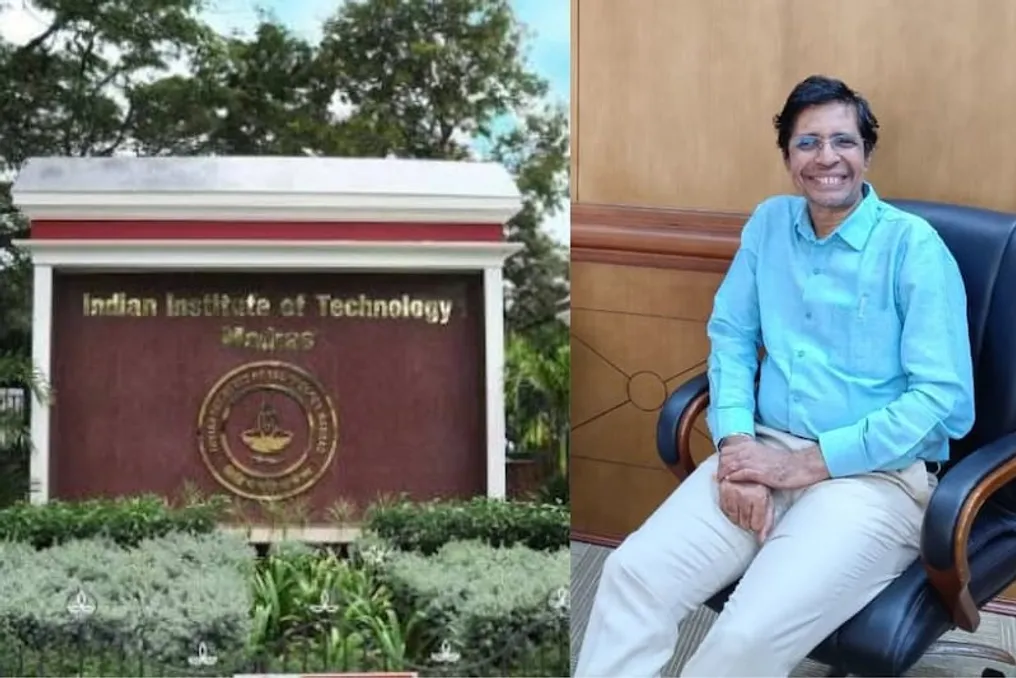
Historically, IIT Madras has been associated exclusively with world-class engineering education, where systems are created, codes are written, and mechanisms necessary for the country's functioning are developed. However, a completely new vector of development is about to emerge at this prestigious educational institution: in addition to specialists in creating machines, doctors capable of treating people will also be trained.
In an exclusive interview with India Today, IIT Madras Director, Professor V. Kamakoti, announced plans to launch its own 'School of Medical Sciences' and provide medical degrees. Professor Kamakoti emphasized that launching such an educational institution will strengthen the institute's status.
He specified that the institute intends to offer a full range of medical qualifications: MBBS degree at the undergraduate level, MD at the postgraduate level, and PhD for scientific research.
IIT Madras's work in this area did not start from scratch. As early as May 2023, the institute launched the 'Department of Medical Sciences and Technology,' which became the first such division in India. This department implements a four-year undergraduate course, forming hybrid graduates—half engineers and half biologists. These specialists focus on developing medical software, implants, and scanners, rather than direct patient care.
There is a significant difference between these two fields. The existing department trains medical technologists and physiologist scientists—researchers who understand the language of both the human body and machines. The new 'School of Medical Sciences' will allow it to reach a higher level by graduating practicing physicians.
Professor Kamakoti clearly explained his position: 'Any technical institute must open a medical school. Otherwise, as a country, we cannot withstand the pressure of the global medical market.' His conviction was formed against the backdrop of the coronavirus pandemic, which demonstrated modern medicine's critical dependence on technology and the necessity of creating these technologies domestically instead of costly imports.
According to Professor Kamakoti, since a significant portion of high-tech medical equipment in India is still imported, the country needs to ensure that its doctors and engineers study together, think, and work in a unified language, designing their own devices.
Here, ambitious plans meet state regulatory norms. Medical education in India is entirely regulated by the National Medical Commission (NMC), which determines which colleges can operate and issue the MBBS degree. No IIT can unilaterally announce the opening of a medical college; official approval from the NMC and the presence of an active teaching hospital where students gain practical experience in patient treatment are required.
Nevertheless, a model already exists in the country. IIT Hardpur established its own hospital and received permission to launch MD courses, although the MBBS plan is still awaiting infrastructure. IIT Madras must also go through this long and complex path: first establish a hospital, and then obtain regulatory approval.
Despite all obstacles, IIT Madras has an advantage due to the presence of centers on campus such as the Centre for Medical Technologies and the Brain Mapping Institute. The department launched in 2023 is already collaborating with major city hospitals where engineers and doctors work together. Professor Kamakoti only wishes for the next generation of graduates to possess both these qualities.