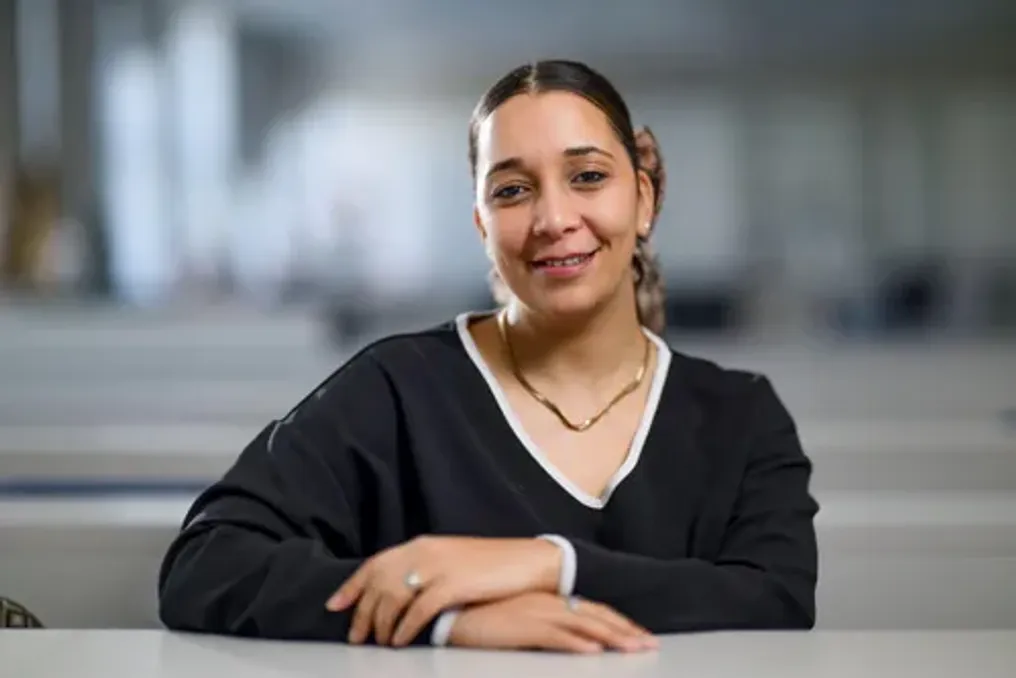
Delicia Davies, a research fellow at Stellenbosch University (SU), has become the first South African to receive the prestigious Einstein Scholarship. This achievement will allow her to move from Stellenbosch to the garden cottage of Albert Einstein's summer home in Caput, Germany.
Davies described the fully funded scholarship as a once-in-a-lifetime opportunity, noting that she has not fully grasped the news yet. The scholarship is provided by the Einstein Forum in collaboration with the Wittgenstein Foundation and is intended to support outstanding young intellectuals engaged in interdisciplinary research outside their original specialization.
As an early researcher, lecturer, and educator in the SU Department of Curriculum Studies, Davies plans to use this opportunity to study a topic of deep personal significance. Her project, titled 'Restorative Narrative, Memory, and Identity,' will analyze the stories of people who identify as coloured in South Africa and compare them with practices of public memory in Germany.
The idea for the project partially arose after the death of her father in 2023, just as she was beginning her doctoral dissertation. She noted that she realized how much she didn't know about him and his background, saying: 'You really don't ask until it's too late.'
These questions intersect with experiences that have already shaped her, including work as a Mandela Rhodes Scholar on reconciliation, participation in a housing provision team in Vilhelhof with Professor Pumla Gobodo-Madikizela and Dr. Wilhelm Verwuerd, and her involvement with the Hampshepe Commission. The scholarship research will begin with ten families, starting with students of her generation, and then trace their stories through families and communities.
She hopes to capture 'the complex stories, but also the rich heritage we have.' Davies added that she does not know where the research will lead, but considers it important both for herself and for the broader narrative that society has yet to address.
Davies grew up in Delft, attended an 'Ex-Model C' type school in Parow, and enrolled at SU in 2012 as a first-year student in the Irene dormitory. Initially, she planned to become a teacher of mathematics and natural sciences, but pedagogy and the opportunity to influence future generations of teachers attracted her. She emphasized that the difference in scale between influencing one class of 30 children and influencing all future teachers who might eventually teach 30 or 40 children seems significant.
Her doctoral dissertation, which is in its final stages under the supervision of Professor Jonathan Jansen, examines how final-year teachers understand the use of technology and how life experience shapes their perspectives. In class, Davies has established herself as someone who does things a little differently. She uses digital quests where students solve problems collaboratively, think critically, and master course material in unconventional ways.
However, her interest in technology is accompanied by caution. Davies expressed concerns about 'cognitive offloading' through artificial intelligence, where students might produce polished work without experiencing the struggle and uncertainty often associated with learning. She warned: 'There is a facade of innovation that could actually harm us more than save us.'
Her main question is not whether technology should be rejected, but what part of the work should be delegated to it and what must remain human. Such thinking is also at the core of the SU agency's Digital Studio, which Davies founded and academically leads, bringing together students, scholars, and youth to explore how technology shapes learning.
Outside of research, she finds joy in cooking and hosting dinners, bringing together students, colleagues, and visitors. She notes that 'the conversation is never just about work. We talk about a million things.'
Davies lives with her husband and two cats in Harmony dormitory, where she serves as the dormitory manager. One student even jokingly called her a 'meta-human.' Despite scholarships, research, international conferences, and innovative teaching methods, Davies describes herself much more simply: 'At heart, I am a teacher,' she concluded with a wide smile.