Graphene, one of the crystalline forms of carbon, shares structural characteristics with diamond and graphite, presenting an extremely thin laminar structure with a vast surface area. This configuration grants it high mechanical strength, good thermal stability, and high electronic conductivity.
Thanks to its unique physicochemical properties, graphene-based nanomolecules have great potential for multiple applications. Although widely known in technology, such as in battery manufacturing, graphene is also being intensely investigated in the biomedical field, particularly in systems designed for drug delivery and release.
These nanoparticles function as vehicles capable of transporting drug molecules through the body. To optimize this function, the nanomaterials are combined with dendrimers—complex synthetic macromolecules characterized by a highly branched and regular structure—which significantly improves their solubility and facilitates interaction with biomolecules present in the organism.
Since it is composed solely of carbon and hydrogen, graphene has a composition similar to most structures found in human cells, and therefore is not classified as toxic, thus avoiding the activation of immune responses in the body.
In this scenario, researcher Beatriz Fumelli, a postdoctoral fellow at the USP Institute of Biomedical Sciences, began her studies focused on the biotechnological potential of this structure. She investigated nanoparticles called 'GOXP,' which are formed by graphene oxide (GOX) associated with polyamine dendrimer (PAMAM), using them as a support for an antitumor drug. However, before reaching this point, Fumelli followed an extensive scientific path.
The scientific trajectory began in 2017, when Fumelli was pursuing her undergraduate degree in Biological Sciences. In this initial phase, her focus was on understanding how these nanomaterials interact with biological systems, specifically with breast cancer-associated tumor cells.
The researcher emphasizes that, in an ideal scenario, the nanoparticle should not exert any action on the cells, implying that when used as a drug carrier, it must interact as little as possible with the organism without causing cell damage.
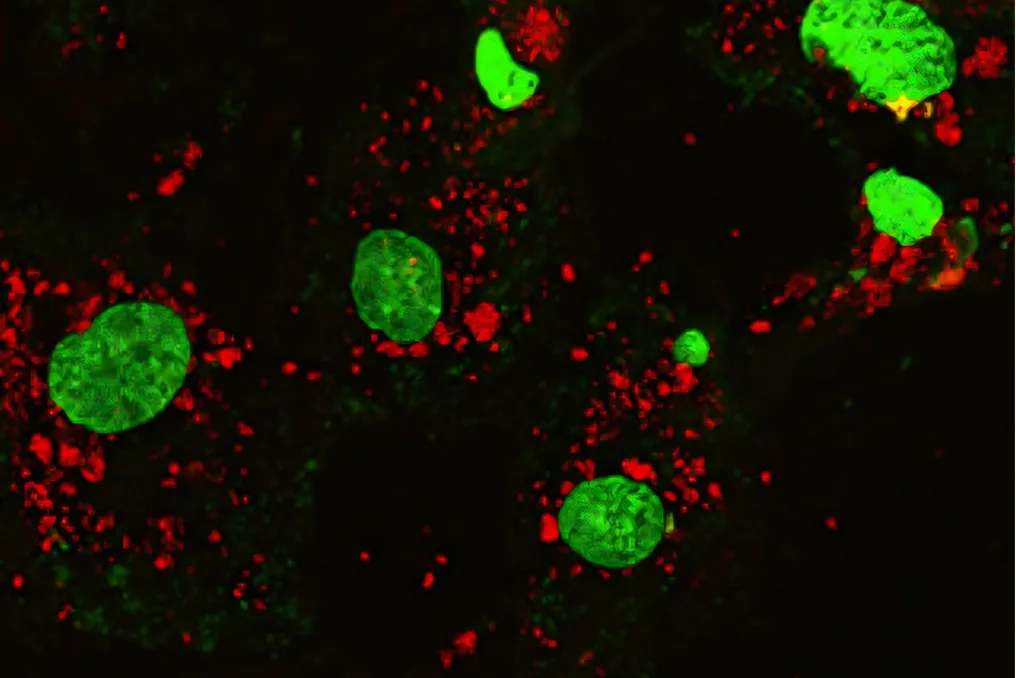
The GOXP used in the experiments was developed by Professor Devaney do Carmo's team, belonging to the State University of São Paulo (UNESP). In laboratory tests, different amounts of graphene nanoparticles were applied to breast cancer cells. The results showed that these nanoparticles not only adhered to the cell surface but were also absorbed by them, a crucial aspect for a drug delivery system.
Even at high concentrations, the nanomaterial exhibited low cytotoxicity, resulting in the death of a small fraction of the tumor cells, in addition to inducing morphological changes that altered their shape and size. Nevertheless, the general findings point to low interference from the nanoparticles in the tested cell lines.
To analyze the behavior of breast cancer cells exposed to GOXP in detail, researchers resorted to real-time microscopy. This method allowed observation of the tumor cells' reaction at the exact moment of interaction with the nanoparticles. The observation confirmed that the nanomaterial adheres to the cell surface, which facilitates its internalization in the form of aggregates, which subsequently fragment into smaller groups.
In this experiment, scientists observed that the cells transfer these aggregates to their daughter cells, a process compared to an 'inheritance,' which strengthens the potential of this material as a relevant therapeutic tool.
Considering that cancerous cells multiply very rapidly, GOXP would allow the internalized drug to be distributed to the new cells generated after cell division. Beatriz points out that 'this opens up a very interesting therapeutic window.'
After in-depth analysis of the characteristics of graphene nanoparticles and confirmation of their biotechnological potential, the researchers proceeded to test GOXP loaded with an antitumor drug, doxorubicin (DOX). Several assays were conducted both at USP and at the University of Groningen, Netherlands, where Fumelli completed her doctorate. They evaluated the efficacy of this treatment in various types of breast cancer cells.
The researchers noted that the drug linked to GOXP proved more efficient compared to its isolated use, eliminating a greater number of tumor cells in graphene-based treatments. Additionally, DOX was released from the nanoparticles gradually, promoting progressive cell death over time.
Fumelli further emphasizes that the triple-negative breast cancer cell line—a more aggressive subtype of the disease for which there is still no specific treatment—showed greater susceptibility to GOXP-linked doxorubicin, signaling a higher sensitivity of this lineage to nanomaterial-mediated treatment.
In summary, these results suggest that GOXP functions as an effective and biocompatible drug delivery platform, positioning it as a promising tool for biomedical applications. However, additional studies, both in vitro and in vivo using animal models, are necessary to fully understand the behavior of GOXP in the organism, evaluating its pharmacokinetics, biodistribution, efficacy, and biocompatibility characteristics.