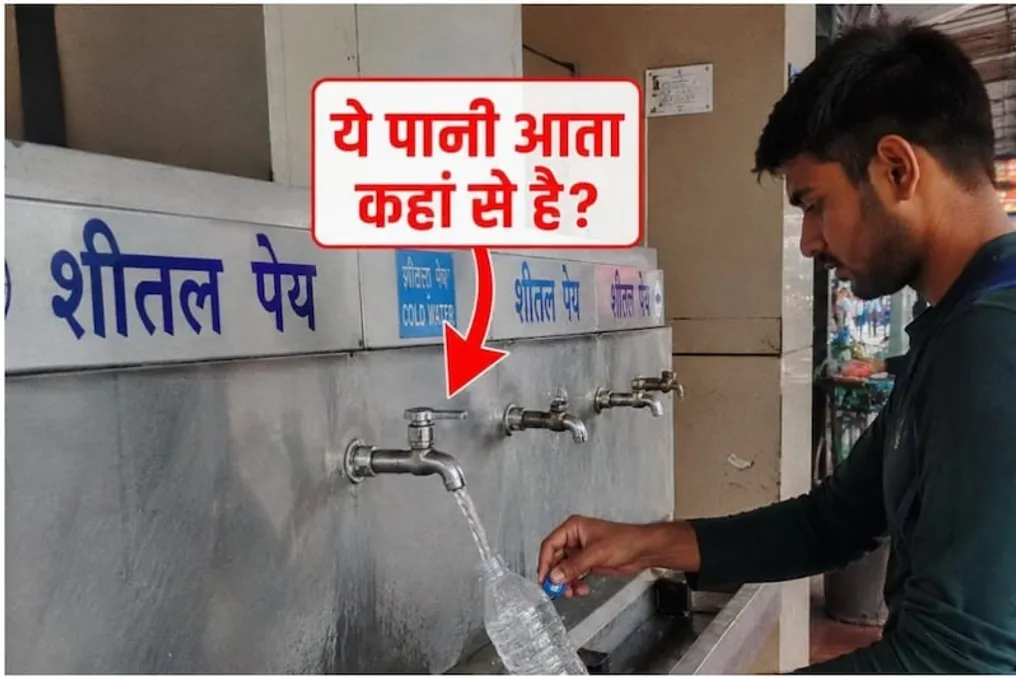
Every railway station is equipped with two types of water supply: one is water loaded into train tanks, and the second is drinking water. This raises the question of the origin of this drinking water and whether it undergoes filtration. A recent report revealed the presence of various bacteria in the drinking water available at many railway stations.
To understand the water supply system at the stations, it is necessary to know whether the water comes directly from municipal sewage pipes, how purification occurs if there are contaminants, and whether reverse osmosis (RO) systems are installed at all stations.
According to an audit report by the Court of Accounts (CAG), E.coli bacteria were found in water samples taken from coolers at several stations. These microorganisms can cause serious illnesses such as diarrhea and other health problems.
The CAG report recorded the presence of E.coli in samples from coolers at Koyambur and Pallakar stations (Southern Railway), Hyderabad (South Central Railway), Chhatrapati Shivaji Maharaj Terminus, Bivandi Road, Kalyan, and Lonavala (Central Railway), as well as at Madhupur station (Eastern Railway).
Water sources at railway stations vary. According to official railway documents, water is supplied from wells, boreholes, rivers, or canals. If there are problems with groundwater, the water supply is provided through municipal services.
However, the water does not go directly to the taps after being extracted from the well. There is a separate water quality treatment system. Filtration, chlorination, and, if necessary, other methods are used to make it potable. After this, the water is placed in large storage tanks and distributed to different parts of the station via pipelines.
Despite this, not all stations use an RO system for purification; there are other ways to make the water drinkable. The railway has established certain standards for the water, and it is only sent further after meeting these parameters. Various water indicators are checked, including pH, TDS, turbidity, hardness, and fluoride. The water is dispatched only after it meets the established norms. Simply put, the water comes from a source at the station, is then stored in one place, and delivered to the taps after it has been made potable.