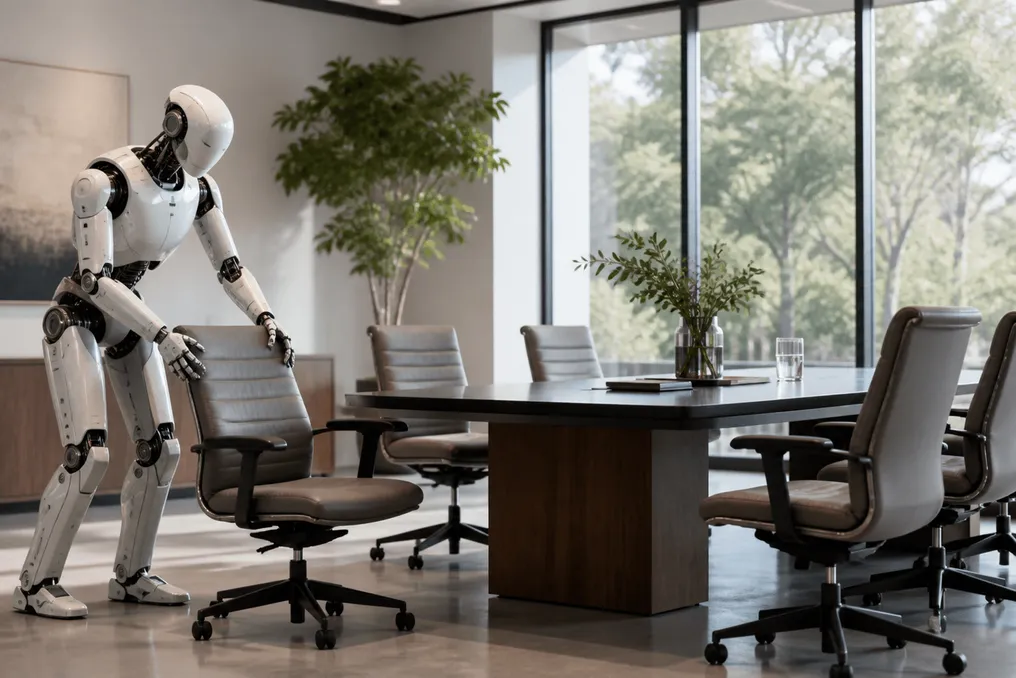
The humanoid robot sector is on the verge of reaching a significant milestone, comparable to what happened with ChatGPT, according to Wang Xingxing, CEO and founder of Unitree. This advancement refers to a crucial improvement in the processing capacity and decision-making of these machines.
Wang presented this perspective during the World Robot Conference held in Beijing, shortly after his company was listed on the Shanghai Stock Exchange. His statement comes at a time of great expansion in the sector in China, although the CEO himself acknowledges that current technology still has practical limitations.
According to the Unitree executive, the industry goal is to develop robots capable of being introduced into unfamiliar homes and still performing approximately 80% of household tasks by receiving simple instructions.
This autonomy capability, allowing robots to understand and execute orders without prior training, is seen as the essential factor for driving accelerated growth in the sector. Wang projected that a considerable leap in robot software could occur in two to three years under an optimistic scenario; however, if more complex technical obstacles arise, full evolution could take up to ten years.
The main hurdle pointed out by the executive lies in the ability of artificial intelligence (AI) models to interpret the real environment. Unitree dedicates a large part of its capital and team to developing simulation systems. Despite this, the CEO admitted that both the company and the sector are still lagging in the practical application of these tools.
Wang's company is a world leader in manufacturing robot dogs and holds the second position in humanoid robots. Currently, most of Unitree's sales are directed towards universities and research centers. Market interest was evidenced by the launch of its shares on the Shanghai Stock Exchange, where demand from retail investors exceeded the initial supply by more than eight thousand times.
The analysis of software challenges aligns with China's strong industrial dominance in this segment. The Asian country is responsible for 97% of global shipments of humanoid robots and recorded the delivery of over 40,000 units in the first half of 2026. The Chinese industry aims to intensify the transition of these machines to real-world testing in warehouses, factories, and homes, aiming to meet the demand for replacing repetitive tasks in the context of population aging.