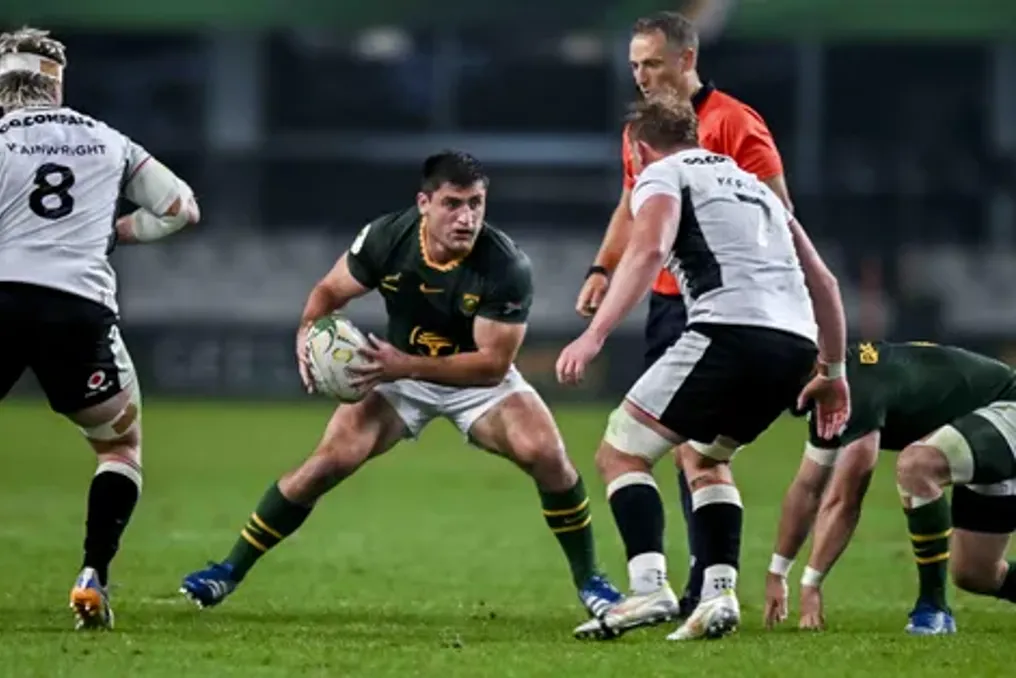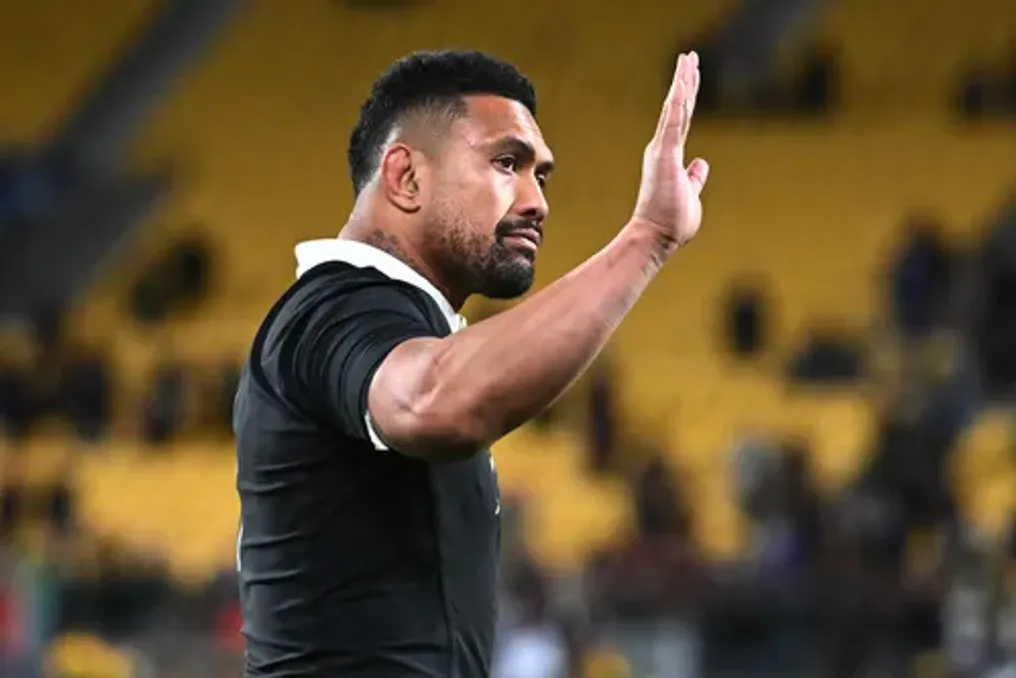
Ardie Savea to lead All Blacks squad against Springboks in Ellis Park match
Read more
IOL
iol.co.za

Ardie Savea to lead All Blacks squad against Springboks in Ellis Park match

All Blacks captain Ardie Savea returns to the team after a period of absence. All Blacks head coach Dave Rennie has formed a strong squad of 23 players for the opening match of the series against the Springboks, which will take place at Ellis Park on Saturday at 17:10. Key stars are included in the squad, debuting during this tour.

The Greatest Rugby Rivalry

Ardie Savea will once again lead the team in the number 8 position, becoming a central figure in the rebuilt backline alongside Luke Jacobsone and Tupo Va'a. The attacking line featuring Ethan de Groot, Cody Taylor, and Tyrel Lomax brings 203 matches of experience to contend with the powerful Springboks scrum. Josh Lord and Fabian Holland form an athletic pair in the second row.

Cam Rygaard debuts in the tour at the halfback position next to flyhalf Ruben Law. Jordi Barrett and Quinn Tupaea play in the center of the field, and the three players in the defensive line possess deadly attacking power. Will Jordan presents the team for the first time on the right wing opposite Josh Murby, while Damian McKenzie will occupy the fullback position, providing impetus for counterattacks.

Rennie chose a formation with a bench ratio of 5–3. It includes experienced players such as Asaph Aumua, George Bower, Fletcher Newell, and centre Anton Linet-Brown with 90 matches, as well as young talents: Peter Lakai, Anton Segner, Kyle Preston, and Leroy Carter.

All Blacks Squad for Ellis Park:

The main squad includes: 15 Damian McKenzie, 14 Will Jordan, 13 Quinn Tupaea, 12 Jordi Barrett, 11 Josh Murby, 10 Ruben Law, 9 Cam Rygaard, 8 Ardie Savea (captain), 7 Luke Jacobsone, 6 Tupo Va'a, 5 Fabian Holland, 4 Josh Lord, 3 Tyrel Lomax, 2 Cody Taylor, 1 Ethan de Groot. Reserves: 16 Asaph Aumua, 17 George Bower, 18 Fletcher Newell, 19 Anton Segner, 20 Peter Lakai, 21 Kyle Preston, 22 Anton Linet-Brown, 23 Leroy Carter.
Similar stories

Player Comparison: Sacha Feinberg-Mngomezulu versus Richie Mo’unga in the Context of the Springboks and All Blacks Rivalry
Read more
iol.co.za

Player Comparison: Sacha Feinberg-Mngomezulu versus Richie Mo’unga in the Context of the Springboks and All Blacks Rivalry

Flyhalf Sacha Feinberg-Mngomezulu has demonstrated an ability to change the course of play for the Springboks over the last few years. Amid the intensification of the main rugby rivalry, the emergence of the brilliant flyhalf Richie Mo’unga has attracted significant attention.

For two years, while Scott Robertson was managing the All Blacks, Mo'unga was in Japan, playing for Toshiba Brave Lupus under Dave Rennie. Mo'unga left New Zealand after the loss to the Springboks in the 2023 World Cup final—a match he nearly won for the New Zealand squad. Meanwhile, in South Africa, Sacha Feinberg-Mngomezulu was gaining momentum, whose play could resemble Mo'unga's audacious style.

It can be argued that since the last World Cup, Sacha Feinberg-Mngomezulu has become the Richie Mo'unga that the All Blacks desire. However, the 32-year-old player could not join the All Blacks due to an outdated rule requiring player residency in New Zealand for selection eligibility.

Mo'unga removed this obstacle by recently returning to Christchurch, where he played for Canterbury in the National Provincial Championship last week. The opportunity arose for him last week when Billy Proctor sustained an injury that ruled him out of the tour against the Stormers. Even before the doctor gave his prognosis, Rennie contacted Mo'unga.

Simply put, Mo'unga possesses a high level of skill. The All Blacks could not afford to leave him at home. Between his international debut in 2018 and his last match in 2023, Mo'unga played a key role in winning five Rugby Championship titles for the All Blacks. He also led seven Super Rugby winning campaigns for the Crusaders.

Naturally, Mo'unga will need to adapt to the current systems within the All Blacks camp. Nevertheless, he and Rennie have likely been in regular discussions since Rennie was appointed to this position on March 4th of this year. They also discussed many matters in Japan during the three months Rennie was still under contract with Brave Lupus.

Mo'unga missed matches against the Stormers and Sharks and is not included in the squad for the game against the Bulls this Saturday, making a start in the first Test unlikely. The only provincial match before this major opening fixture in Ellis Park will be on Tuesday against the Lions. Mo'unga might get game time in this match and then be ready to start the second Test in Cape Town.

However, a more probable and bold scenario is that he will be on the bench in the first Test. He is too good to be excluded from such a crucial opening confrontation in the four-match series. His participation changes the dynamic of the flyhalf battle. The Springboks possess the emerging brilliance of Sacha Feinberg-Mngomezulu, the attacking instincts of Mani Libbok, and the experience and temperament in big matches of Hendre Pollard. Now the All Blacks can respond with Mo'unga, Ruben Law, and Beauden Barrett. This depth at number 10 could prove decisive, given the level of attrition expected from the four Tests between these two heavyweight rivals. Thus, we may see a clash between Sacha Feinberg-Mngomezulu versus Richie Mo'unga, Mani Libbok versus Ruben Law, and Hendre Pollard versus Beauden Barrett. That is a solid collection of flyhalves.

Accusations of slowing the pace of the game could negatively affect the All Blacks during matches against the Springboks
Read more
iol.co.za

Accusations of slowing the pace of the game could negatively affect the All Blacks during matches against the Springboks

All Blacks coach Dave Rennie expresses a desire for referees to speed up the pace of matches during the biggest rugby rivalry. However, critics note that before complaining about the slow pace of the game, the coach should address the team's internal issues.

Despite the New Zealanders stating their desire to play at a fast pace, an analysis of the first two matches of the tour in the great rivalry shows that the game against the Springboks presents a completely different challenge. The New Zealand team faced two United Rugby Championship (URC) teams that were in pre-season form, and it is natural that the pace of the game against the world's second-ranked team eventually caught up with them in the second half of both encounters.

Nevertheless, the Boks players are prepared for high-intensity matches lasting over 80 minutes, and Rennie's team should be ready for a tense confrontation in the first match at Ellis Park stadium. This could become a psychological game on the part of the All Blacks coach, as New Zealand looked more composed in the last few matches between these sides when intensity increased.

Therefore, the comments of the All Blacks head coach after the first two tour matches should be viewed with caution, considering the upcoming match at altitude on Saturday, and then the match against the Springboks next week. This game will show whether the visitors can maintain the pace when their scrum is closely scrutinized by the world champions, and their rolling maul works in reverse, similar to what happened against the Stormers in the first match.

In the previous match, both teams slowed down the game when the Cape Town side still had energy, and the score was 14-14 at one point. However, the guests' excellent physical condition was demonstrated against two URC clubs, and it will be interesting to see if Rennie will stick to the same position after the first match.

Unlike Boks coach Rassie Erasmus, the New Zealand mentor interacted with the referees involved in the series and had the opportunity to convey to them points he would like to see in the matches for the first time. Erasmus recently expressed regret over the new protocols according to which official requests submitted by coaches are available to competing teams and other referees.

Erasmus reported last month how the system now works: 'Now the day referee sends you an email asking if you want to meet, and if both coaches do not agree, there will be no meeting; but if both coaches agree, they meet with the referee.'

This certainly makes the upcoming series interesting, but publicly expressing concerns about the opponent slowing down the game could cause problems for the All Blacks when they face the world champions.

How Rassie Erasmus might change the Springboks' bench composition due to Siya Kolisi's injury
Read more
iol.co.za

How Rassie Erasmus might change the Springboks' bench composition due to Siya Kolisi's injury

Springboks coach Rassie Erasmus faces a difficult selection challenge ahead of the upcoming test series against the All Blacks, as captain Siya Kolisi is once again in doubt due to a recurring hamstring injury.

Kolisi sustained the injury just 24 minutes into his return appearance against Argentina in Buenos Aires on Saturday. Although Erasmus remains optimistic about the severity of the issue, the short preparation window forces the coaching staff to develop contingency plans for both the backline combination and the bench squad.

If Kolisi cannot take the field, Paul de Villiers, a player for the Stormers, is the most likely candidate to start at open flanker. De Villiers demonstrated outstanding play during the World Club Championship in July, establishing himself as a key threat in ball retention and a dynamic ball carrier while Kolisi was on the bench.

However, promoting De Villiers to the starting lineup triggers a chain reaction in the match-day squad, particularly regarding who will provide late-game impact from the bench within the famous 'Bomb Squad.' Under normal circumstances, De Villiers would likely replace the dynamic Kwagga Smith, who is sidelined with a long-term knee injury.

If Kolisi were fit to play, De Villiers would provide an explosive, game-changing role off the bench in the traditional 6-2 ratio. If De Villiers starts, Erasmus must decide who will fill this critical role. Veteran Dion Fourie offers immense experience in ball retention and versatility, as he can play at hooker, making him an attractive option to replicate Smith's destructive impact late in the game.

Alternatively, Marco van Staden provides raw physical power and relentless work rate in tight spaces, offering a more direct, power-based impact, as well as a threat in the air.

The forward reserve group adds another interesting dimension to the discussion. Erasmus successfully utilized the heavy artillery bench against Argentina by bringing on two locks, Kobus Wiesse and Ben-Jason Dixon, to dominate set pieces and collisions in the final quarters. Repeating this tactic against New Zealand would allow them to maintain maximum power in the middle of the park, and their versatility also allows them to operate as backline players.

If the Boks opt for greater versatility at open flanker in the 6-2 setup, they might reduce the number of specialized locks on the bench to one. In that scenario, World Cup two-time winner Pieter-Steph du Toit could transition from blindside flanker to lock in the second half, allowing two specialized 'hunters' like Van Staden and Fourie to remain on the bench when the game becomes tight in the final quarter.

There is also the intriguing possibility of completely abandoning the 6-2 setup in favor of a 5-3 ratio. Such a move would likely depend on the inclusion of Andre Esterhuizen. This fast centre possesses the size, defensive aggression, and strength to act as a hybrid backline player in emergencies, providing the Boks with extra cover in the backline without completely sacrificing forward power.

Esterhuizen made a huge impression off the bench as a hybrid player against the All Blacks in Wellington last year, and he proved invaluable when the Boks were reduced to 14 men against France after Lud de Jager's red card during their November tour. Given that marginal differences will be decisive, Erasmus's final choice will hinge on the trade-off between raw forward depth and tactical adaptability. Replacing Kolisi's leadership and work rate will require a flawless combination of starting effectiveness and bench influence.

Popular