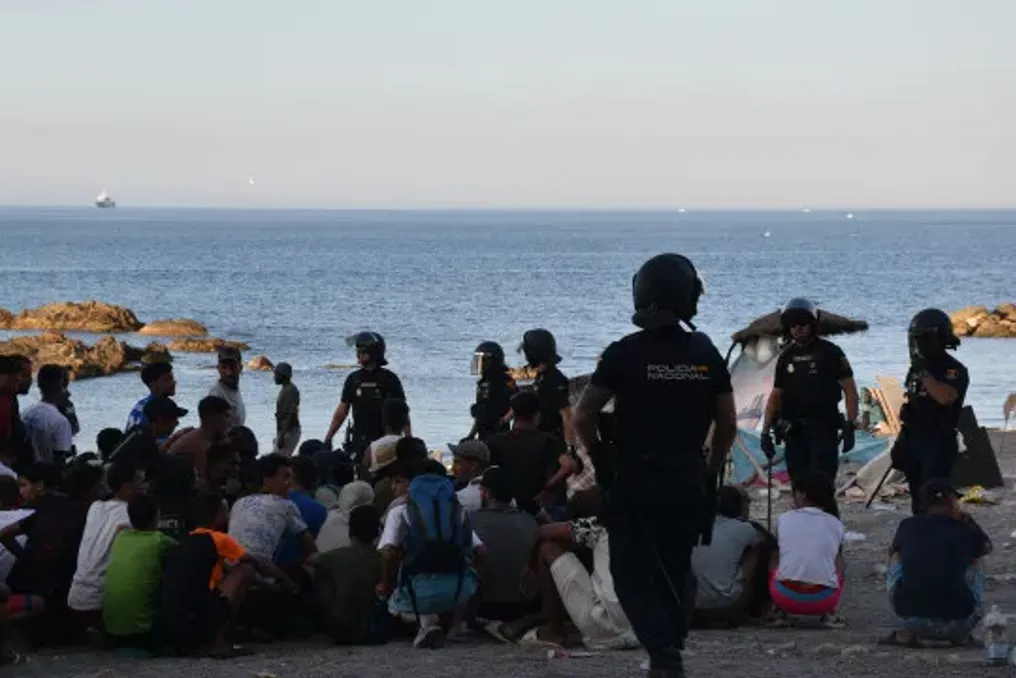
Spain provided temporary housing for 1800 migrants in Ceuta
Read more
Noticias ao Minuto
noticiasaominuto.com

Spain provided temporary housing for 1800 migrants in Ceuta

Spain began the voluntary transfer of migrants to temporary accommodations early on Thursday as part of a coordinated operation with the Civil Guard and the Government of Ceuta, according to sources from the Ministry of Integration, Social Security, and Migration.

Sources also reported the activation of temporary spaces in Loma Margarita and El Embalsamento, which will gradually expand as work on adapting other planned locations is completed.

The main goal of this intervention is to provide support to people in homeless situations in the Trampolín and Loma Colmenar beach area, offering them an alternative residence and reception so they do not have to spend the night on the street or on the beach itself.

The migration crisis in Ceuta occurred at the end of July when about 72,000 people entered the Spanish autonomous city located in North Africa in just 24 hours.

According to Spanish authorities, approximately 70,000 of them have already returned to Morocco. Furthermore, at least 82 people died while attempting to reach Ceuta by swimming.

According to the fact-checking organization Maldita.es, the situation was provoked by false messages spread online, including claims that migrants would be accepted in Spain.

As reported by Lusa this Thursday, after the crisis, more than 100 Instagram accounts containing content about migrant smuggling were deleted through cooperation between the European Commission, digital platforms, and fact-checkers.

Ceuta is a Spanish territory with a population of about 80,000 people, located in the extreme north of Morocco, and together with Melilla is one of the two land borders between Africa and Europe.

Similar stories

Spain creates 1500 temporary accommodation spots in Ceuta to respond to migration crisis
Read more
noticiasaominuto.com

Spain creates 1500 temporary accommodation spots in Ceuta to respond to migration crisis

Spain's Minister of Integration, Social Security and Migration, Elma Saiz, announced measures to create 1500 temporary accommodation spots in Ceuta during her visit to the city to monitor the migration crisis. She emphasized the critical importance of cooperation between various administrative bodies for the swift restoration of normal conditions in Ceuta.

The new facilities will be organized at the parking lot of the Loma del Colmenar reception center, in the equestrian center, on the former cavalry barracks football field, and in the area known as El Guano.

Elma Saiz arrived in Ceuta on Sunday evening. During her visit, she met with the president of the autonomous city, Juan Jesús Vivás, and the delegate of the Spanish government, Miguel Ángel Pérez Triano, where she was greeted with cheers.

Saiz recalled that her ministry had previously declared a state of emergency in Ceuta and allocated 6.5 million euros to strengthen humanitarian response in the Spanish enclave located in northern Morocco. The Red Cross has been given a priority role in assisting the most vulnerable people.

According to Saiz, the international organization distributes about 4000 food parcels daily and has already provided over 4000 social and medical assistance services since the beginning of the crisis. The minister also noted the contribution of other social organizations and residents' associations participating in helping migrants.

The government official defended the idea that the Spanish accommodation system is 'flexible,' explaining the creation of new temporary spaces as an adaptation of existing resources to the increased number of arrivals.

In response to questions about the overcrowding of the Temporary Immigrant Stay Center (CETI) and the thousands of migrants on Trampolín beach, the minister stated that the government is 'assessing' the situation but did not provide updated data on the occupancy rate of these sites.

Furthermore, when asked whether migrants arriving in Ceuta would be housed or deported, the minister assured that Madrid is acting 'in strict compliance with current national and European legislation.'

Saiz also stated that the executive branch, led by Prime Minister Pedro Sánchez, advocates for 'regular, orderly, and above all, safe' migration, viewing illegal immigration as a 'humanitarian tragedy' capable of causing loss of life.

The minister highly praised the reaction of the Ceuta population, calling it a 'model of coexistence,' but warned against attempts to use the migration crisis to spread 'hate speech' and create fear.

Over the weekend, hundreds of migrants attempting to enter the Spanish enclave of Ceuta by land and sea were detained by Moroccan security forces, according to Moroccan state television. According to the state channel Medi 1 TV, 294 sub-Saharan African migrants were detained on Saturday while attempting to enter Ceuta. Additionally, authorities detained 61 Moroccans accused of facilitating migration attempts, according to Medi 1 TV.

These border crossing attempts occurred following social media posts calling on migrants to head to Ceuta. In response, Moroccan and Spanish authorities increased security and restricted movement towards the region.

At the end of July, approximately 72,000 people entered the autonomous city of Ceuta, located in North Africa, within 24 hours, of which 70,000 returned to Morocco, according to Spanish authorities. Official figures indicate the death of at least 90 people on both sides of the border, although human rights groups report higher figures.

Ceuta, a small region with a population of 80,000, bordered by the Strait of Gibraltar, is one of two land borders between Africa and Europe, alongside the other Spanish enclave of Melilla.
Local government reports that there are between 8,000 and 11,000 migrants in Ceuta
Read more
noticiasaominuto.com

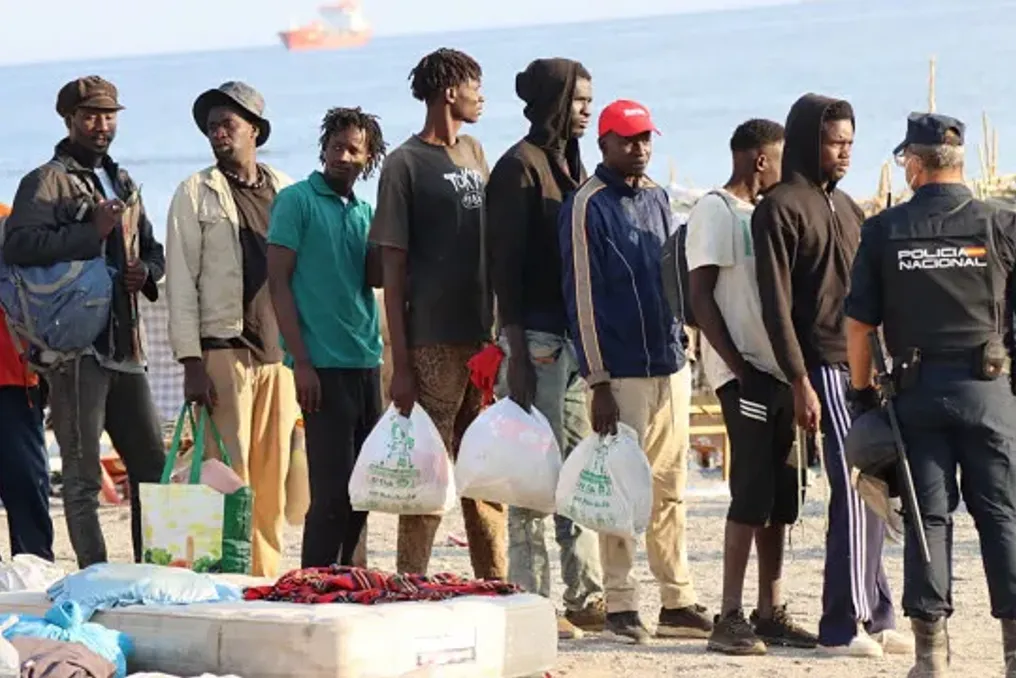
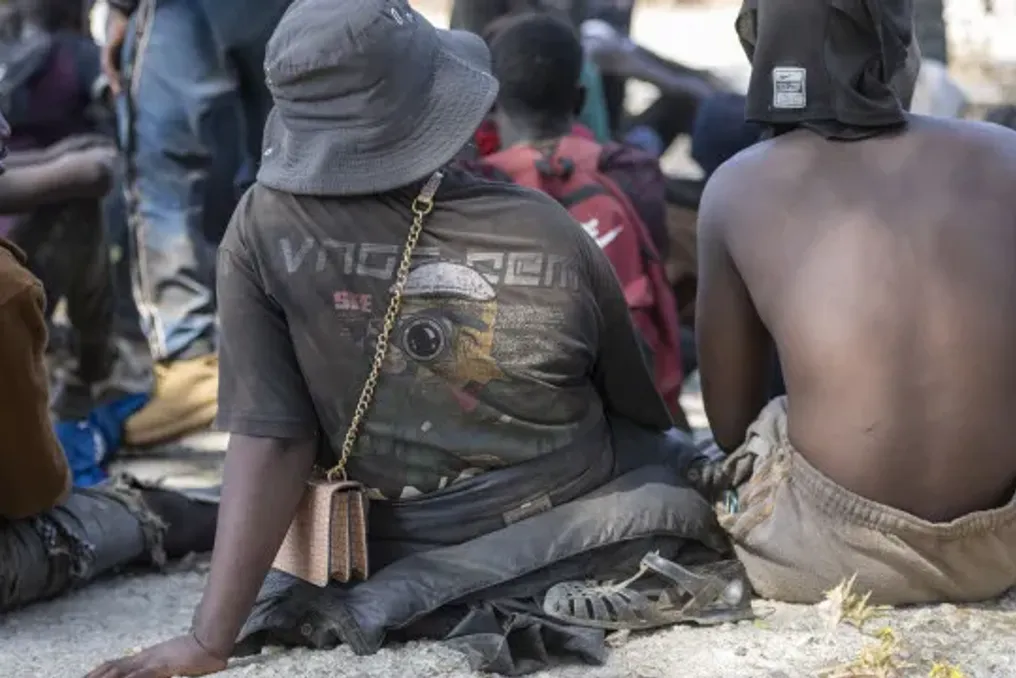
Local government reports that there are between 8,000 and 11,000 migrants in Ceuta

The local government stated that between 8,000 and 11,000 migrants continue to be present in Ceuta. The Chairman of the Executive Power of Ceuta spoke after an extraordinary meeting of the City Government Council, which was convened to analyze the situation eight days after the mass arrival of people from Morocco.

The Chairman of the Executive Power of Ceuta demanded that the central government accelerate the return of migrants to Morocco, calling it the 'only way out' to resolve the 'absolutely unstable' situation. He rejected claims about the normalization of life in the city and questioned the figures presented by the central government, which, according to him, indicate about 2,500 people remaining in Ceuta.

'Estimates suggest the number is between 8,000 and 11,000,' the chairman stated, demanding 'transparency in communication' and an assessment of the situation that allows for a 'proportionate' response. He described the current situation as 'absolutely unstable,' noting that thousands of people 'wander through streets, neighborhoods, mountain areas, beaches, without shelter and without basic necessities.'

In his opinion, this situation generates a feeling of insecurity, disrupts daily life, and threatens coexistence, so he demanded immediate intervention from the central government. The chairman insisted that the only solution is the return of all people who arrived in Ceuta during the mass influx and remain in the city.

He emphasized: 'The only way out is Morocco, across the El Tarajal border,' warning that those who remain in Ceuta must know that the city 'will not issue documents' and 'trips to the Peninsula' are impossible. The Chairman of Ceuta believes that repatriation is a 'lifeline' for the city, as it will help avoid forming expectations that contribute to similar situations in the future.

'If this is not done, open expectation and unbearable uncertainty for the future, stability, and development of our city will remain,' he warned. To make this decision feasible, the chairman requested the central government to increase material and human resources allocated to the foreign affairs sector so that returns can happen 'as soon as possible.'

This request is supplemented by two other measures proposed by the city: a significant increase in the presence of the National Police and Civil Guard on the streets, as well as maintaining the presence of the Army in Ceuta to strengthen the sense of security among the population. The chairman insisted that the current situation is a consequence of the mass influx, which, in his view, constitutes a violation of Spain's territorial integrity and requires an adequate response from the state.

Nevertheless, he assured that the Ceuta government would maintain 'institutional loyalty, responsibility, and a spirit of state,' despite the demand for faster action from the central executive body. He concluded: 'Right now we are asking for what we should ask, because we fully realize that we are playing for the future of our city.'

Popular