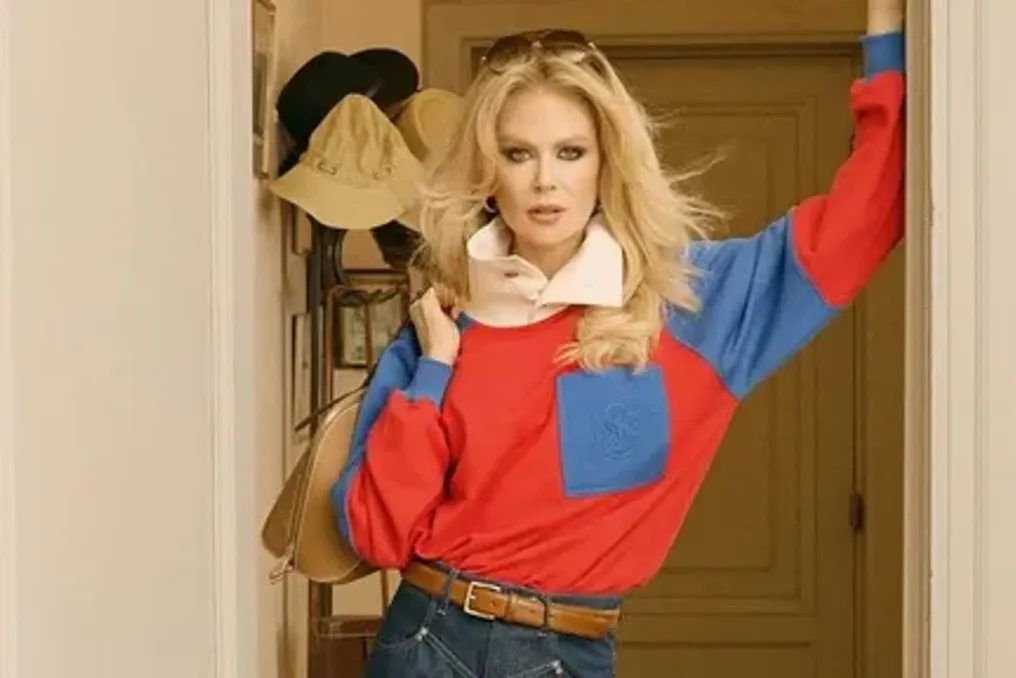
A photograph does not necessarily have to be created by artificial intelligence to look as if it was generated by it. A recent cover of British Vogue featuring Nicole Kidman caused a wide resonance, as many users questioned whether the image was AI-generated.
However, as the cover example showed, makeup, lighting, and retouching are capable of creating an effect of a face resembling an AI product, making people doubt the authenticity of the photograph.
While some online noted that Kidman looked 'AI-generated' and that they did not recognize her, others found her stunning. Nevertheless, the deeper question is not about the use of AI, as there is no evidence that the Vogue photos were created using artificial intelligence.
The public reaction points to a more interesting trend: we are accustomed to seeing synthetic faces online, and now we are beginning to recognize this aesthetic.
What makes a face look AI-generated?
According to plastic surgeon Dr. Omar Tillo, Medical Director and Senior Plastic Surgeon at CREO Clinic in London, the reaction is often related to a combination of visual features, rather than one specific trait.
He notes that when people describe a face as 'AI-generated,' they are reacting to a combination of characteristics that seem excessively polished. These traits include exceptionally smooth skin, very sharp facial contours, and an unusually uniform appearance.
In contrast, real skin has texture: it has pores, fine wrinkles, slight color variations, and various minor imperfections that are barely noticeable in daily life. Removing these details from a photograph can cause the face to start looking strangely alien.
Facial perception studies have also shown that skin texture and surface characteristics influence how we perceive faces, and symmetry is another factor our brain is sensitive to. This helps explain why an image can remain a photograph of a real person yet look less human.
Why does AI-generated skin look so smooth?
The ultra-smooth tone associated with an AI-created face is not solely an AI phenomenon. For years, beauty filters, professional retouching, and high-quality photography have been used to soften skin. The difference is that generative AI has made this look so familiar that people now associate extreme smoothness with computer graphics.
As Tillo explains, when natural skin texture is softened or removed, especially in a large portrait shot, the result can feel synthetic. He cites the Kidman cover example, noting that 'the tone looks exceptionally uniform, with very little natural skin texture, fine wrinkles, pores, and subtle color variations that we subconsciously expect to see in a close-up portrait.'
Lighting can enhance this effect. Professional studio photography can be carefully lit to minimize shadows, emphasize certain features, and create a very polished look. Adding complex makeup and digital retouching allows a person's appearance to change significantly without the involvement of AI.
Makeup can change more than you think
When a person looks drastically different in a photograph, there is a temptation to assume that cosmetic procedures or artificial intelligence are to blame. However, makeup is capable of significantly altering perceived facial proportions. Eyebrows can affect the visible shape of the eyes, contouring changes the prominence of the cheekbones and jawline, and eye makeup can make the eyes larger or more expressive, while a different hairstyle can change the proportions of the entire face.
This is particularly noticeable in fashion photography, where the goal is often not to present a direct reflection of how a person looks in everyday life. In Kidman's shoot for Vogue, the style itself is highly transformative: bleached eyebrows, dramatic makeup, and a deliberately exaggerated hairstyle contribute to a completely different visual impression.
It is important to consider this when viewing celebrity photos. A red carpet photo, an unfiltered candid shot, and an editorial fashion portrait can depict the same person and look strikingly different.
There is another aspect to this discussion. Several years ago, most people probably would not have been able to explain why an image looked artificial. Now, having seen millions of AI-generated images in social media, advertising, and the internet, we are becoming more familiar with the visual language of synthetic images.
Tillo believes this is changing our instincts. He says: 'What interests me particularly is that the audience is becoming much more sensitive to this aesthetic. When a real image removes too much of the natural irregularity and texture that makes a face human, people can recognize that something feels different, even if they cannot immediately explain why.'
It is similar to listening to an artificially generated voice. You might not immediately understand what is wrong with it, but the rhythm, tone, or delivery might seem slightly unnatural. The same thing can happen with a face.
Synthetic faces are changing beauty standards
Here the conversation goes beyond one celebrity photograph. AI-generated images increasingly present people with faces that do not exist in the real world. They can be extremely polished, symmetrical, and devoid of the minor variations that make individual faces recognizable.
At the same time, traditional beauty photography has long moved in a similar direction through lighting, makeup, filters, and retouching. The result is the blurring of the line between a retouched photograph and a synthetic image.
This does not necessarily mean that every highly polished photograph is misleading. Fashion photography has always aimed to create an image, not just document reality. However, it requires us to be more conscious of what we are looking at.
A photograph is not necessarily an unedited record of a person's appearance, especially when it comes to celebrity and fashion images. Perhaps this is what makes the reaction to Nicole Kidman so interesting. The debate was not so much about people's ability to recognize one of Hollywood's most recognizable faces, but about how powerful visual manipulation can be before a familiar face starts to look strange. The technology may be new, but the desire to create an unimaginably polished image is not. What has changed is that we have a new word for this look: 'AI-generated.' And sometimes a face just needs to look synthetic to provoke a reaction; it doesn't necessarily have to be.