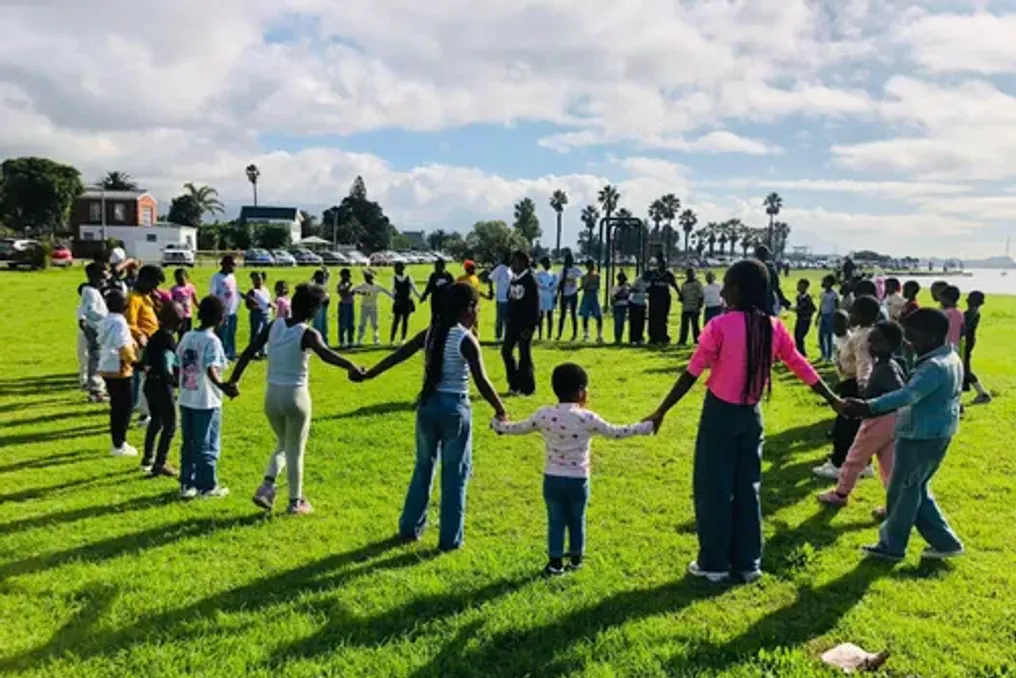
STBB Launches Nationwide Campaign to Raise Funds to Combat Menstrual Poverty Among Schoolgirls
Read more
IOL
iol.co.za

STBB Launches Nationwide Campaign to Raise Funds to Combat Menstrual Poverty Among Schoolgirls

As part of Women's Month celebrations, STBB has launched a nationwide fundraising campaign to combat menstrual poverty, aiming to support needy schoolgirls. This campaign is designed to enhance the dignity of young women and address an issue affecting hundreds of thousands of schoolgirls across South Africa.

Under the umbrella of the STBB4Good program, the initiative seeks to help overcome the socio-economic challenge of menstrual poverty. This problem is defined as the lack of access to affordable hygiene products, adequate sanitation facilities, and health education programs.

What is menstrual poverty?

Estimates suggest that 500 million women, girls, and non-binary individuals face this issue monthly. For many girls, it is not merely an inconvenience but a significant barrier to education and future opportunities. Without access to sanitary pads, students are forced to miss classes during menstruation, leading to academic setbacks and, in some cases, complete withdrawal from education.

More than a third of girls in South Africa miss a week of classes every month due to restrictions imposed by menstrual poverty. Furthermore, approximately 3,000 schools lack basic sanitation and hygiene facilities, such as running water and functional toilets. When hygiene products are unavailable, many young girls resort to unhygienic substitutes like newspapers, old rags, tissues, or leaves. These methods jeopardize their health, safety, and comfort, increasing the risk of urinary tract infections, toxic shock, and other reproductive issues.

Access to sanitary pads is directly linked to academic performance. When girls have the necessary supplies, they are more likely to attend school, participate confidently in lessons, and remain engaged in the learning process. Ensuring the ability to manage menstruation safely and with dignity is a simple yet powerful way to support their future.

The Campaign

The campaign aims to support 600 schoolgirls over three months, with a target of collecting 1,800 packs of sanitary pads. Throughout August, collection boxes will be placed in the reception areas of all 13 company offices nationwide so that employees, clients, and the public can contribute to this important mission. Every donated unit will help ensure the continuation of girls' education without the monthly difficulties associated with the lack of necessary supplies.

Beyond meeting an immediate need, this initiative aims to stimulate collective action, raising awareness about menstrual poverty and encouraging communities to play an active role in creating long-term social impact.

Our Beneficiaries

As part of STBB's ongoing support through the uPhawu Community Development organization, all collected pads will be distributed among the following selected schools and educational institutions in the Western and Eastern Cape:

  • Samora Machel Primary School
  • Zola Business School
  • Mathew Gonowe High School
  • Athenkosi Primary School
  • Zwelivumile High School
  • Lisahluma Skills and Development

Essentially, this initiative reflects STBB's belief that meaningful community engagement extends beyond the legal profession. On the occasion of Women's Month, STBB invites everyone to join them in making a tangible contribution to helping needy young girls. While one pack of pads may seem like a small donation, for a girl facing menstrual poverty, it means restored dignity, confidence, and the ability to remain in class.

By working together to tackle this issue, we can remove the socio-economic barrier that forces girls to choose between managing their menstrual cycle and receiving an education—a choice that ultimately prevents them from realizing their full potential. For more information about the campaign, please contact the team.


Similar stories

Activists criticize observance of Women's Month in South Africa amid ongoing violence against women
Read more
iol.co.za

Activists criticize observance of Women's Month in South Africa amid ongoing violence against women

As Women's Month is celebrated in South Africa, activists state that there is little to celebrate because women continue to face gender-based violence, femicide, poverty, and insecurity, nearly nine months after gender-based violence was classified as a national disaster.

The organization Abahlali baseMjondolo emphasized that poor women, especially those living in slum camps, are forced to support their families independently despite the lack of adequate housing, basic services, and a sense of security. The organization stated: 'This is not a month of celebration. No woman in South Africa is free. All women are at risk of violence. Poor women remain deeply oppressed.'

Abahlali reported that women in informal settlements can be in danger simply trying to access basic services, with some having to go to communal taps after dark. The movement noted that 'for millions of poor women in shacks, tin houses, and backyards, every day is a struggle for survival.'

Sabrina Walter, founder of Women For Change, also criticized the government's response to gender-based violence, noting that the urgency promised to women upon declaring a national disaster on December 19, 2025, has not led to tangible action. Walter stated: 'Nine months. Nine months since South African women were promised urgency. Nine months since families believed that perhaps finally, women and children would receive attention.'

She added that Women For Change had received no significant public updates on what had been implemented since the disaster declaration, with the only national acknowledgment being a 27-second mention during the State Address. Walter's concern intensified after visiting the national conference on gender-based violence, which was supposed to be opened by the Minister of Women, Youth, and Persons with Disabilities. 'She never showed up, and I couldn't help but wonder: if the minister responsible for leading the response to a national disaster cannot even speak to those working on the front lines, then where are we as a country?' she said.

These statements came as Abahlali uses Women's Month to honor the memory of activists killed while fighting for land, housing, justice, and dignity. Among them is 17-year-old Ngobile Nzusa, who was killed by a police officer during a road blockade in Cato Crest on September 30, 2013. According to Abahlali, Nzusa, a high school student, joined a protest against attacks on land occupation in Marikana in Cato Manor and was dedicated to the fight for land.

The movement also paid tribute to Thuli Ndlovu, an Abahlali leader in KwaNdengezi, who fought for her community's land, housing, and dignity before being killed on September 27, 2014. Nokutula Mabaso, mother, organizer, and leader of the eKhenana commune and the Abahlali Women's League, who was killed on May 5, 2022, while her community was under attack, was also remembered. Abahlali noted: 'Thuli and Nokutula were leaders. We also honor other women who gave their lives in the fight for justice.'

The organization also expressed respect for Fikile Ntshangase, a leading member of the Mfolozi Environmental Justice Organization, who campaigned against coal mining and was killed on October 22, 2020. Furthermore, Babita Deokaran, a whistleblower from the Gauteng Department of Health who exposed corruption and alleged theft of public funds intended for hospitals and clinics, was killed in 2021.

Walter stated that the deaths of women and girls continue to demonstrate the devastating consequences of a system that, according to activists, fails to protect vulnerable people. 'Meanwhile, women keep dying. Nomzila. Palesa. Entle. Chilkana. On the first day of Women's Month—Timing. A woman who could live today if the system hadn't let her down,' she said.

Walter mentioned Timing, who had previously reported violence and against whom a case was filed against the alleged aggressor, who was later granted bail. She was allegedly killed a few days later. 'How many more names must we name before action replaces promises?' Walter asked.

Abahlali insists that meaningful recognition for women must go beyond political speeches and flowers, instead demanding safe access to land and decent housing, basic services, an end to political killings and intimidation, and more decisive action against gender-based violence. The organization also called for decent work, healthcare and education, reproductive health and contraception, guaranteed income recognizing unpaid care, measures to reduce food prices, and accountability for activist murders.

Abahlali stressed: 'We are not interested in politics that come with speeches and flowers and say nothing about the oppression we live in, and nothing about our leaders who gave their lives fighting this oppression.'

Walter warned that Women's Day should not become another symbolic event while families mourn. 'Women's Day cannot be another day of flowers, hashtags, and speeches while women continue to bury their daughters, mothers, sisters, and friends.'

Abahlali also cautioned against attempts to pit poor women in South Africa against migrants and refugees, asserting that the real problems for poor communities are lack of land, unemployment, and state neglect. The movement stated that cases related to activist murders must not be forgotten or closed without holding perpetrators accountable. 'Poor women are not asking to be celebrated. We demand safety, housing, to be heard, to live,' Abahlali concluded.

Despite the concerns, Walter maintained hope through the women she met throughout her life who continue to fight violence and oppression. 'No matter how heavy my heart is today, I refuse to lose hope,' she said. She noted that the strength of women lies not in being 'indestructible,' but in their ability to recover and support each other.

Abahlali concluded that Women's Month should be a period of remembrance, organization, and struggle until women can live safely and with dignity. 'Until that happens, August cannot be a month of celebration. It must be a month of remembrance, a month of organization, a month of struggle,' the organization stated.

Call to recognize structural barriers and care work for women's empowerment
Read more
iol.co.za

Call to recognize structural barriers and care work for women's empowerment

Women's Day in South Africa, celebrated on August 9th, is the result of a collective movement and expression led and supported by women themselves. The annual Women's Day, recognized both nationally and internationally (March 8th), aims to promote more equitable societies where women can live, lead, and thrive as equals.

Discussions surrounding Women's Day can sometimes seem superficial or bleak. Many annual reflections focus on the issues that women and girls in South Africa continue to face, such as partner violence, gender-based violence, harassment, and workplace discrimination, as well as obstacles to education and employment.

These critical issues affect the physical and psychological safety of women, as well as their ability to contribute to societal and economic development. However, to realize women's potential in society, it is necessary to look beyond these risks and barriers and consider other social changes needed for women and girls to truly flourish.

One initial step is recognizing the central and often unseen role women play in maintaining broader ecosystems of care and support. Many women carry numerous responsibilities—they are primary breadwinners, mothers, caregivers, colleagues, and crisis managers. In South Africa, thousands of such women do this under conditions of chronic stress and financial hardship.

While this observation is not new, the subtle ways unequal norms and practices manifest are rarely discussed. The mental load associated with caregiving, as well as the uneven distribution of domestic duties and responsibilities, often begins early when girls absorb messages and expectations about how they should participate in family and societal life. Opportunities for play, exploring interests, and enjoying childhood in a safe and supportive environment are crucial for both girls and boys, but they are not always realized.

Throughout the life cycle, we also observe how many of these roles are passed down to the second generation, as mothers become grandmothers and repeat many of the same caregiving and support roles for their children's children. While multi-generational care models are often vital for maintaining households, they can also create an additional burden for women who have performed these roles for decades, and contribute to intergenerational tensions among younger household members.

These dynamics are not merely anecdotal; our own research confirms this. A team from the University of Stellenbosch Health Life Cycle Research Institute conducted joint interviews with adolescent mothers living with HIV and elderly women from their families in rural Eastern Cape to better understand their experiences of early, unintended motherhood. Through interactions with mothers, sisters, and grandmothers, these intergenerational conversations fostered mutual understanding and compassion, the exchange of personal stories, and the formulation of future hopes.

Such conversations should be encouraged not only among women. Another priority is involving boys and men in discussions about social change and gender expectations, providing them space to reflect on these differences and make positive contributions. It is worth noting that when given this opportunity, boys and men often show a willingness to participate in these conversations.

A series of dialogues called 'Conversations / Iincoko' (in isiXhosa) was recently held with children and youth aged 7 to 24 in Heylwood, bringing together boys and girls of similar ages to discuss their current realities and future aspirations. These sessions revealed many common interests, priorities, and challenges, including reflections on absent fathers and male role models. By creating spaces for boys and girls to interact, delve into complex topics, and express vulnerability, such dialogues can be a useful first step in building meaningful connections and reducing the gender gap that seems to widen as children grow up.

Even while acknowledging these relationships and responsibilities, we must pay equal attention to women as individuals, not just through the roles they play for others. The collective spirit of Women's Day in South African history can sometimes overshadow this individuality. Despite the importance of recognizing the relationships and systems in which women make and sustain critical contributions, there is an urgent need to see women as individuals from the outset.

In educational, community, and online platforms, this imperative must include providing accessible opportunities for women to develop leadership skills and participate in events that allow their unique voices to be heard and their ideas to be valued. We know that supporting women yields tangible benefits for public health and well-being, considering all that women already do. Structural barriers, invisible care work, intergenerational relationships, and individual recognition are not separate topics for discussion; all of this is part of what women will need to truly thrive.

Beyond flowers or greetings on Women's Day, those who support, live with, and work with women can make small commitments to recognizing these unequal realities and begin some of these important changes through dialogue, acknowledgment, and action.

Popular