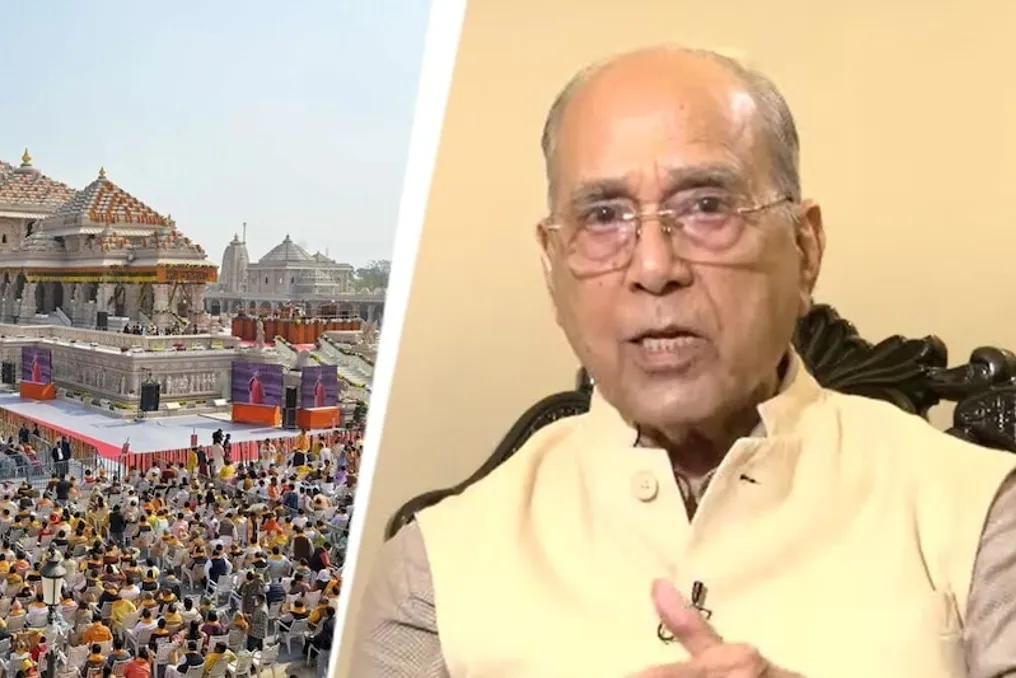
Nripendra Mishra reports on completion timelines for unfinished work in Ram Mandir after meeting
Read more
Aaj Tak
www.aajtak.in

Nripendra Mishra reports on completion timelines for unfinished work in Ram Mandir after meeting

Nripendra Mishra, Chairman of the Ram Mandir Construction Committee, arrived in Ayodhya. On Tuesday, amid an investigation into the theft of donations at Ram Mandir, a meeting of the construction committee was held under the chairmanship of Nripendra Mishra. Various important issues were discussed at this meeting, including the progress of construction in the Shri Ram Janmabhoomi complex, unfinished works, and payments to contracting organizations.

Following the Ram Mandir Construction Committee meeting, Nripendra Mishra stated that most of the construction work on the site is expected to be completed by September 30. He specified that major work will continue in the auditorium and museum areas.

Nripendra Mishra also reported that employees of leading construction companies L&T and Tata will leave the construction site by October 30. Unfinished tasks and payments for construction organizations such as L&T, Tata, and Sompura were reviewed.

The museum being constructed in the Ram Mandir complex is planned to have a total of 20 galleries. These galleries will use modern and immersive technologies to vividly present the life of Lord Rama, the Ramayana, and events related to the temple for pilgrims.

It is planned that in Gallery No. 7, visitors will be able to experience the divine and majestic appearance of the temple complex using immersive technologies. In Gallery No. 17, episodes of Rama's departure to the forest and associated rivers will be demonstrated using advanced technology. Experts from IIT Madras are providing technical support for the construction and technological development of the museum.

The construction of the perimeter wall of the Ram Mandir complex is also progressing actively, with a target completion date set for December. However, following this, the installation of security systems is likely to take an additional two months. In finalizing the Ram Mandir complex, the construction committee is now focusing not only on construction work but also on the phased completion of the museum, auditorium, security system, and other amenities.
Similar stories

Pujaris Explain Donation Accounting System at Mahakal Temple in Ujjain
Read more
www.aajtak.in

Pujaris Explain Donation Accounting System at Mahakal Temple in Ujjain

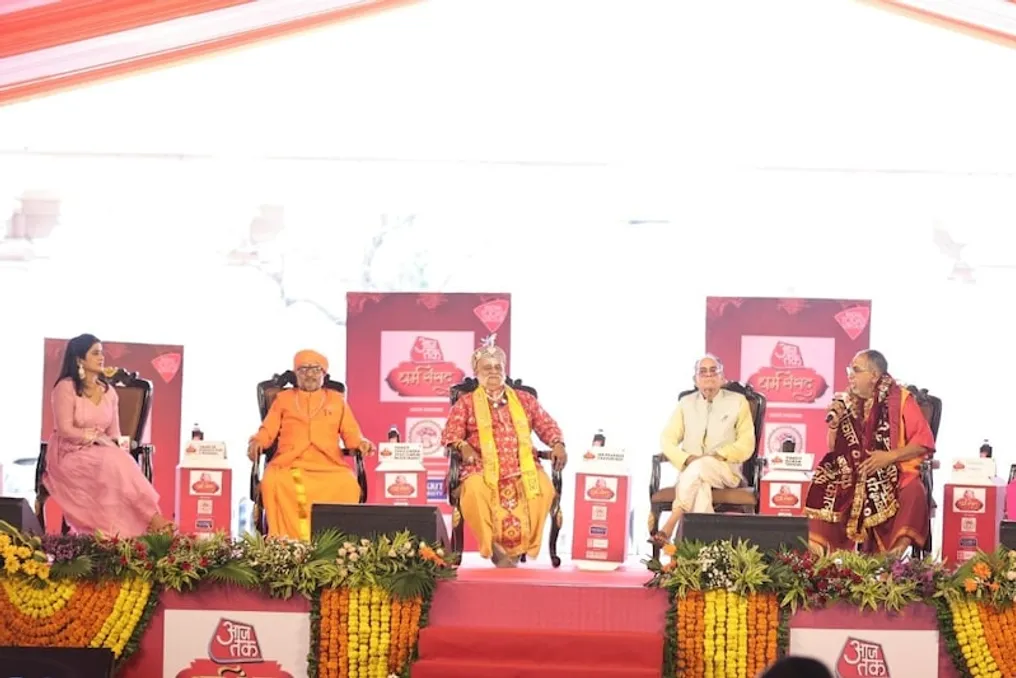
During the event 'Aajtak Dharma Sansad' held in the city of Ujjain, known as the city of Mahakal, leading saints, scholars, and pujaris of the Mahakal temple openly shared their views on religious faith, temple transparency, and the mythological significance of Ujjain.

The saints expressed deep concern over financial irregularities and theft issues that have surfaced in Ram Mandir in Ayodhya. Swami Avdesh Maharaj stated that the construction of Ram Mandir was made possible by five thousand years of history and the sacrifices of many generations. He noted that donations from millions of devotees are undermined by such incidents and emphasized that such events are unacceptable in any temple or Jyotirlinga. He called for the creation of a system in temples to prevent such occurrences and ensure that the culprits receive the harshest punishment.

Pandit Shailendra Vyas added that after a long legal battle, the magnificent temple structure was erected, and those who committed audacity, whether in public or in shadow, will be punished by law and God. He also mentioned that the Chief Minister of Uttar Pradesh, Yogi Adityanath, will certainly ensure that the guilty are punished.

Speaking about the organizational aspect, Pandit Raman Trivedi stated that all those responsible for the theft must be punished. He noted that pujaris often become targets in disputes, although their job is exclusively to conduct worship rituals. According to him, the responsibility for temple management and financial maintenance lies with the trustee and administration.

In response to questions about donation management in temples, the pujaris provided information about the transparent system at the Mahakal temple in Ujjain. Funds received in the general donation box of the temple are used for the development, maintenance, and provision of amenities for pilgrims.

According to tradition, 35 percent of the funds collected in a special box before Lord Mahakal are traditionally given to the families of the pujaris. The counting of all donation boxes is done under the direct observation of CCTV cameras with complete transparency. All collected money is officially credited to the bank accounts of the temple committee.

Highlighting the distinction and uniqueness of Ujjain from other Jyotirlingas, Pandit Raman Trivedi explained that the beginning of the calculation of time and era originates precisely from this sacred land, which is why Lord Shiva is called 'Mahakal' here. The place of Mahakala among the 12 Jyotirlingas holds exceptional significance. It is a city of gods where a mere glance can relieve one of the fear of sudden death. During the month of Sawan, millions of pilgrims arrive from different countries to witness the royal procession of Mahakala. The Governor of Madhya Pradesh is personally a devotee of Mahakala, and under his leadership, unprecedented development is taking place in this region.

Pujari Aashish from the Mahakal temple explained the deep meaning of the world-famous Bhasma Aarti. He reported that only in Ujjain, among all 12 Jyotirlingas, Lord Shiva wears ash. This ash is specially made from charcoal ashes and weighs about two and a half kilograms. It carries a profound spiritual message. The average weight of a newborn child is also about two and a half kilograms, and after death, the body leaves approximately the same volume of ash. Bhasma Aarti symbolizes the beginning and end of life. Shiva, wearing ash, conveyed to the world the message that ultimately everything must merge into this cycle of the immaterial and material.

The chief pujari of Kal Bhairav temple, Om Prakash Chaturvedi, spoke about the traditions of the temple. He clarified that offering alcohol to Kal Bhairav is considered a symbol of negativity. Offering alcohol at the feet of Kal Bhairav signifies transferring all internal negative energies, vices, and evil to God, allowing positive energy to circulate in the life of the believer.

Popular