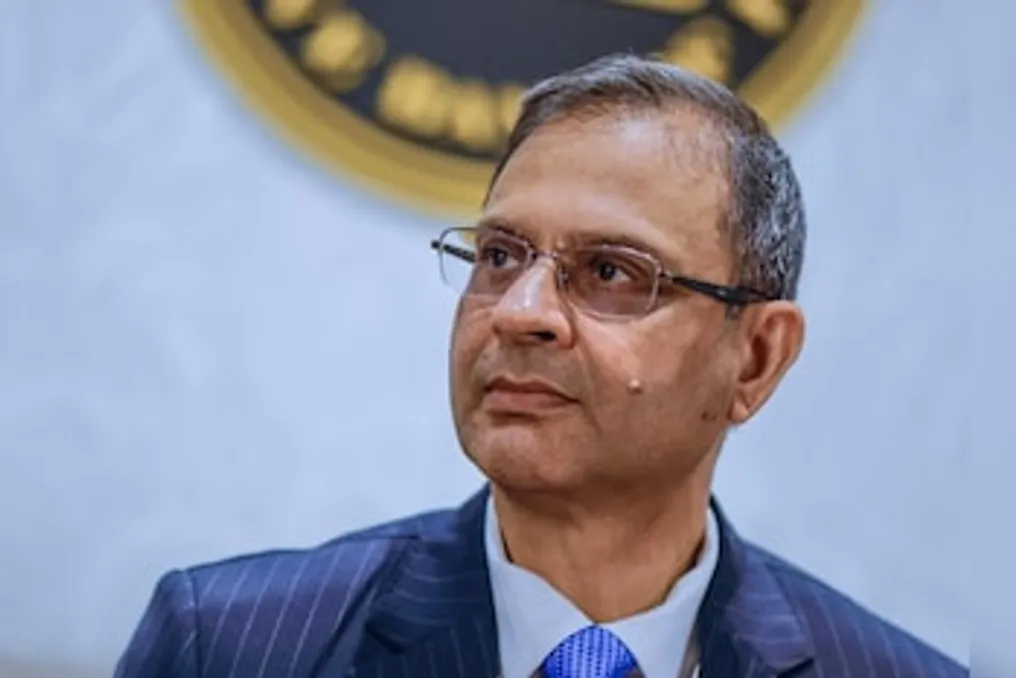
The Reserve Bank of India (RBI) chief, Sanjay Malhotra, stated that the foreign currency inflow has exceeded expectations, with FCNR(B) deposits and external borrowings already attracting $56.85 billion.
The central bank of India forecasts attracting at least $80 billion in foreign currency inflow due to recently introduced measures aimed at drawing dollars into the country. This was reported by the central bank chief in an interview published on Thursday.
Sanjay Malhotra noted in a conversation with the Financial Express that the volume of receipts surpassed both expectations and the forecasts of most market participants. This is the first instance where the central bank discloses such a figure it anticipates receiving through a series of measures announced to protect the weakening rupee. Analysts and bankers had previously estimated this inflow to be around $80 billion.
The initiatives launched in June allow local banks to offer attractive rates on foreign currency deposits while the central bank subsidizes hedging costs. According to the latest RBI data, as of August 13, the amount mobilized through non-resident foreign currency deposits (FCNR(B)) stood at $52.3 billion. Adding receipts from external debt financing and external commercial loans brings the total to $56.85 billion.
Despite these flows being expected to improve sentiment towards the rupee, the currency barely changed from the level it held on June 5, when the measures were announced. This contrasts with the sharp rise of the rupee in 2013, when a similar dollar-attracting program was last launched.
Malhotra's comments came after the RBI unexpectedly postponed the closure of the FCNR swaps window for a month, to August 31, surprising the markets last week. Malhotra defended this decision, calling it a 'calibration' based on data, not a change in policy direction.
He explained that 'there is diminishing marginal utility of every dollar exchanged,' while costs are rising due to the need for longer liquidity sterilization.
Expenditure
Although the announcement might have seemed sudden, Malhotra emphasized that the provided timeframe is sufficient for banks to prepare. However, the program could become costly for the central bank if it continues to grow. Although the RBI currently does not account for the market value costs it incurs by subsidizing bank hedging, an acquaintance with the matter reported that the possibility of such accounting is under discussion.
According to this source, preliminary calculations by the central bank suggest that such allocations could reach up to 300 billion rupees in the first year of the program and potentially aggregate to 1 trillion rupees over five years. This, the source added, would become a burden on RBI profitability and could affect dividends paid to the government.
The RBI did not immediately respond to requests for comment regarding any proposal to cover market value costs. Malhotra stated that the exchange rate continues to be determined by the market, and the net short position on the dollar remains manageable. He stressed: 'The exchange rate continues to be determined by the market. Our intervention policy remains the same, which is to curb excessive volatility and any unwarranted speculative activity.'
Over the past two years, the central bank of India has built one of the world's largest short positions on the dollar to support the persistently weak rupee. It now faces the task of unwinding this position without destabilizing the currency market. Nevertheless, Malhotra referred to previous liquidity swap operations and recent measures that will help manage the short dollar position.