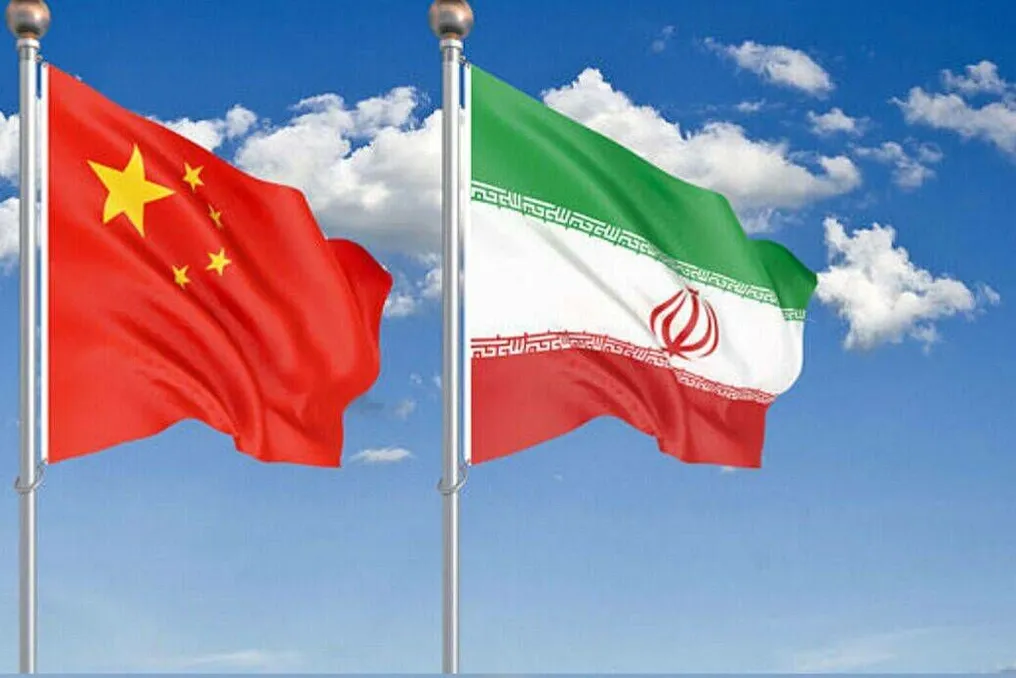
Mazandaran University is preparing to host the Iran-China Science Day, according to an official representative of the Ministry of Science. A meeting took place on Sunday between Ehsan Kabul, head of the International Scientific Cooperation Center of the Ministry of Science, Research and Technology, and Ebrahim Salehi-Omran, Rector of Mazandaran University. The purpose of the meeting was to discuss the university's capabilities and explore the potential for expanding international cooperation.
Kabul noted the constructive steps taken by Mazandaran University, emphasizing that the university's efforts to strengthen ties with universities in East Asia, especially the expansion of the Chinese language training center, have created a favorable environment for deepening partnerships. For his part, Salehi-Omran stated that the university's leadership will use this opportunity to accelerate the process of internationalization and eliminate existing obstacles. He also recalled that over the past year, the University has signed various Memoranda of Understanding (MOUs) to promote international cooperation.
Tehran and Beijing Strengthen Scientific and Technological Ties
In 2025, Hossein Rouzbakhsh, head of the Organization for the Development of International Cooperation in Science and Technology, and the Chinese Ambassador to Iran, Zhong Peiwu, studied directions for expanding scientific and technological interaction between the two countries. This meeting took place on August 20, 2025, following Peiwu's visit to the Iran Innovation and Technology House (iHiT) branch in Tehran.
Visiting iHiT in Tehran, the Chinese official stated that Iran possesses a magnificent civilization and is populated by intelligent people who have achieved significant successes. He added that the country's history of technological development is glorious, and today they are proud of Iran's rapid technological advancements in the modern era. Zhong Peiwu concluded that China and Iran are two great civilizations with rich histories, possessing enormous potential for developing scientific cooperation.
Referring to the visit of Hossein Afshin, Iran's Vice President for Science, Technology, and Economy, to China and the country's open approach to international cooperation, the ambassador noted: 'We believe there are many potential areas to strengthen partnership between the two countries.'
In turn, Rouzbakhsh emphasized the need to promote and accelerate scientific cooperation between Iran and China, highlighting the long history of scientific, technological, economic, and trade ties between the two nations. He also mentioned that Iran's science and technology ecosystem has made significant progress in recent years, boasting over ten thousand knowledge-based companies. He noted that the contribution of highly qualified and talented workforce creates great opportunities for joint development.
Addressing the MOUs signed by Afshin and Ding Jisheng during the Second Conference on Science and Technology Exchange under the Belt and Road Initiative in June 2025, the Vice Premier of the People's Republic of China announced Iran's full readiness to implement these agreements. He stressed China's outstanding capabilities in Artificial Intelligence (AI) and Iran's progress in this field, stating that AI partnership will bring invaluable achievements to the region and the world.
Furthermore, he reported that the establishment of BRI Labs (Belt and Road Initiative LabsNet) will play a crucial role in expanding international scientific interactions. The two countries also agreed on the exchange of researchers, young scientists, and elites, as well as joint participation in each other's exhibitions. Cooperation covers joint efforts in the sectors of technology, healthcare and medicine, environment, and agriculture.