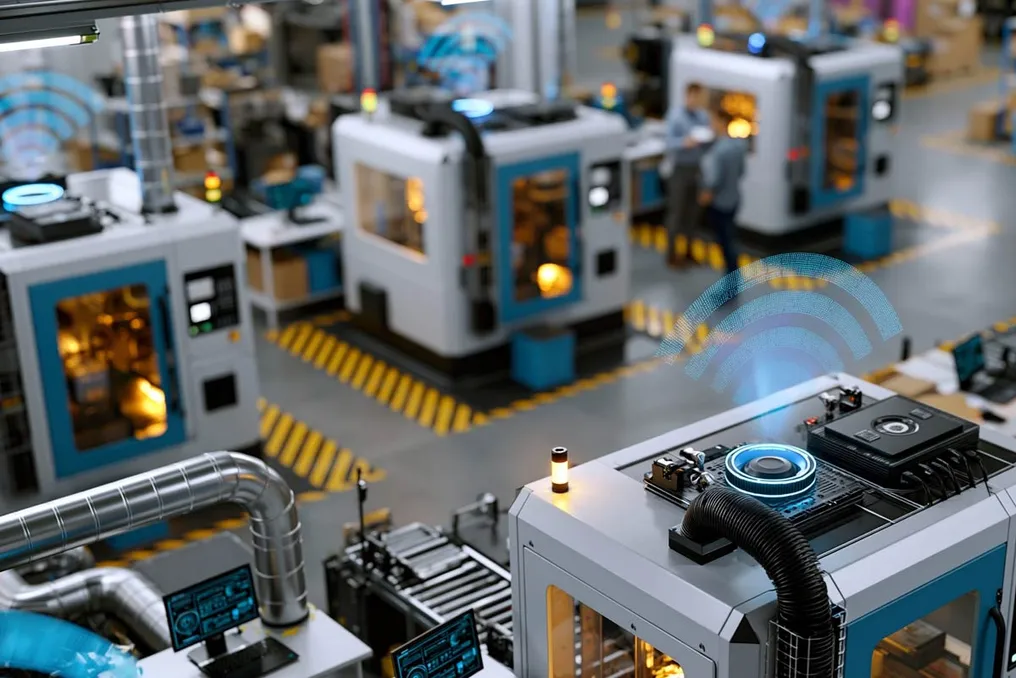
Industrial enterprises face constant pressure caused by rising operating costs, energy sector limitations, infrastructure obsolescence, supply chain uncertainty, and shortage of skilled personnel. These factors force organizations to rethink their methods of operation. Simultaneously, advancements in artificial intelligence (AI), industrial internet of things (IIoT), robotics, automation, and digital manufacturing open up new opportunities for work.
For most companies, the problem is no longer finding suitable technologies, but determining which specific technologies will bring real benefit to the business. The leaders of the next decade will not be those who invest in the largest number of technologies, but those who can effectively connect them: integrating data, systems, equipment, and personnel so that every investment supports the others, rather than being isolated solutions that do not interact with each other. The question has shifted from what to buy to how to build a smarter operational model.
Start by ensuring transparency
For years, industrial companies generated huge volumes of operational data, much of which remained locked in unconnected systems. Thanks to connected sensors, industrial software platforms, and IIoT technologies, this information is now brought together, allowing organizations to track the condition of equipment, production processes, and assets in real time. A higher degree of transparency facilitates earlier detection of inefficiencies and accelerates decision-making.
This also leads to a reduction in unplanned downtime. Unexpected equipment failures disrupt production schedules, increase maintenance costs, and jeopardize commitments to customers. Predictive maintenance allows companies to move beyond fixed maintenance intervals, using machine learning, continuous condition monitoring, and connected sensors to detect problems before they turn into failures. Maintenance teams intervene earlier, which increases reliability and reduces unnecessary work.
Safety is also evolving in this direction. Automation, robotics, machine vision, and intelligent monitoring reduce the frequency of employee exposure to hazardous conditions while improving process control and consistency. Technologies do not replace skilled specialists; they provide them with better information and advance warnings.
Artificial intelligence expands all these capabilities. Instead of displacing human expertise, it helps engineers, shop floor managers, and operational teams analyze large volumes of operational data, find patterns, and make decisions faster. Its greatest value in industrial settings lies not so much in automation as in enabling the making of better operational decisions.
Connections are more important than individual components
Digital manufacturing, automation, AI, IIoT, and predictive maintenance achieve maximum efficiency only within an integrated operational strategy. Technology investments work when they align with business goals, existing infrastructure, and practical day-to-day operating conditions. Competitive advantage is gained by connecting the right technologies to solve real problems, not by owning a large number of technologies.
Therefore, conversations are as important as innovations themselves. Understanding how smart operations are created requires comparing different technologies, questioning suppliers, discussing implementation challenges with technical experts, and observing equipment performance. Whether it is AI software, industrial automation, robotics, connected sensors, or predictive maintenance, direct dialogue with the engineers behind the product provides a level of understanding unavailable in reports and webinars.
Electra Mining Africa 2026
Industry events bring together people developing these technologies and organizations seeking to apply them, creating opportunities for idea exchange, solution comparison, and determining how different technologies can work together. Electra Mining Africa will take place from September 7 to 11, 2026, at the Johannesburg Expo Centre, Nasrec, gathering technology suppliers, engineering specialists, and industry decision-makers in one place. The 2024 exhibition attracted nearly 40,000 visitors.
Industry professionals can register to attend for free.
About Electra Mining Africa
Electra Mining Africa is South Africa's leading industrial exhibition, showcasing the latest innovations in mining, manufacturing, automation, power, transport, and logistics. Held every two years, the exhibition connects technology suppliers, equipment manufacturers, engineering specialists, and industry professionals across the entire industrial value chain. Through technology demonstrations, specialized conferences, and networking opportunities, Electra Mining Africa provides a platform for knowledge exchange, building business relationships, and exploring technologies that enhance productivity, efficiency, safety, and sustainability.
Montgomery Group Africa unites the Montgomery Group divisions across Africa into a single flexible and future-oriented organization. The company has a portfolio of premier exhibitions and strives to strengthen connections across the continent, opening up opportunities for innovation, business growth, and long-term impact in every market it serves. Building on the 130-year heritage of the Montgomery Group, Montgomery Group Africa has been hosting influential events since 1968, with a portfolio covering Southern, Eastern, and Western Africa, creating venues where industries connect, ideas flourish, and communities benefit. More information can be found on Facebook, LinkedIn, Instagram, and YouTube.