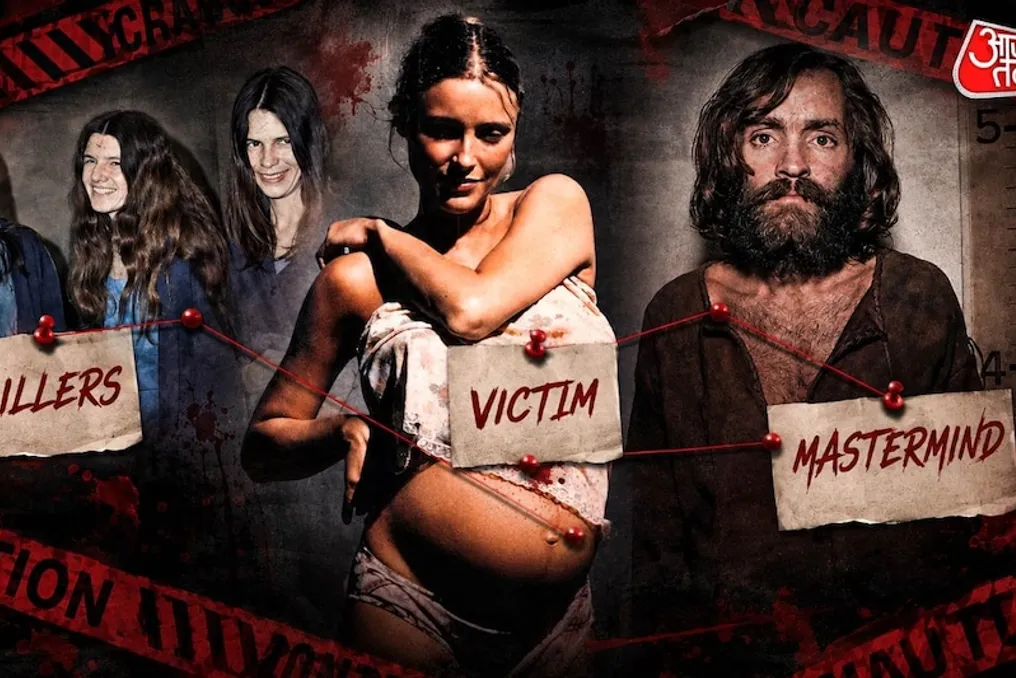
Charles Manson once held a guitar and dreamed of Hollywood in his eyes. He strived for fame, much like Frank Sinatra. Despite a past filled with prison time and crimes, he was convinced of his talent and believed that the brilliant world of Los Angeles would grant him notoriety. However, his destiny took a different path. In his pursuit of fame, Manson gradually transformed into a cult leader whose word could incite people to any action. This raises the question: how could this petty criminal, raised in prisons and correctional facilities, exert such a strong influence on people?
This story goes beyond the horrific death of Sharon Tate, an actress who was eight months pregnant. It is a narrative about a deranged man whose ambitions, insecurities, and anxieties created a world that later became the epicenter of one of America's most terrible crimes.
To understand Manson, one must examine America of that era, where he gradually carved out his place. It was the 1960s—one of the most turbulent periods in US history. Protests against the Vietnam War were on the streets, racial discrimination was widespread, and the younger generation was challenging societal structures. Old norms of life, morality, and family were being questioned. In such an environment, the Haight-Ashbury district in San Francisco became a symbol of this new counterculture. Here, freedom meant not only political liberation but also the ability to live by one's own rules, whether through communal living, the use of psychedelic drugs, free relationships, or rebellion against the social system.
It was this soil that allowed Manson to find his place among similar vagrants. Arriving in San Francisco in March 1967 after his release from prison, 32-year-old Manson had neither money, social identity, nor a clear plan for the future. But he had a guitar, songs, and a manner of speaking that quickly attracted attention.
Manson's appeal was not like that of a movie star. He was a short, thin man who had spent a long time in custody. He possessed neither wealth, fame, nor achievements to sustain people, yet he still drew them in. He knew how to make a conversational partner feel understood in their anxieties. He told young people dissatisfied with society that the problem was not with them, but with the world that had never accepted them. Gradually, the people gathered around him began to see Manson as a savior.
For youth whose family relationships were damaged and who could not find their place at home or in society, Manson created an alternative family. He acted before them simultaneously in three roles: friend, sexual partner, and mentor. First, he won their trust, then distanced them from old ties, and gradually confined their world to his own. It was this process that transformed a small group of hippies into what would later be called the Manson Family.
In this world, freedom was proclaimed, but Manson gradually began to define the very concept of that freedom. He asserted that society was a lie, the family was outdated, and the laws were corrupt. People living with Manson began to consider themselves superior to this system. For his followers, life initially seemed exhilarating: communal living, sex, drugs, music, and life without established social rules. However, within this freedom, another trap began to form—addiction.
But Manson's desire was not solely about controlling others. He also felt a strong urge to prove his worth. Music remained his main path. He wrote songs, played the guitar, and believed he possessed a talent capable of lifting him from ordinary life into the world of fame. At the end of 1967, he and his group headed toward Los Angeles to seek contacts in the music industry. There, he met Dennis Wilson, drummer for the Beach Boys. Through Wilson, Manson got acquainted with producer Terry Melcher. He felt that Hollywood was very close. He showed his written songs, recorded them, and hoped someone would give him a chance, but each time he faced disappointment.
After the disappointment with Melcher, the Manson Family arrived at Spahn Ranch. It was an old film set outside Los Angeles, previously used for shooting Westerns and television shows. The place was now dilapidated. For Manson, this location turned out to be ideal. Now Manson spoke not only of freedom and communes. He began to create his strange world, merging religion, racial tension, drugs, and various aspects of pop culture.