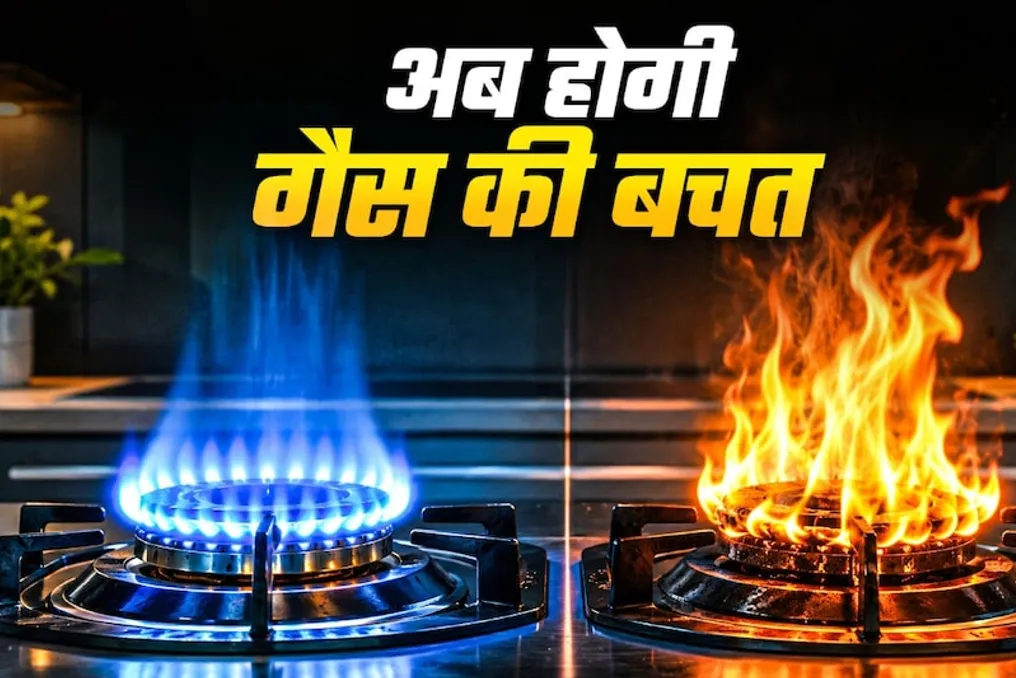
When cooking on a gas stove, it is sometimes observed that the flame burns yellow or orange instead of blue. Many users ignore this sign, considering it normal, but it can negatively affect both the budget and health. A yellow flame indicates incomplete fuel combustion, which leads to significant gas loss and the formation of black spots on cookware.
The main reason for this phenomenon lies in the accumulation of grease, dust, or food residue in the burner and air intake holes. Below are three key elements of the stove that need cleaning to restore a blue and more intense burn.
The flame of a gas stove is a visible result of the combustion process (burning reaction) of natural gas and oxygen. The color of the flame directly reflects the efficiency of this process.
A blue flame indicates complete combustion, meaning an ideal ratio of fuel and oxygen. As a result of this process, carbon dioxide and water vapor are formed, which are not inherently dangerous.
Characteristics of a well-burning blue flame include:
- Uniform and stable flame across all burner ports.
- Formation of a deep blue cone with a lighter blue outer flame.
- Minimal flickering in a calm atmosphere.
- A clear shape that does not rise above the burner.
An orange or yellow tint to the flame signals a disruption in the balance between gas and oxygen. When the proportions are unbalanced—for example, too much gas or insufficient air—the combustion process becomes incomplete. In such conditions, unburnt carbon particles heat up and begin to glow, giving the flame a yellow or orange appearance.
To correct the situation with a yellow flame, it is recommended to clean three components:
- Small holes of the gas burner: Milk, oil, or grain residue can clog the fine holes of the burner during cooking, preventing oxygen intake. To clean the burner, it should be soaked in a solution of vinegar and baking soda for 15 minutes, and then the dirt should be removed from all holes using a pin or an old toothbrush.
- Air intake / Mixing tube: Under the burner, near the tube, there is a small air intake that mixes gas with oxygen. If dust, grease, or cobwebs accumulate in it, the gas does not receive enough oxygen, causing yellow burning. This valve must be thoroughly cleaned with a piece of cloth or a thin brush.
- Gas hose and nozzle: Carbon or debris often gets stuck in the small nozzle located directly under the burner. You must turn off the stove, provide a light stream of air towards the tube, or carefully clean the layer of soot on the nozzle tip with a thin needle. This will ensure the correct gas pressure and immediately return the flame to blue.
It is important to understand that an orange flame is not just a cosmetic defect, but an indicator of a potential safety issue. If the flame does not stabilize after cleaning, you should immediately contact a specialist mechanic.