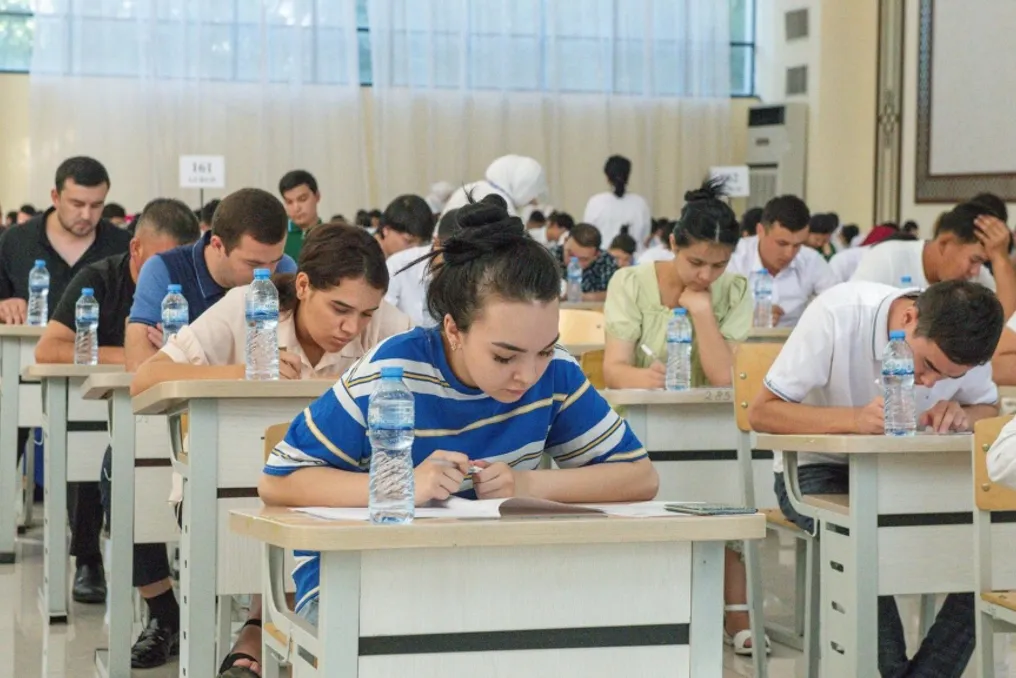
Uzbekistan is considering a potential adjustment to the current methodology for assigning maximum scores to applicants who possess national certificates. This issue is currently under review in collaboration with the Agency for Assessment of Knowledge and Qualifications, according to Sardor Rajabov, the first deputy minister of higher education, science, and innovation.
Rajabov explained that the exams for obtaining a national certificate differ from standard entrance examinations: they include open-ended tasks, and results are calculated using the PISA model. In contrast, regular tests use closed questions, which creates a risk of randomly guessing answers.
It is noted that the number of applicants holding national certificates is increasing year by year. According to Rajabov's forecasts, their numbers may exceed those taking traditional entrance tests in the coming years.
Currently, holders of A+ and A level certificates receive full marks for the corresponding profile subject. For B+, B, C+, and C level certificates, scores are distributed proportionally to the achieved result. Furthermore, all certificate holders receive the maximum score for the mandatory subject, regardless of their level.
Despite the discussions, a final decision on modifying the existing system has not yet been made. Experts need to assess the validity of the current system and analyze its impact on the admission campaign. Any potential changes will be announced later.
Additionally, there was previous information that children of medical and pharmaceutical workers with at least fifteen years of experience in state institutions would receive compensation equivalent to thirty percent of the annual tuition fee at state universities, provided this amount does not exceed fifteen BRV.