Most households and small businesses in India requiring backup power use lead-acid battery batteries. These batteries are inexpensive, but they are heavy, require water topping, are susceptible to corrosion, and only last a few years.
For larger facilities, diesel generators are used, which are expensive to operate and noisy enough that no one wants them nearby. Lithium is considered an obvious replacement, but it has its own problems: raw materials are imported, the price is set abroad, and the risk of fire requires strict safety rules when installing a large lithium block inside a building, which is not required for a lead-acid battery.
Naxion Energy offers sodium as a solution. Founded in 2024, the company is based in Hyderabad, with its manufacturing plant located in Coimbatore. It produces sodium-ion based energy storage systems and battery packs.
Sodium is located directly below lithium in the periodic table and possesses sufficient property similarity for battery operation. It is abundant, cheap, and independent of supply chains concentrated in a few countries.
The drawback of sodium is weight: sodium cells store less energy per unit volume, which precludes their use in phones, but this is less critical for a wall-mounted device.
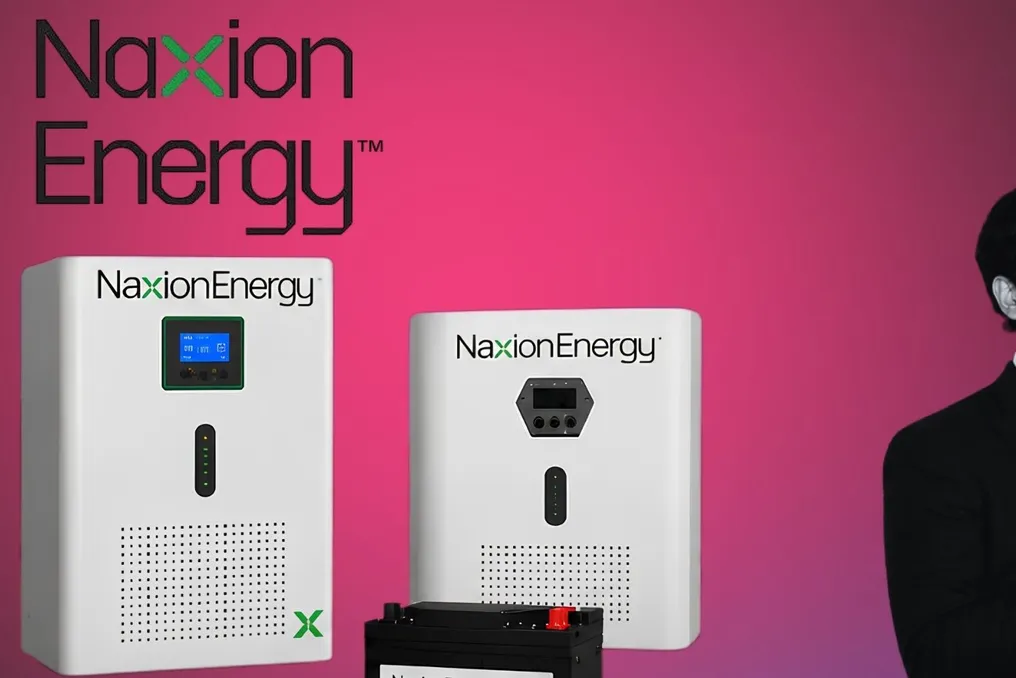
In December 2025, the company unveiled what it calls the first sodium-ion energy storage system in India. This design integrates the battery, inverter, and solar charge controller into a single unit, available in three sizes: 3.5 kW, 5 kW, and 10 kW, with the battery capacity being able to be doubled.
A key aspect is the chemistry: sodium-ion cells do not ignite like lithium ones, which is important for installation in a home or enclosed commercial space. Furthermore, they require no maintenance, eliminating the main inconvenience of lead-acid batteries.
The company also claims that its product has a performance advantage that is more practical than energy density. The chemistry supports significantly higher charge and discharge rates compared to lead-acid or lithium systems. This allows these systems to power heavy inductive loads, such as air conditioners, compressors, pumps, and industrial equipment like welding and cutting machines—precisely the loads that disable conventional inverter batteries.
In addition to storage systems, the company manufactures sodium-ion packs for mobility, industrial equipment, marine applications, and grid installations, stating plans to collaborate with equipment manufacturers to integrate its chemistry into their products.
The company has raised 250 crore rupees. Its Coimbatore plant has an annual production capacity of 1.5 gigawatt-hours of sodium-ion packs. The announced expansion exceeds the amount of funding raised. Abhishek Reddy, CEO of Naxion Energy India, stated that the company plans to invest 200 crore rupees in a pilot plant for producing 500 megawatt-hour sodium-ion cells by the end of December 2026, as well as a 1 gigawatt-hour battery pack assembly plant in Hyderabad, increasing its staff by 50%.
This distinction is significant: producing battery packs involves purchasing cells and assembling them into a system, whereas producing the cells themselves is a more complex and capital-intensive stage, which is almost non-existent in India. The 200 crore rupee figure represents the stated investment plan, not just the funds raised.
The event was attended by G Sateesh Reddy, former chairman of DRDO and scientific advisor to the Defence Minister, who spoke about sodium ions from the perspective of energy security and material limitations. No data on customers, orders, or revenue was publicly disclosed.