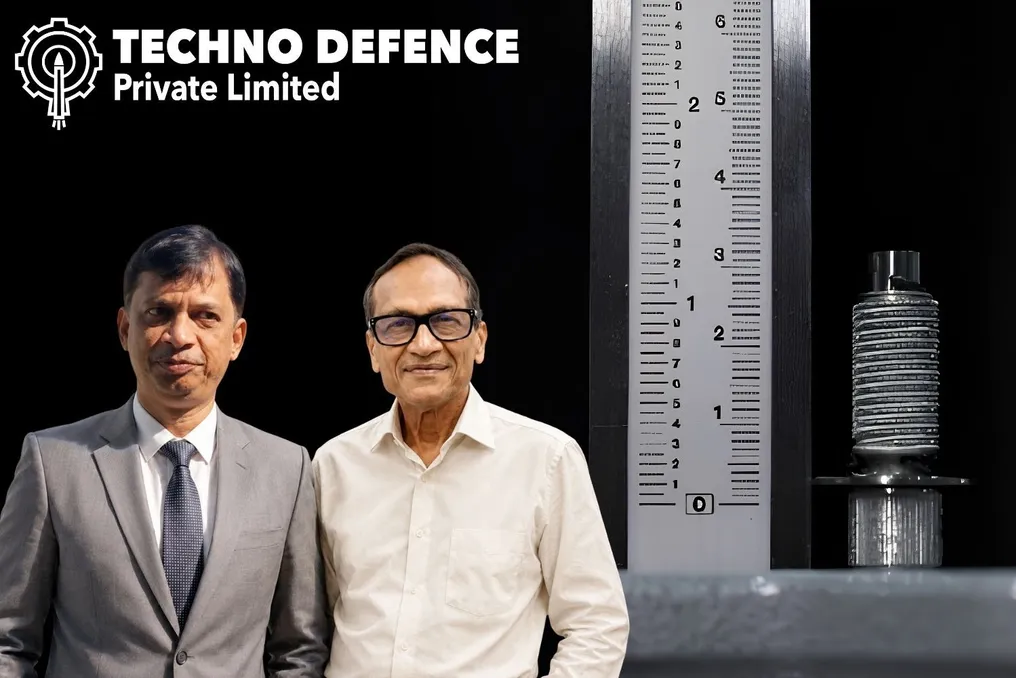
Techno Defence developed compact cryocooler previously imported into India
Read more
YourStory [india, en]
yourstory.com

Techno Defence developed compact cryocooler previously imported into India

Infrared sensors face a problem: because they operate by detecting heat, the sensor itself generates enough heat at room temperature that the target signal is lost in noise. Trying to detect a distant heat source with a warm detector is like trying to see a candle next to a bonfire.

The solution to this problem is cooling the sensor to a very low temperature, around minus 196 degrees Celsius. At such a cooling, the sensor's own noise decreases, and the weak signal becomes discernible. Creating such a device, which must be small, light, and immediately ready for use, presents a complex engineering challenge.

The startup Techno Defence solved this problem. The company is based in Mumbai, and its office and laboratory complex is located in Thane. It has attracted the attention of high-ranking military officials, including the chairman of DRDO and the founder of BrahMos Aerospace. They have developed a miniature Joule-Thomson type cryocooler—a device that cools by expanding high-pressure gas through an orifice, which sharply lowers its temperature.

The device weighs approximately ten grams. It has a two-flow, self-regulating design created in collaboration with the DRDO Solid State Physics Laboratory in Delhi under the Technology Development Fund. This fund supports Indian companies engaged in defense technologies.

Work on the project began around 2017 or 2018 and was supervised by Dr. Pravin Salinkar, an IIT Bombay graduate and former director of the DRDO laboratory. Funding from the Technology Development Fund was received in 2020. The cryocooler was completed in 2023 or 2024 and handed over to DRDO for evaluation.

Testing was deemed successful. Instead of building large-scale infrastructure, the company developed its own manufacturing methods and equipment, using small and artisanal production for part of the process. Assembly is performed under microscopes, in sterile conditions meeting reliability standards for defense needs, by a small team, most of whom are women.

Cooled infrared detectors are used in guidance systems that locate and track targets. Although not all types of weaponry require such detectors, such as satellite-oriented systems, the cryocooler is indispensable for infrared-guided systems, and historically, the technology came only from a few suppliers.

The importance lies not so much in the device itself, but in what it replaces. A subsystem of this kind, acquired abroad, comes with export licenses, delivery schedules set by a third party, and the possibility of supply cessation. Furthermore, it changes the economics of the systems in which it is integrated. A component available only from one foreign supplier has a corresponding price, whereas a domestic alternative revises this cost for every program using that component.

This breakthrough attracted public attention after industrialist Anand Mahindra noted it, highlighting the small size of the team and the duration of work on one complex task. Techno Defence states that its broader goal is the development of cryocooling technologies and the creation of cost-effective solutions for guidance systems, as well as working with young engineers on new developments. Its lab in Thane has been visited by high-ranking military leaders, including the chairman of DRDO and the founder of BrahMos Aerospace. However, the commercial position remains confidential: no orders, contract values, production volumes, or revenue have been disclosed, and besides support from the Technology Development Fund, no other funding sources appear in any reports.
Similar stories

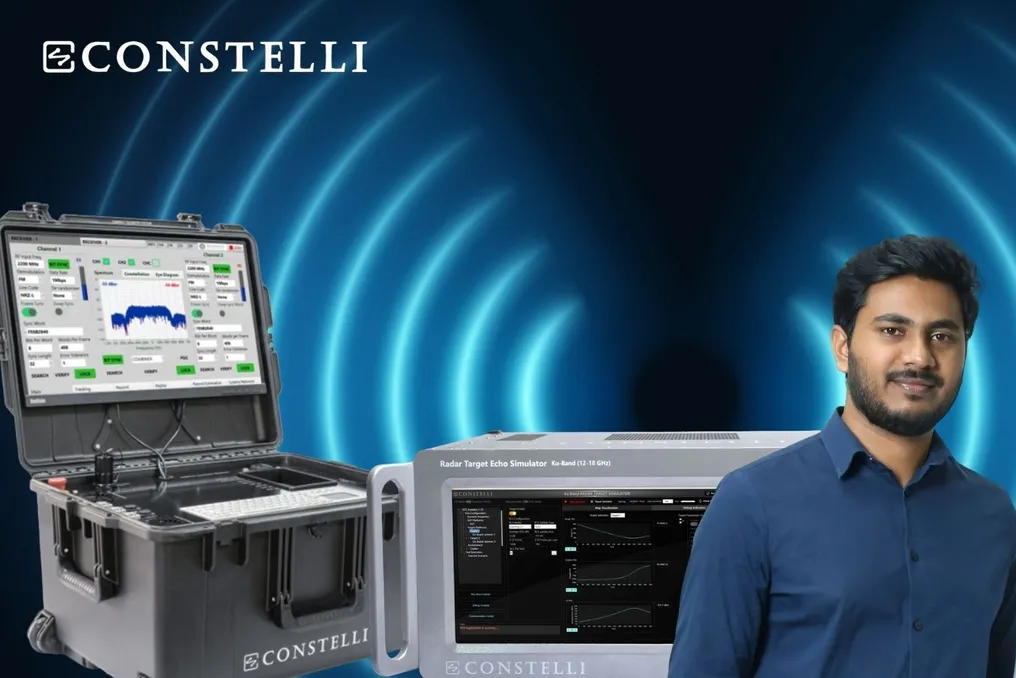
Constelli develops signal processing tools for designing radar and electronic warfare systems
Read more
yourstory.com

Constelli develops signal processing tools for designing radar and electronic warfare systems

Constelli is engaged in creating signal processing tools used in the development of radar and electronic warfare systems. The process of creating such systems requires testing against the signals they will encounter in operation, and producing these signals is complex and expensive. Aerial tests involve high costs and yield a limited amount of data per flight.

An alternative approach is to create a simulation environment in a laboratory setting, where the system under development is fed into it to identify problems before it leaves ground test ranges. In India, there has been a growth in the development of indigenous defense electronic components over the last decade, and all these projects require similar testing infrastructure that was traditionally imported.

Constelli, founded in Hyderabad in November 2017 by Satya Gopal Panigrahi, CEO, and Avinash Chenreddy, manufactures equipment for this purpose. The company specializes in signal processing for radar, electronic warfare, tactical communications, and telemetry.

From the beginning, the company stated its intention to operate not only in the domestic Indian market. Panigrahi emphasized that the company intentionally targeted export markets because international competition serves as a quality check for technologies, and a company selling products only domestically will never know its true standing.

The central element of Constelli's offering is modeling and simulation. The company uses laboratory simulation to reduce the volume of necessary aerial tests within the program. This allows design problems to be identified at earlier stages and studied in more detail than is possible during a single test flight.

These tools include the products themselves: hardware and software created based on modern computing technologies, distributed computing, and field-programmable gate arrays (FPGAs). These reconfigurable chips allow the system to be retuned to work with a different signal without the need to manufacture new silicon. The company claims that this significantly reduces development timelines, which in defense programs are measured in years.

The company's clients are organizations that create systems, not those that use them. Constelli collaborates with the Ministry of Defence of India and the Defence Research and Development Organisation (DRDO), as well as with defense contractors from South Korea, Australia, and Singapore. This export list supports the company's argument about the need to test itself against global players.

In February 2026, Constelli raised approximately 180 crore rupees, equivalent to 20 million dollars, in a round led by General Catalyst, with participation from 360 One Asset Management and existing investor Pravega Ventures. Previously, in January of the previous year, Pravega conducted a Pre-Series A round worth 3 million dollars. These funds are intended for research and development in next-generation electronic warfare and communication means for drones, ground systems, naval vessels, and satellites.

This marks a transition from selling tools to developers to creating the systems themselves. Furthermore, the company plans to establish infrastructure for rapid prototyping and early-stage manufacturing to reduce the gap between the design and the system ready for field use. Entering the payload segment places the company in the same category as organizations that were previously its clients, representing a different competitive position than selling them tools.

These developments occur against the backdrop of India's overall increase in defense spending and the expansion of the group of Indian companies working on defense electronics and unmanned systems. No information regarding revenue, order portfolio, or contract value has been publicly disclosed.

Popular