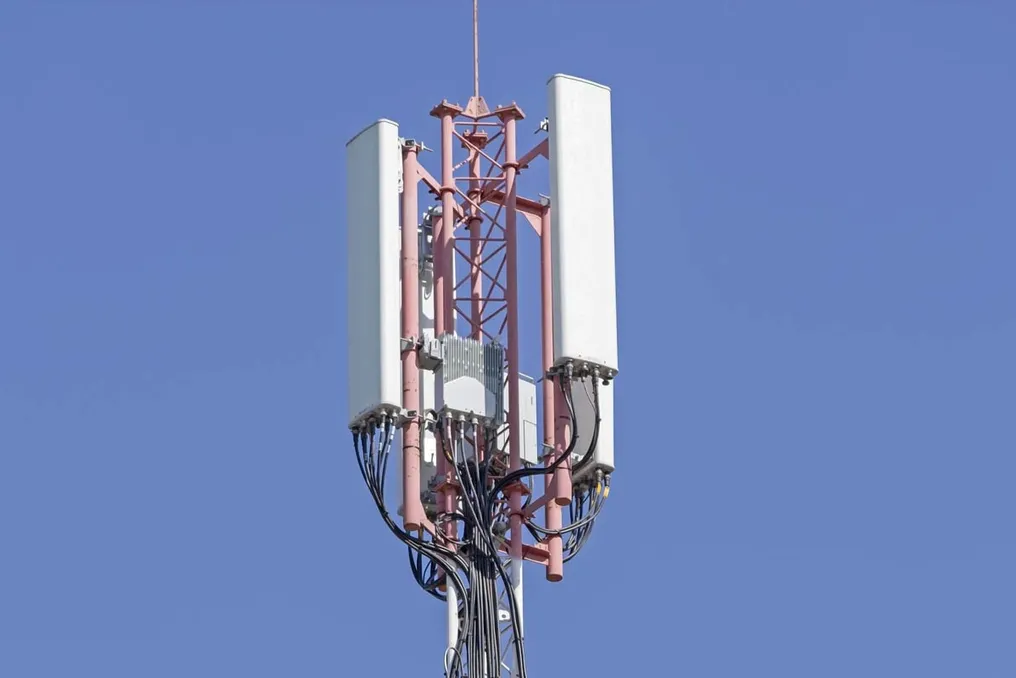
Comsol has begun selling wholesale access to a national 5G network specifically designed for home broadband access. This project is backed by a multi-billion funding round and shareholder restructuring, which saw Nedbank Private Equity exit the company after nine years of collaboration.
The project receives support from influential figures, including Richard Cami, one of the early investors who participated in deploying fiber optic lines across South Africa via Vumatel. The new network will feature a 5G core and will not support legacy technologies; it will be sold exclusively on a wholesale basis.
Internet service providers, mobile virtual network operators, and other resellers will independently determine pricing, packaging, and branding, and will own the customer relationships. Comsol will not sell services directly to end consumers.
In an interview with TechCentral, CEO Ian Stevenson responded to whether this was an open wholesale network (Woan) that the government had tried to license for over ten years but ultimately abandoned: 'I wasn't going to say that. You can say that, and that is exactly what we are doing.'
This move represents a decisive entry into the consumer market for Comsol, as the company previously operated almost exclusively with corporate clients for nearly thirty years.
Nedbank Private Equity, which acquired a 25% stake in Comsol in 2016 to finance the initial national buildout, sold its stake in December. It was replaced by two new shareholders.
New Investors
One of the new investors is Platform Investment Partners, the investment fund of Cami, former director of Dimension Data and early sponsor of Vumatel and Dark Fibre Africa. PIP Cami is now the largest single shareholder in Comsol, although he does not hold a controlling stake. The second investor is Wimsey Capital, a private investment firm.
Convergence Partners, a shareholder from the earliest stages of the company's institutional funding, retains its investment and contributed additional capital for growth alongside Solcon Capital, which entered through a continuation fund created after the original Convergence fund exited. Stevenson retained his stake through Mactavish Investments and increased his investment. Debt financing was arranged and provided by RMB.
Stevenson declined to disclose the debt-to-equity ratio, stating: 'There is a significant debt component, but also a very large equity portion coming in. This is a multi-billion amount, meaning this is what is being invested to deploy the infrastructure.'
He characterized the new round as 'patient money, unlike venture capital, with a long-term view of business growth prospects,' noting that the fundraising process was lengthy. 'It was a long process for us. That happens with venture capital. It's nice to reach a point where we can unleash all the potential here.'
Comsol has been building its new network for six months and reports that it covers over a million households in Gauteng. The first internet provider will begin operating on the network in September, with others following. Stevenson did not name this provider.
He reported that full coverage in Gauteng will be achieved by the end of the current year, followed by parts of the Western Cape and KwaZulu-Natal, after which selected regional cities and towns will follow. The company aims for approximately 2,000 base stations nationwide.
Similar to the corporate network built in 2016, Comsol leases towers and fiber instead of building them itself. 'Thousands of towers are available. We just select suitable towers in the right places,' stated Stevenson. He emphasized that construction is not limited to wealthy suburbs: 'It's Diepsloot, it's Alexandria, it's Soweto.'
The network operates on 60 MHz of spectrum in the 3.74 GHz to 3.8 GHz range, located directly above the Rain allocation in this band. Comsol was one of five small operators granted access to this band by Icasa, a decision that drew criticism at the time for bypassing the competitive process. Its license was issued in 2022.
Stevenson noted that Comsol's allocation is exclusive and national. More striking is that the license requires no obligations. 'We have no deployment commitments,' said Stevenson. He also added that there is no specific renewal date. 'There is no license renewal. It is a clean allocation, and it is used as it should be.'
This contrasts with the coverage and population obligations tied to the spectrum that Vodacom, MTN, Telkom, and others paid billions for at the auction in March 2022.
ZTE Wins Tender for Construction
Comsol also owns 336 MHz of contiguous millimeter wave spectrum at 28 GHz, acquired in 2010 when this band garnered little interest. Stevenson stated that mmWave is the next level of capacity for the consumer network, and tests show cell sizes comparable to those used at 3.7 GHz. He declined to discuss this in detail.
Comsol selected ZTE as its technology partner after extensive evaluation, during which the company tested all major suppliers. According to Stevenson, ZTE won due to a complete package offering and its mmWave roadmap.
Comsol claims that the design provides roughly twice the uplink capacity compared to a typical fixed wireless access service from an operator. Physical capacity reaches just under 1 Gbps (theoretical maximum); Stevenson reported that his own internal home unit operates at speeds over 500 Mbps without throttling, although internet service providers will develop their own packages with varying speeds.
Since the services are not tied to a single base station, as is common in operator fixed wireless products, customers can move the router between coverage areas.
Stevenson does not consider fiber optic operators competitors. Approximately 15% of homes in South Africa are connected via fiber, mainly in densely populated metropolises where cable laying costs can be offset. He noted: 'There is a huge base of people connected in alternative ways, and also a huge part of the South African population is unconnected.'
He acknowledged that Comsol could be seen as a threat to fiber optic operators targeting underserved areas, where Comsol's economics are more favorable. The main targets are mobile operators whose fixed wireless products compete for bandwidth with mobile traffic.
Banks and retailers managing MVNOs are clearly target partners for Comsol in the wholesale segment. This shift to the consumer market marks a turnaround. In a March 2023 interview with TechCentral, Stevenson stated that Comsol was not interested in the consumer market and would not 'attack mobile operators in their corner.' His current response is that the wholesale model allows the company to stay out of the fight: partners conduct the retail battle, and Comsol provides the road.
The test will be whether internet service providers participate and whether 60 MHz can provide mass home broadband access after reaching scale. Stevenson is not concerned about the bandwidth issue. 'There is a huge amount of capacity in the network,' he said. As saturation approaches, Comsol will add base stations. 'It's a pleasant problem. We look forward to this problem.'
Parallel to the consumer project, Comsol's business in private networks has also grown. Stevenson reported that the company has deployed a private 5G network in the Port of Durban, is building one at a major mine, and is implementing a smart city project.
[