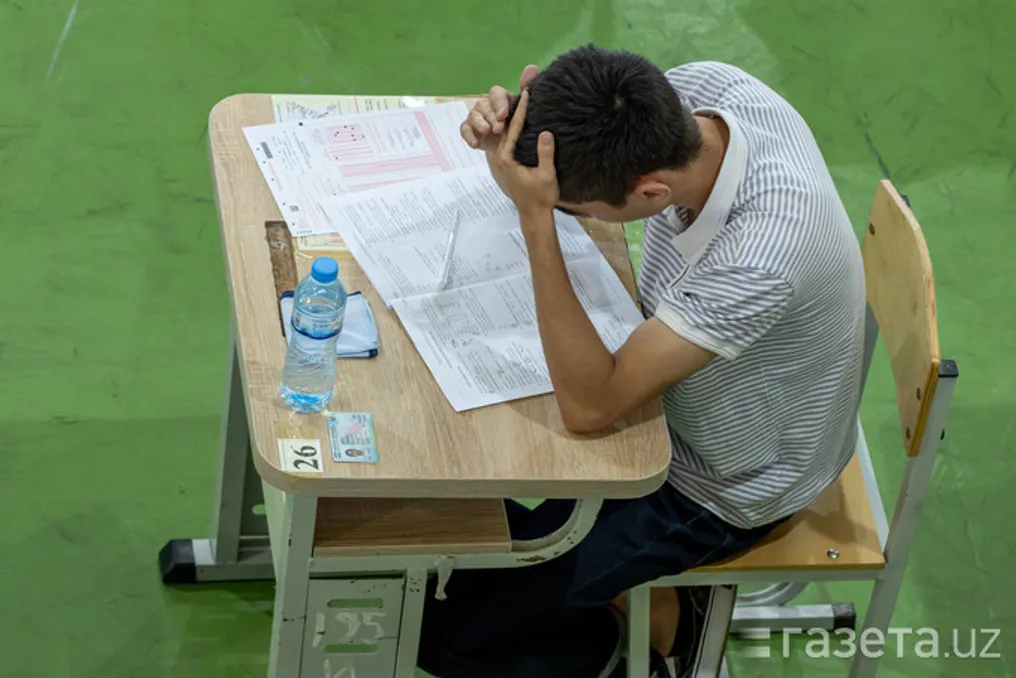
The Minister of Higher Education, Science and Innovation, Kongratbay Sharipov, stated that the assertion about the necessity for all school graduates to obtain higher education is incorrect. He emphasized that the demand for higher education in the labor market is only about 30%, and that the remaining 70% of youth can successfully work with secondary specialized education. This information was shared by him at an international conference held in Tashkent on August 14th.
An analysis of data over the last four years showed positive dynamics: the percentage of applicants who could not achieve the minimum required score for admission to state universities decreased from 46% to 34%. Sharipov noted that achieving a rate of 74% among those who scored above 56.7 points indicates an improvement in the quality of school education and the changes being implemented in the system.
According to the minister's data, in 2025, the share of applicants who did not reach the passing score was 41.29%, compared to 46.9% in 2024. In Sharipov's opinion, the main task is to train qualified personnel that meet the requirements of the labor market and prevent youth unemployment.
This year, 36 thousand grant places have been determined in universities, and training for almost 200 thousand students on a contract basis is also provided. These figures were calculated based on the labor market needs provided by the Ministry of Economy and Finance and include specific indicators regarding fields of study and enrollment volume.
The minister also reported that universities are expanding curricula in line with market demands. Previously, in July, at the parliament, Kongratbay Sharipov predicted that state universities would graduate over 323 thousand people in 2026, and more than 390 thousand graduates are expected to enter the labor market in 2027.
Back in 2018, the State Commission for Admission to Educational Institutions set the minimum threshold for admission to a state grant at 68 points (which is 36% of the maximum 189 points), and for paid study—56.7 points (30%). In 2024, an increase in these minimum scores from 56.7 to 75.6 points was announced, and for specialties such as 'healthcare', 'law', 'business', and 'management'—up to 94.5 points, but these changes have not yet come into force. Applicants who do not pass the exams have the right to study under the terms of a supercontract in one of the chosen bachelor's programs.