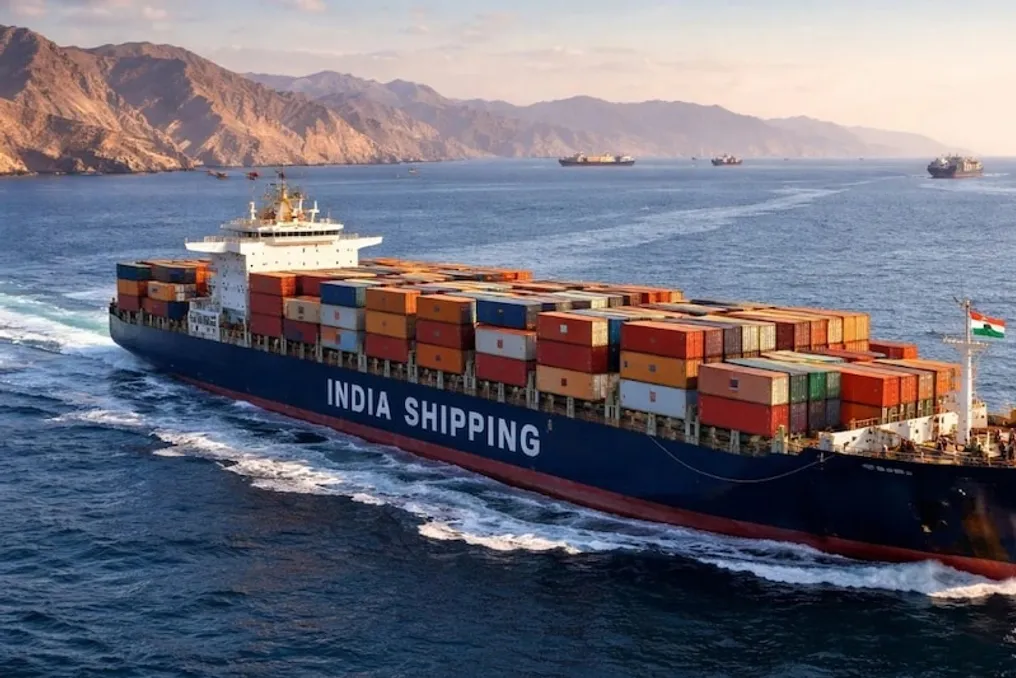
Discussions continue in the country regarding ethanol-blended gasoline, touching upon engine health, fuel consumption, and fuel quality. At the same time, the government is preparing to make significant changes to the fuel used in marine vessels. A roadmap has been presented aimed at promoting biofuels and their blends to reduce emissions from ships.
The government published a draft roadmap to gradually increase the use of low-carbon and renewable fuels in marine areas. The goal of this project is to reduce greenhouse gas emissions from ships and transition vessels operating in Indian territorial waters to cleaner fuel.
The document, released by the Directorate General of Maritime Administration (DGMA) on Wednesday, states that biofuels and their blends can be a simple and economical way to reduce emissions associated with maritime transport. An important point is that using such fuel will not require large-scale changes to the fuel systems of existing ships.
The government believes that blending 'drop-in' type biofuels with traditional marine fuel allows for the reduction of greenhouse gas emissions over the ship's lifecycle. Simply put, fuel blending helps reduce pollution from these ships. Furthermore, the gradual transition to biofuel blends is easier than completely replacing existing ships with new systems.
DGMA proposed a '10% biofuel blend,' meaning that at least 10% of the volume of homogeneous marine fuel used in ships must consist of biofuel. According to DGMA, 'sustainable biofuel' is fuel produced from certified and approved raw materials through established processes, with full documentation confirming origin, traceability, and greenhouse gas emissions throughout its life cycle.
Under this proposal, starting January 1, 2028, all ships operating in Indian coastal trade will be encouraged to use a blend of up to 10% biofuel mixed with MGO, VLSFO, or FO. However, this will depend on fuel availability, compatibility, safety, manufacturer or component recommendations, and applicable legal regulations.
During this period, ship owners, operators, and charterers must gradually organize the procurement of biofuel blends, check fuel compatibility and stability, prepare for fuel handling and storage onboard, train the crew, monitor fuel consumption and equipment performance, and maintain proper reporting on biofuel usage.
DGMA notes that starting January 1, 2029, the marine fuel used in propulsion and auxiliary machinery in Indian coastal trade must mandatorily contain at least 10% biofuel by volume. DGMA emphasizes that this initiative aligns with the National Marine Transport Decarbonization Policy (NMDPF), the 2018 Biofuel Policy, and India's environmental goals. This new regulation will be implemented in phases, for which a complete structure for using biofuel blends has been developed.
According to the DGMA document, the blending proposal applies to ships using traditional marine fuels such as Marine Gas Oil (MGO), Very Low Sulphur Fuel Oil (VLSFO), and Fuel Oil (FO). This also includes residual marine fuel types used in ship propulsion systems and auxiliary equipment.
The impact of this new infrastructure solution will not be limited only to ship owners. Other parties involved in the procurement, blending, supply, bunkering, and use of marine fuel will fall under the scope of the rules, including ship owners, ship managers, operators, charterers, captains, fuel suppliers, manufacturers, and blending enterprises. DGMA has clearly stated that these provisions will apply to ships engaged in Indian coastal trade. This paves the way for a gradual increase in the use of biofuel in the marine sector and a reduction in dependence on traditional fuels.