Pakistani batsman sets awkward record: first time in 43 years this has happened
Read more
Aaj Tak
www.aajtak.in

Pakistani batsman sets awkward record: first time in 43 years this has happened

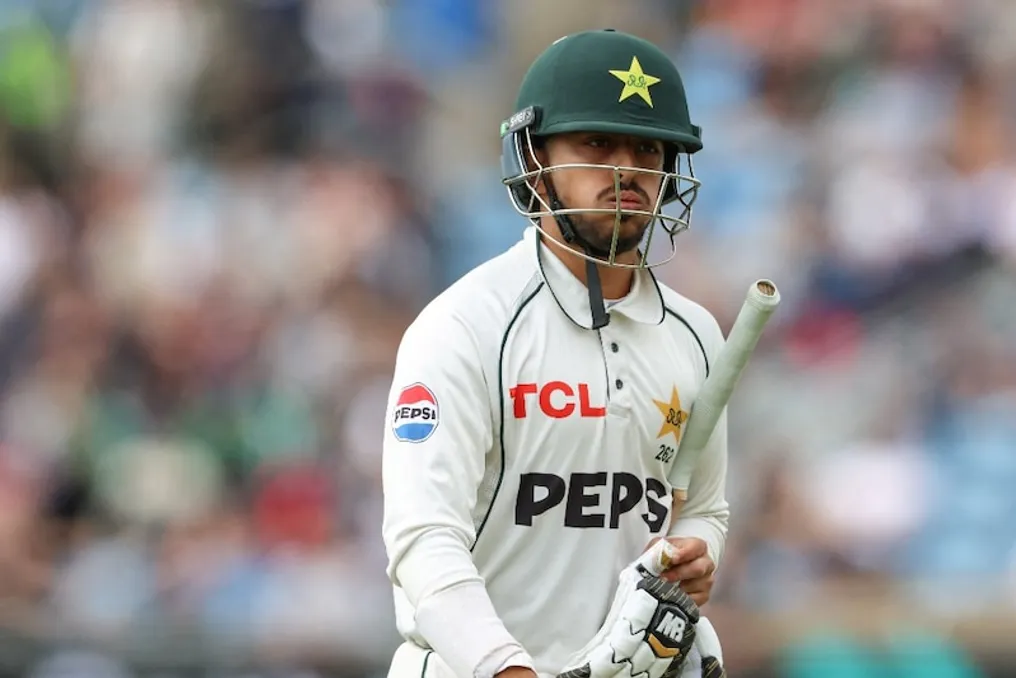
The first match of the three-match series of test games between England and Pakistan took place at Headingley in Leeds. In this game, the performance of the Pakistani batsmen in the first innings was extremely poor, and the entire team scored only 171 runs. Opener Azan Aways did not meet the hopes of Pakistani fans.

On the very first delivery, Ollie Robinson dismissed Azan Aways via LBW. Robinson bowled a wobbling seam delivery that pitched inside to left-handed batsman Azan Aways. Azan could not correctly judge the trajectory of the ball, and it hit him directly on the pad. After persistent demands from the English team, umpire Chris Gaffney declared him out.

Azan Aways disagreed with the umpire's decision and immediately requested a video review (DRS). The replay clearly showed that the ball did not hit his bat. However, after tracking the ball, which showed three radii from contact to the stumps, and analysis, the third umpire upheld Chris Gaffney's decision because the ball struck the upper part of the middle stump.

Thus, Azan Aways was forced to leave the field on the very first ball of the test series and found himself on an undesirable list. Azan is the second opening batsman for Pakistan to be dismissed on the first ball of a test match. A similar incident occurred in 1983 when Mohsin Khan was dismissed on the first ball against India in a match in Jalandhar. This means that this event has been repeated among Pakistan's opening batsmen after 43 years.

Although Azan Aways set an awkward record, Ollie Robinson achieved a significant feat. He became the fourth English bowler to take a wicket on the first ball in any Test match played in England. This phenomenon began with Maurice Tate in 1926, when he dismissed Warren Bardsley of Australia on the first ball in Leeds.

Forty-eight years later, George Arnold in 1974 sent Indian batsman Sunil Gavaskar to the pavilion on the first ball in a match in Birmingham. In 2007, Ryan Sidbottom dismissed Darren Ganguly of West Indies on the first ball in a match in Chester-le-Street. Now, in 2026, Robinson has joined this rare list by dismissing Azan Aways.

After Ollie Robinson delivered the initial blow to Pakistan, he did not allow the pressure to ease. Four out of the first five batsmen fell victim to him. Robinson bowled a total of 18 overs, taking 5 wickets for 51 runs. This result is particularly important for Robinson as he recently returned to the national team after a long break. In June, he played a key role in England's victory at Lord's against New Zealand, taking 7 wickets for 77 runs. Now he has demonstrated his impact even before the start of the match against Pakistan.
Similar stories

Five batsmen with the most sixes in WTC, including Rishabh Pant and Rohit Sharma
Read more
www.aajtak.in

Five batsmen with the most sixes in WTC, including Rishabh Pant and Rohit Sharma

With the introduction of the World Test Championship (WTC), players' approach to Test cricket has changed, adding a special dynamic to every match. Now, teams compete to improve their position in the points table.

Fours and sixes have become more common in Test cricket. When reviewing the list of the best batsmen in the world by the number of sixes hit in WTC history, many Indian players feature.

At the top of this ranking is Ben Stokes from England. This all-rounder has scored 3857 runs in 64 WTC matches and hit a record 88 sixes. Ben Stokes announced his retirement from international cricket on June 28th of this year. He made this unexpected decision during the Trent Bridge match between England and New Zealand, which was a big shock to fans.

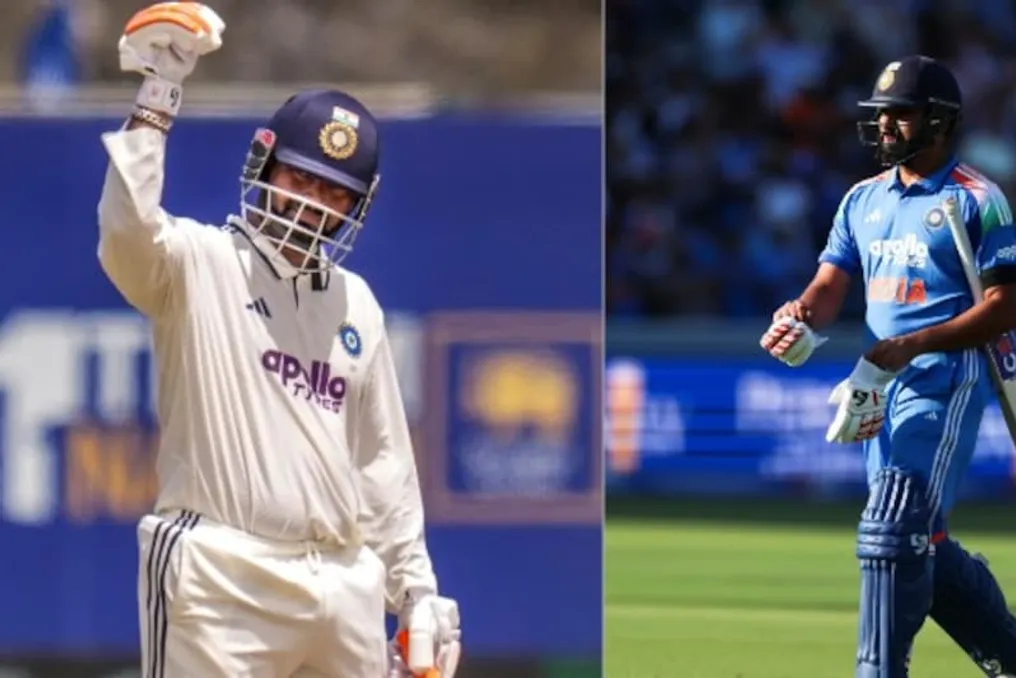
Star veteran batsman and wicketkeeper for the Indian team, Rishabh Pant, ranks second on this list. Having hit 80 long sixes, he scored 2885 runs in only 41 WTC matches. Rishabh Pant became the fastest batsman in Test cricket history to reach 100 sixes, setting this record against Sri Lanka in Galle.

Former captain of India, Rohit Sharma, demonstrated his powerful batting in Tests. He scored 2716 runs in 40 WTC matches and sent the ball over the boundary 56 times. Additionally, Shubman Gill, the current captain of India in Test and ODI formats, also showed excellent results, scoring 2867 runs in 41 WTC matches and hitting 46 impressive sixes.

Young Indian opener Yashasvi Jaiswal quickly made an explosive impression. In just 29 WTC matches, he scored 2543 runs and hit 45 sixes. The list also includes aggressive English batsman Harry Brook, who hit 44 sixes, scoring 2999 runs in 34 WTC matches. Indian all-rounder Ravindra Jadeja scored 2632 runs and hit 42 sixes over 49 WTC matches.

23-year-old spinner Lyle Robertson breaks world record of Pakistani bowler by taking 6 wickets on ODI debut
Read more
www.aajtak.in

23-year-old spinner Lyle Robertson breaks world record of Pakistani bowler by taking 6 wickets on ODI debut

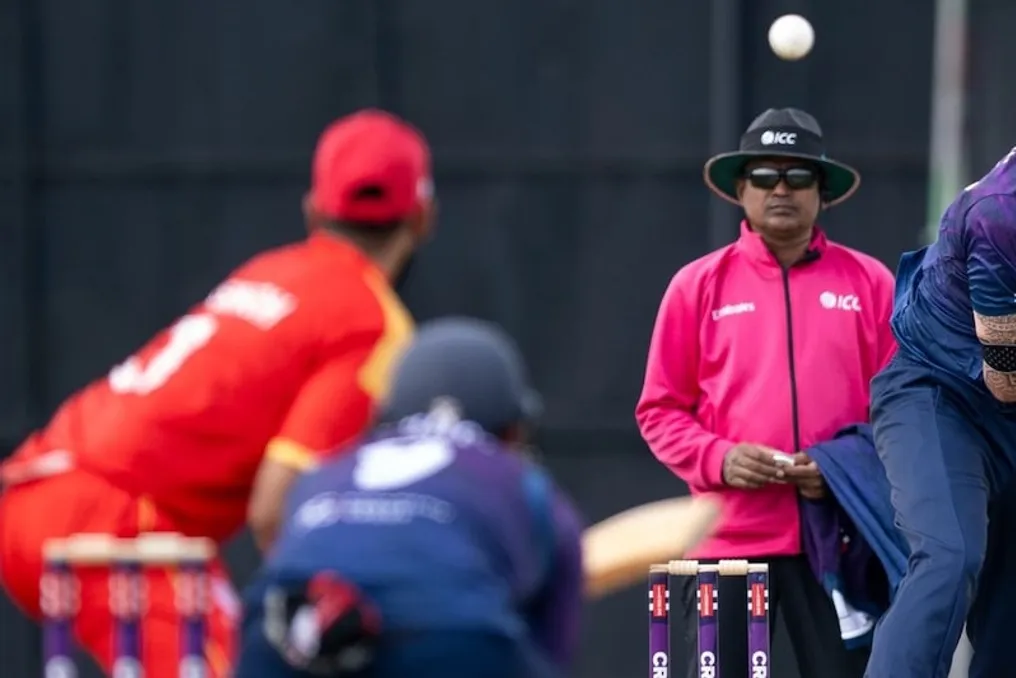
Scottish spinner Lyle Robertson achieved a historic feat on his One Day International debut. In the match against Canada, Robertson took six wickets for just 52 runs in 10 overs. This is the best bowling performance by a spinner on an ODI debut. Due to his impressive bowling, Scotland defeated Canada by a large margin of 170 runs.

Robertson broke the record set by Arafat Minhas of Pakistan. Minhas had taken five wickets for 32 runs in his ODI debut against Australia this year. In this match on August 13th at Forthill ground in Dundee, Scotland set a massive target of 348 runs against Canada. However, the Canadian team was all out for 177 runs in just 35 overs.

Robertson got his first wicket in the 23rd over when he dismissed Harsh Thacker. Subsequently, he also sent Sad Bin Zafar and Shivam Sharma back to the pavilion. Robertson concluded his spell in a spectacular fashion; in his final over, he dismissed Shreyas Mowa and Zahid Shirzad consecutively. The next ball was a dot, and then he completed his six-wicket haul by taking the wicket of Kaleem Sana.

With this performance, Robertson became the fourth bowler in the world to take six or more wickets on an ODI debut. The world record in this category is held by Charlie Ceesell of Scotland. Ceesell took seven wickets for 21 runs on his debut against Oman at the same ground in 2024. Additionally, Kagiso Rabada of South Africa took six wickets for 16 runs in his first ODI against Bangladesh in 2015. Meanwhile, Fidel Edwards of West Indies took six wickets for 22 runs on his ODI debut against Zimbabwe in 2003.

In the match, Scotland's captain Richie Barrington decided to bat first after winning the toss. Despite the early loss of two wickets, Barrington and Brandon McCullum stabilized the innings. A crucial partnership of 140 runs was formed between these two batsmen for the third wicket. McCullum scored 64 runs off 59 balls, which included eight fours and three sixes. On the other hand, Barrington scored a brilliant century with 120 runs off 103 balls, including 15 fours and four sixes. Matthew Cross and Jack Jarvis added quick runs in the final overs. Cross remained unbeaten on 51 runs, while Jarvis contributed 30 runs off just 14 balls. Scotland posted a huge total of 347 runs losing seven wickets.

Canada's chase of the massive target did not start satisfactorily. Aaron Johnson was dismissed early, and Yuvraj Samara managed only 16 runs. Paragat Singh tried to stabilize the innings by scoring 42 runs. Anup Cheema played an explosive innings of 42 runs off just 16 balls, but Robertson dismantled the middle and lower order batsmen, ending all possibilities of a Canadian comeback. From a run-scoring perspective, this was Scotland's biggest win in ODI cricket jointly. Previously, Scotland had defeated Canada by 170 runs in 2014.

Record score of 952 runs after the 1997 match: Is it possible to break the 1000-run barrier in Test cricket?
Read more
www.aajtak.in

Record score of 952 runs after the 1997 match: Is it possible to break the 1000-run barrier in Test cricket?

In the T20 era, where the style of play has changed and batsmen have learned to score faster thanks to the popularity of powerful shots, and fitness and technique levels have risen, the world of cricket has gone through an entire era from 1997 to 2026. However, one record remains unchanged—the fortress of 952 runs.

Twenty-nine years ago, the Sri Lankan team set an incredible record in Test cricket that no other team has managed to surpass to this day. The match, which began on August 2, 1997, at the R. Premadasa Stadium in Colombo between Sri Lanka and India, witnessed India first scoring 537/8 after declaring their innings. Captain Sachin Tendulkar scored 143 runs, Mohammad Azharuddin scored 126, and Navjot Singh Sidhu scored 111. At that time, a score over 500 was considered a very strong performance.

But what happened after the completion of the Indian innings turned this match into one of the most outstanding events in cricket history. Sri Lanka came out onto the field and started scoring runs, and instead of wickets falling, records were broken. The score climbed: 300, 400, 500, 600... The game of the Sri Lankan batsmen did not stop. In the end, after 271 overs, the score reached 952 for the loss of 6 wickets, after which the innings was declared. In fact, on the fifth day, Sri Lanka played not for victory, but to create a historical moment. During the transition from 587/1 on the fourth day to 952/6 on the fifth day, the team added 365 runs.

To date, this score remains the highest team total in Test cricket. Following it are 903/7 by England, 849 by England, and 823/7 against Pakistan in 2024. Thus, almost three decades later, 952 remains the leader.

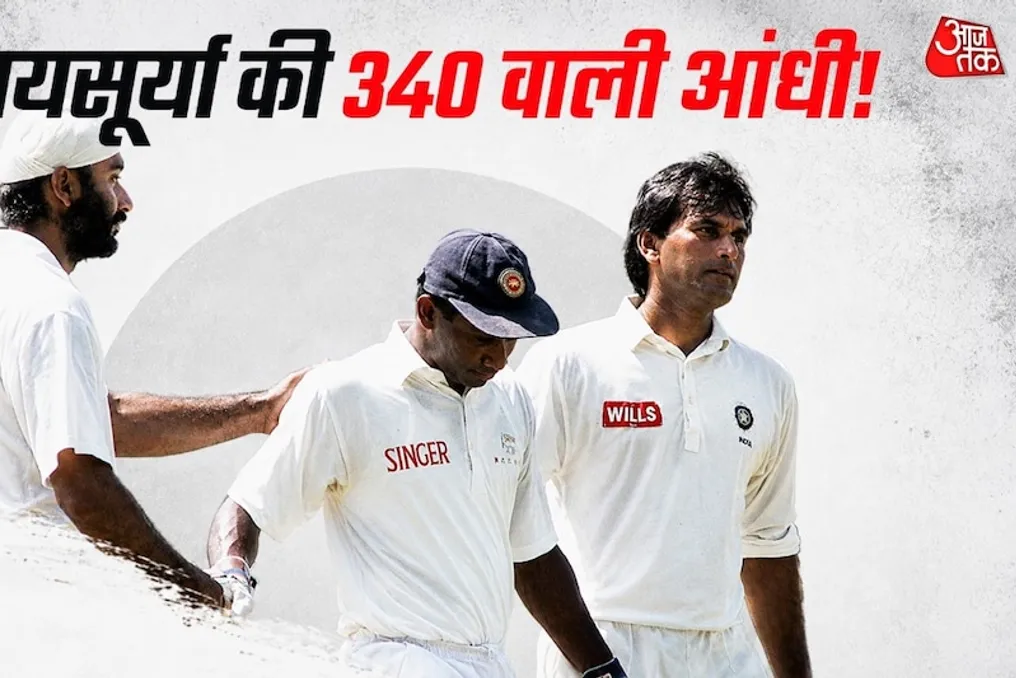
However, the story of 952 runs is not just a tale of a large score; it contains statistical data that is still difficult to accept. Sanath Jayasuriya personally scored 340 runs, playing 578 balls, with his innings including 36 fours and two sixes. Roshan Mahanama scored 225 runs off 561 balls. These two added 576 runs for the second wicket. This partnership of 576 runs is still a world record for the second wicket. Moreover, it is the largest partnership in any wicket in Test cricket history, only surpassed by one match: in 2006, Kumar Sangakkara and Mahela Jayawardene added 624 runs for the third wicket against South Africa in Colombo (SSC).

Thus, the partnership of Jayasuriya and Mahanama for 576 runs is the second-largest partnership in Test cricket history. Imagine: one batsman scores 340 runs, another reaches 225, and together they score 576 runs. After this, Arvind D Silva added 126 runs. The total score of the Sri Lankan team was 952 runs. Sri Lanka created a Test cricket record that has stood for 29 years. This is where the true mystery of 952 begins.

Is it possible to reach 1000 runs in modern cricket? The question becomes even more interesting in the current era. T20 cricket has made the game more aggressive, allowing batsmen to send the ball over the boundary more easily. The rate of scoring has also increased in many situations compared to 1997.

Nevertheless, reaching 1000 runs in Test cricket is not just a matter of speed. It requires a very flat pitch where batsmen will not find it difficult to score runs. Furthermore, at least two or three large and prolonged partnerships are necessary for the score to continuously increase. Most importantly, the opposing bowlers must not manage to dismiss the players, and the batsmen must not be under pressure.

However, the captain faces the biggest challenge: what is the priority—the record or the result. To approach 900–1000 runs, the innings needs to be stretched, whereas for winning a Test match, it is important to declare the innings at the right time to give the opponent enough time.

Sri Lanka in 1997 demonstrated that there is no limit to offensive possibilities in Test cricket, achieving 952 runs. After 952/6 by Sri Lanka, no team has managed to reach even 904 runs. In 2024, England tried to approach this record, scoring 823/7 against Pakistan. Thus, although batsmen in the T20 era have become faster, the 1000-run wall in Test cricket still stands. The mountain of 952 runs that Sri Lanka built 29 years ago remains the Everest of Test cricket. The only question remaining is: will any team ever be able to overcome this Everest and reach 1000?

Popular