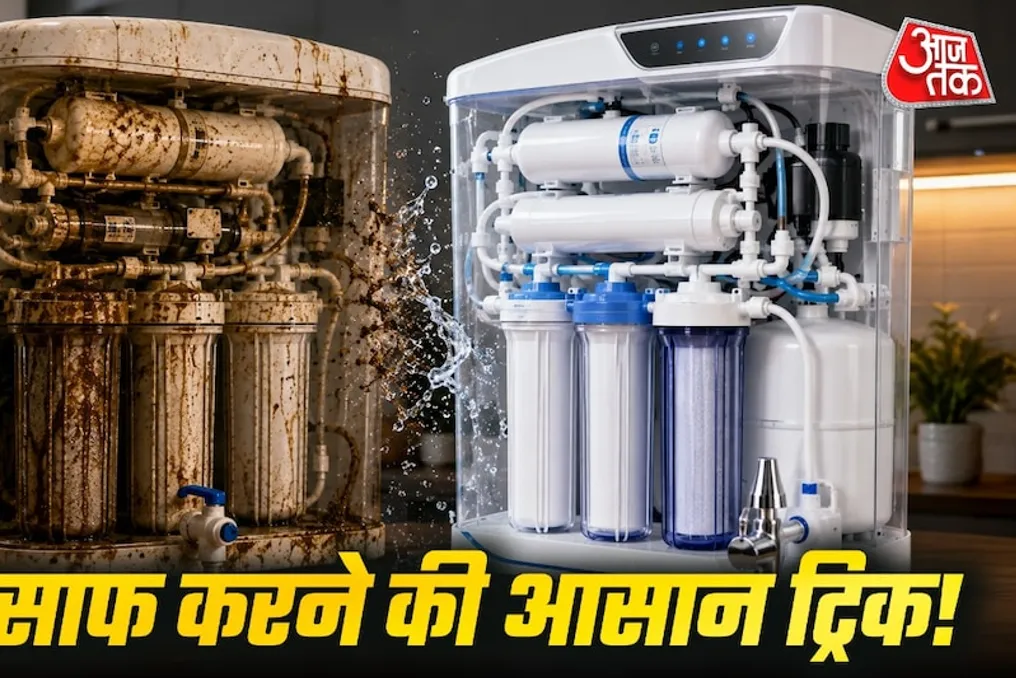
Most homes today have installed RO water purification systems. After installation, many assume that the entire responsibility for water purity lies with the machine itself. They regularly change filters and perform maintenance, considering the task complete. However, it is important to remember that cleaning the water storage tank inside the RO system is no less important. If this tank is not cleaned for a long time, accumulated dirt and grease can spoil even purified water.
Especially during the rainy season, due to humidity and prolonged water stagnation, the risk of deposits forming inside the tank increases. Often, people spend significant amounts of money by calling specialists to clean this reservoir. If you are one of those people, this information will be useful to you. Below is a simple way to clean the RO reservoir yourself, which will allow you not only to perform the cleaning yourself but also to save money.
Signs of RO tank contamination
Even if the dirt in the reservoir is not visible, changes in the water can be noticed. If the taste of the RO water suddenly changes or a slight unpleasant odor appears, attention should be paid to cleaning the tank. It is also recommended to clean after a long absence when water remained in the reservoir, or after filter replacement during RO service maintenance.
How often should the RO reservoir be cleaned
As a rule, it is recommended to clean the RO reservoir every one to two months. However, if the taste or smell of the water changes, or you see dirt in the tank, or the machine has not been used for a long time, do not wait for the next date—clean immediately.
Preparing to clean the RO reservoir
The primary step in cleaning is ensuring safety. Before opening the reservoir, you must disconnect the machine's power cord from the outlet and shut off the water supply. Then, you need to completely drain the water remaining in the reservoir. If the water is not too old, it can be used for watering plants or cleaning the house.
Step-by-step instructions for cleaning the RO reservoir
- Carefully open the tank: If the reservoir is easily removable from the RO, carefully detach it. If it is fixed inside the machine, open only the part that opens easily according to the model. It is important to avoid jerking or attempting to disconnect pipes, wires, or any connections.
- Avoid using soap or detergents: Dishwashing liquid, soap, powders, or strong chemical cleaners should not be used to clean the RO reservoir. Their particles may remain inside and come into contact with the water later. Instead, you can use a little lemon juice or vinegar mixed with warm water.
- Slowly clean the inner walls: Take a clean soft cloth or sponge and gently wipe the inner surface of the reservoir with the prepared solution. Pay special attention to areas with fatty deposits or stains, using light pressure. You should not scrub or scratch the tank surface heavily.
- Thorough rinsing: After cleaning, the reservoir must be thoroughly rinsed with clean water two or three times. This ensures that even a small amount of lemon or vinegar remains inside. Then, wipe the interior with a dry clean cloth to remove residual moisture.
What to avoid during cleaning
Metal dish brushes, steel scrapers, or any sharp objects should not be used to remove dirt from the RO reservoir. This can lead to scratches on the walls, which will increase the probability of dirt accumulation in the future. If your RO has a UV lamp, try not to touch the glass part during cleaning.
Can the water be drunk immediately after cleaning
After the reservoir is put back in place, turn on the water supply and start the machine. Although technically you can start drinking the water, it is better to first drain the first batch of water that collected after cleaning. After that, let the reservoir refill with water again and use it as usual.
When is it better to call a specialist
You should not try to clean it yourself if the RO model is difficult to open, access to the reservoir is difficult, or if opening it requires disconnecting pipes and electrical connections. In such cases, it will be more reasonable to contact a qualified technical specialist.