The World Robotics Conference (WRC) 2026 demonstrated the transition of robots from the stage of confirming technological capabilities to the stage of confirming product market value. The event opened on August 19th at the Biren Yichuan International Exhibition Center in the Yichuan district of Beijing and was dedicated to the theme of human-machine symbiosis and the integration of production demand.
The conference gathered over 300 domestic and international companies, presenting about 3000 exhibits and more than 150 newly released products. Over 1000 experts participated in seven main forums and more than 70 parallel events, while over 17,000 participants from more than 20 countries competed.
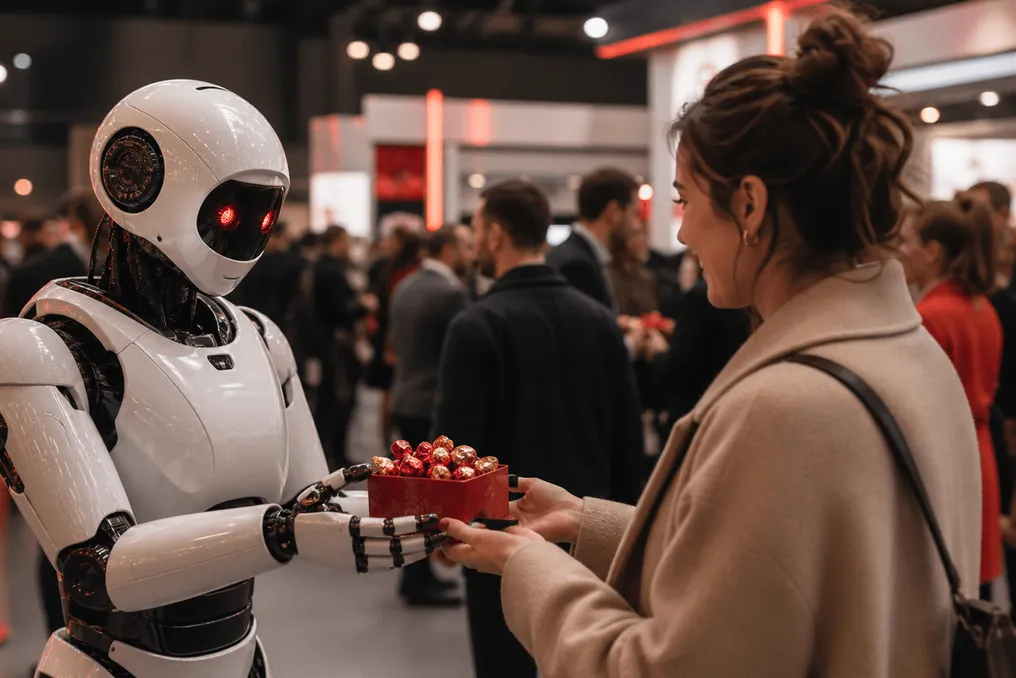
The first day of the conference coincided with the Qixi Festival, and the exhibition even organized a 'robotic wedding': a bipedal groom bowed to present flowers, and a wheeled bride with arms accepted a badge and walked down the podium distributing sweets, while robots delivered flowers to visitors.
According to the authors, if last year's WRC discussed the ability of robots to work, this year the industry focused on how well they function, what their cost is, who buys them, and whether they can be worn by humans. Among the developing areas are the evolution of robot movements and operational capabilities, the development of tactile sensing and dexterity, as well as the use of exoskeletons by ordinary people, with joints becoming a new arena for component suppliers.
One of the key trends is that robots are shifting from technological validation to product validation. WRC turned its first day into a product launch day: over 300 companies presented more than 2000 exhibits, including over 150 novelties. The industry is moving beyond demonstrating capabilities; running, jumping, and tumbling are becoming basic functions, and new competition is starting in the areas of learning speed, task completion, scenario efficiency, and product definition. Robots are increasingly turning into products that must be used, purchased, and operated in the long term.
Despite the progress in capabilities, development continues: the company Unitree, which was included in the Shanghai STAR Market on the same day, attracted significant attention. Its G1 model demonstrated playing table tennis with humans, using a perception-decision-whole-body-control-execution chain based on self-developed algorithmic models, with forehand, backhand, and smash skills, and a control latency of less than five milliseconds.
Other noted trends include: a focus on global models, although they proved less in demand than expected; tactile sensing as a new emphasis for dexterity; the beginning of exoskeleton potential manifestation; and the transformation of joints into a new battleground for component suppliers. These five directions point to a general trajectory: robots are moving from proving their viability to actually being used and bought in daily life, forming a real industry.