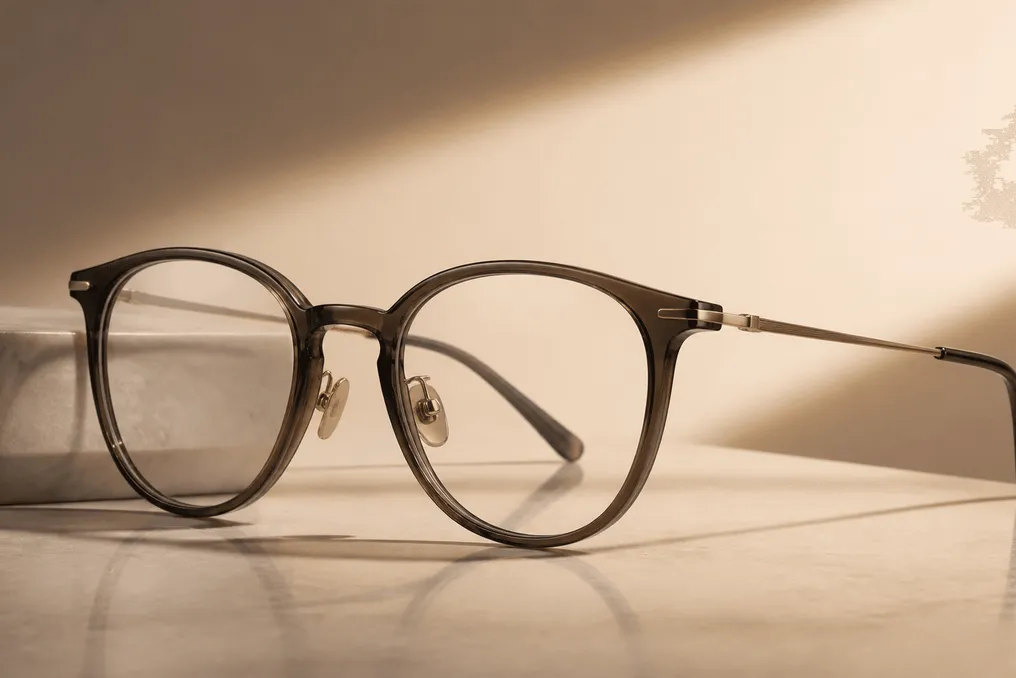
Sharge Technology introduced its loomys L1 smart glasses in Wuhan on August 18. These glasses, priced from 2,699 RMB, are built around three core features: stylish design, comfort for extended wear, and an artificial intelligence-based active memory function.
Founder and CEO Zhang Bo referenced the company's past experience. In late 2024, Sharge released the A1 AI glasses at a collaborative price of 999 RMB, which sold over 50,000 units within 24 hours of domestic pre-orders and exceeded $2 million USD in international monthly crowdfunding. However, issues with Bluetooth, image calibration, battery life, and software upon delivery led to returns and refunds. Consequently, Sharge suspended production of tens of thousands of units and fully refunded early users.
Zhang stated that the goal of these smart glasses is to replace conventional eyeglasses, not smartphones. Most existing AI glasses resemble sunglasses and are designed for about three hours of daily use. In contrast, the loomys L1 targets users who wear glasses for more than 16 hours daily.
For construction, Sharge utilized an aerospace-grade titanium front frame and natural acetate plates. Titanium provides strength with low weight, while acetate is skin-safe. The design is inspired by the Danish eyewear brand Lindberg, where cables are positioned between the titanium and the plates. A proprietary spiral hinge with a flexible titanium rod eliminates the need for springs, supports frame width adjustment, maintains damping after 10,000 open-close cycles, and conceals wiring.
Thanks to the slim design, the camera, battery, and motherboard are housed in the temples, shifting the center of gravity behind the ears. The lightest model weighs only 43 grams, reducing pressure on the nose by 50%.
The loomys L1 operates on Sharge's proprietary active memory system, LoomOS, which differs from passive activation modes. Key functions include multi-scene recording that captures conversations, calls, and ambient sounds during music listening and voice chats; an AI digital diary that integrates recordings with phone messages to summarize encountered people and tasks; and an AI Live Photo feature that combines photos with notes.
Privacy concerns are addressed via a magnetic lens case. Sharge commits not to store raw audio and video materials in the cloud long-term, retaining only organized text content.
The hardware employs a dual-chip architecture: the main processor is the Qualcomm Snapdragon 4nm-class W5100 and the Bluetooth chip is the Hengxuan BES2700, both running on Android. The W5100 consumes 38% less power than in the AR1 AI memory mode. The camera is a custom 12-megapixel module with a 111-degree ultra-wide field of view, approximately 20% smaller. The audio system uses a Goertek 8mm speaker. The battery features a 5-second quick-swap architecture, with a 258mAh cell capacity and a foldable casing, providing up to 40 hours of total operation or about 12 hours in active AI memory mode.
In the loomys L1 ecosystem, Feishu is integrated via a command-line interface to connect agents, allowing voice control over messages, summaries, and scheduling, and it also connects to Tencent WorkBuddy for email management. Prices range from 2,699 RMB with Essilor Crizal 1.67 lenses to 2,999 RMB with Zeiss Duravance Platinum 1.67 lenses. Pre-orders are accepted until September 17th with an annual AI membership subscription costing 999 RMB. Large-scale delivery is expected by the end of 2026, with initial 24-hour pre-orders exceeding 25,000 units. This transition marks a fundamental shift, and the true test will come after delivery.