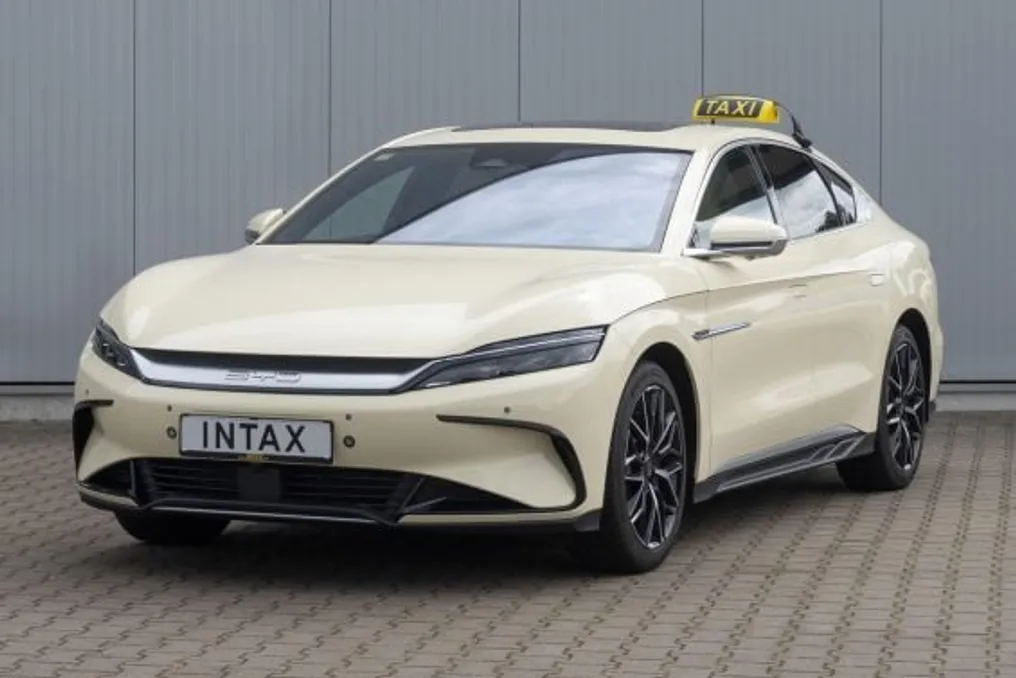
Mercedes-Benz has significantly increased its share in the German taxi market, aiming to reverse a previous decline and curb the expansion of the Chinese manufacturer BYD. From January to June 2026, the automaker registered 18% of newly licensed taxis in the country, a notable increase from the 8% recorded in the same period of 2025, according to the newspaper Handelsblatt.
Historically, Mercedes was the preferred supplier for nearly 17,000 German taxi operators and once dominated 45% of the segment in 2022. However, the company had reduced its presence due to the perception of excessively low profit margins. The E-Class model, traditionally considered the ideal German taxi, saw its registration grow from 72 units throughout last year to 126 just in the first half of 2026. Annually, the country registers between 4,000 and 6,000 taxi vehicles.
Much of this growth is attributed to Mercedes' promotional offers. The company grants a 24% discount to taxi drivers on two diesel versions of the E-Class, which reduces the cost to less than 242 thousand reais (40 thousand euros). This promotion, which was set to end in July, has been extended until the end of the year. Additionally, the Vito receives an 18% reduction plus a bonus of 36 thousand reais (6 thousand euros), while the V-Class offers a 3% discount with a one-time payment of 30 thousand reais (5 thousand euros).
The V-Class is being gradually replaced by the electric VLE model, which the brand also intends to incorporate into fleets. However, this plan faces a regulatory hurdle: in its broadest configuration, the VLE can exceed 3.5 tons, which is the limit established both in Category B licensing in Germany and in Brazil.
Analyst Frank Schwope commented to Handelsblatt that 'giving up on taxis was a fatal mistake,' referring to Mercedes' CEO, Ola Källenius. According to Schwope, a taxi fleet functions as a moving showroom, as every ride exposes the passenger to a model they might not otherwise consider purchasing, acting as an unintentional test drive.
On the other hand, BYD has integrated the taxi segment into its national expansion strategy. Although it registered only ten taxis in the first half, the brand reports having over 100 orders and forecasts around 500 deliveries by December. Carsten Schopf, responsible for corporate sales for BYD in the country, stated that 'next year, the number in Germany must obligatorily be four digits.'
BYD's main attraction is the price: the hybrid SUV Seal 6 is offered to operators for less than 181 thousand reais (30 thousand euros), representing a 37% discount on the list price. The brand also aims to sell the electric models Atto 3 and Sealion 7 to taxi drivers, betting on the growing list of municipalities requiring zero-emission taxis, citing Hamburg as an example. Furthermore, BYD has recruited industry specialists from competitors and intensified its advertising in specialized media.
Despite the fierce competition, the market remains highly concentrated. Volkswagen, Toyota, and Mercedes-Benz together account for 90% of new registrations, with Volkswagen alone accounting for more than half. The best-selling taxi vehicle in the country for several years has been the Touran, a model that Volkswagen itself has already discontinued.