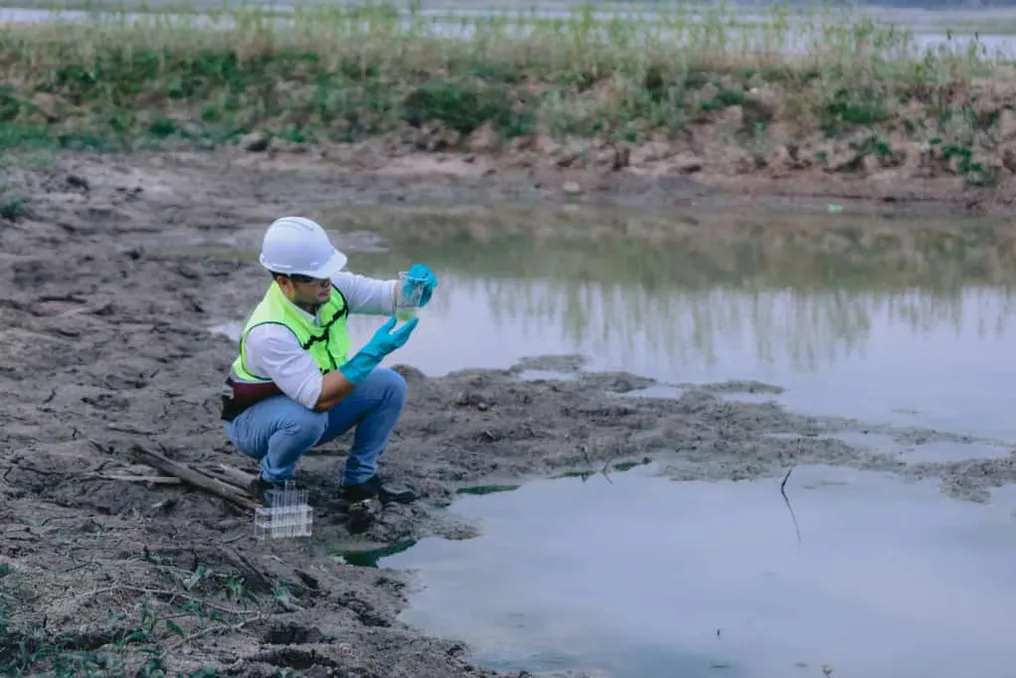
The next pandemic may give signals even before the first patients appear. Unusual animal deaths, environmental changes, or the spread of microorganisms in a specific region can indicate a transformation in the relationship between humans, animals, and nature.
This is one of the principles of the One Health concept, which views human health, animal health, and the state of the environment as a single system. Infectologist Luana Araujo states that these elements are interconnected and susceptible to factors such as climate change, deforestation, pollution, urbanization, and human migration.
According to Luana Araujo, we live in complex systems where various factors interact and do not exert isolated effects. For example, environmental changes can alter the conditions for the circulation of infectious agents, increasing contact between humans and microorganisms that were previously further from human populations.
Explaining the One Health concept, the specialist emphasizes that 'human health, animal health, and environmental health are one whole.' She notes that an imbalance in any of these components leads to negative consequences for the others.
The spread of the Aedes mosquito serves as an example of how ecological changes can affect disease distribution. Araujo points out that dengue, previously considered a tropical disease, has become endemic in some parts of Southern Europe and is also found in the southern United States.
Deforestation is another area of concern. The infectologist says that expanding agricultural frontiers increases the risk of human contact with microorganisms against which there are no known defenses, many of which are still unknown to science.
If a new threat may arise from an unidentified microorganism, monitoring the condition of animals can help notice changes before they manifest as an increase in cases among humans. For sanitary expert Gonzalo Vesina Neto, founder and former president of the National Health Surveillance Agency (Anvisa), this requires creating a permanent monitoring system across Brazil's various biomes.
Vesina insists that this network must also incorporate information from residents of these regions. He mentions indigenous peoples, coastal dwellers, and other local inhabitants who might notice unusual changes in the animal world sooner than traditional surveillance systems detect them.
When any animal begins to die off en masse for any reason, local residents should be ready to report it to find out if something else is happening in the animal world. When something happens in the animal world, some microorganism is at work there.
For the sanitary expert, this monitoring must cover six Brazilian biomes—the Amazon, Pantanal, Cerrado, Caatinga, Atlantic Forest, and Pampas—and include observation of animals and plants. The goal is to track changes in nature that may require investigation by authorities and laboratories.
Perceiving changes in fauna or the environment is only the first step. After that, it is necessary to find out what is happening and quickly identify the involved agent. Molecular biology methods, laboratory automation, rapid tests, and genetic sequencing are used in this process.
Pathologist Carlos Alberto Aita notes significant progress since the COVID-19 pandemic in molecular biology methods for rapid identification of new pathogens, as well as in laboratory automation and the development of rapid tests.
In Aita's opinion, the ability to rapidly, qualitatively, and accurately determine infectious agents is already part of the routine work of clinical laboratories. He also emphasizes that monitoring does not depend solely on specific tests; general analyses help track patients' health status.
Integrated data monitoring networks allow for prompt response to minimize the spread of new cases immediately after receiving a small number of notifications.
This integration allows linking what is observed in the environment with laboratory testing. An unusual event can trigger notifications, directing sample collection and analysis, which then leads to agent identification and tracking of its spread.
Detecting changes in nature is only useful for public health if there is the capacity to investigate what is happening. Therefore, Vesina advocates not only for monitoring in biomes but also for creating a network of microorganism sequencing centers distributed across the country.
According to the sanitary expert, Brazil still concentrates sequencers in certain universities and should expand this capability to various regions. He also advocates for continuous investment in technology development aimed at treatment and healthcare.
Aita points to another aspect of these efforts: keeping laboratories up-to-date and training specialists capable of working with new methodologies and data obtained by these networks. For him, it is crucial to invest in the technological upgrade of reference and clinical laboratories, create structured data analysis networks, and ensure continuous team training.
Thus, monitoring based on the One Health principle begins before the disease reaches the hospital. It depends on the ability to notice changes in animals and the environment, quickly determine what might be behind them, and link this information with laboratories and surveillance systems capable of directing a response.