IBM develops quantum refrigerator capable of reaching temperatures much lower than deep space
Read more
Olhar Digital
olhardigital.com.br

IBM develops quantum refrigerator capable of reaching temperatures much lower than deep space

IBM has introduced a new cryogenic cooling system that can maintain quantum computers at temperatures below 15 millikelvin, which is equivalent to only 0.015 degrees above absolute zero.

This temperature is more than 180 times lower than the temperature found in deep space and represents a significant advance for the company in overcoming one of the biggest obstacles to developing fault-tolerant and scalable quantum computing.

This system operates as a modular unit, functioning like a quantum refrigerator, which allows for the simultaneous connection and operation of several quantum processors under extremely low temperature conditions.

Keeping components at such low temperatures is crucial, as quantum processors rely on superconducting qubits; any heating can affect the behavior of these components and generate errors during quantum operations.

For comparison, IBM processors require temperatures close to absolute zero, while deep space has an approximate temperature of 2.7 Kelvin, related to the cosmic background radiation.

The new IBM equipment reaches less than 15 millikelvin, demonstrating a considerable disparity compared to the space environment.

The focus is not just on achieving extreme cold, but on ensuring that the cooling is stable and functional while the processors perform quantum calculations, as well as enabling the interconnection of modules without compromising the environment necessary for the qubits.

Although it is a notable progress, the technology is still in its initial phase. IBM managed to connect two modules and keep them at the required temperatures, also performing simple operations with the Flamingo processor.

However, this does not imply that the company has proven the execution of complex quantum operations between different modules; this remains a future challenge for the project.

In the coming days, IBM plans to integrate the Nighthawk processors into the system to continue testing the architecture.

The implementation of the modular architecture is scheduled to begin in 2027, and a main goal for 2029 is the development of the Starling quantum computer.

Starling was designed to operate with 200 logical qubits and execute one hundred million quantum operations. Unlike physical qubits, which are vulnerable to errors, logical qubits are formed by several physical qubits and employ error correction methods to increase calculation reliability.

In this context, the new cryogenic architecture gains importance because it allows the connection between different quantum processors maintained at ultra-low temperatures, aiming to build an infrastructure capable of supporting systems much larger than what is possible in a single module.

Nevertheless, proving an architecture capable of performing complex operations between these modules remains an essential step before the conception of a large-scale fault-tolerant quantum computer materializes.

Similar stories

Top 10 smartphones with 12 GB of RAM recommended for purchase in 2026
Read more
tecnoblog.net

Top 10 smartphones with 12 GB of RAM recommended for purchase in 2026

When selecting the best phone equipped with 12 GB of RAM, it is essential to consider the type of memory used. For example, the LPDDR5X standard offers greater speed and efficiency compared to LPDDR4X, even when both devices have 12 GB of RAM.

Furthermore, it is necessary to evaluate other crucial specifications, such as processor speed, camera quality, and battery life, to ensure that the smartphone meets both the user's needs and their budget.

In this article, Tecnoblog presents a list of ten 12 GB RAM phones, ranging from top models to mid-to-premium options. The positive and negative points of devices from manufacturers such as Samsung, Apple, Motorola, and Xiaomi will be analyzed.

Galaxy S26 Ultra

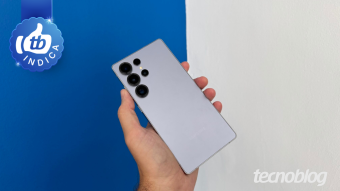
The Galaxy S26 Ultra comes in versions with 12 GB or 16 GB of RAM, utilizing the LPDDR5X standard. This type of memory has become common in more sophisticated models because it provides faster data transfers and better energy efficiency.

This device incorporates the Snapdragon 8 Elite Gen 5 for Galaxy (3 nm) chip, which is considered one of the most powerful mobile processors currently available. The System on a Chip (SoC) ensures robust performance even during intensive activities, such as gaming or video editing.

In terms of photography, it features an advanced quadruple rear camera system, which includes a 200 MP wide-angle lens with an f/1.4 aperture, which is a highlight in the analysis conducted. Additionally, its 6.9-inch Dynamic AMOLED 2X screen has a privacy feature to prevent unauthorized viewing by third parties.

iPhone 17 Pro Max

The iPhone 17 Pro Max comes equipped with 12 GB of LPDDR5X RAM across all four storage configurations, ranging from 256 GB to 2 TB. This configuration ensures smooth multitasking operation and speeds up application loading.

Complementing this, the A19 Pro (3 nm) chip in this phone offers the highest performance ever seen in an iPhone. Thanks to thermal redesign, the Graphics Processing Unit (GPU) and the Central Processing Unit (CPU) can maintain continuous processing up to 40% higher than the previous model.

Another notable aspect is the rear camera array, which features the largest telephoto lens (1/2.55'') ever seen in an Apple phone. This lens set allows for professional-quality shots and is positioned in a prominent rectangular module.

South Korean SEBIT rocket launched in Maranhão; mission results not yet confirmed
Read more
olhardigital.com.br

South Korean SEBIT rocket launched in Maranhão; mission results not yet confirmed

The South Korean SEBIT rocket was launched on Wednesday, the 19th, from the Alcântara Launch Center (CLA), located in the state of Maranhão. Professionals who attended the event on site confirmed the operation to CNN.

Despite the launch, there was no broadcast of the operation, and there is not yet enough data to attest to the success of the mission. According to reports provided to CNN, the procedure was executed through an agreement signed between ALADA, a Brazilian aerospace projects company, and the South Korean company INNOSPACE, following the schedule established for tasks under Brazil's responsibility.

All planned procedures for ALADA and the Alcântara Launch Center were fulfilled, including the completion of the flight. However, this does not allow for defining the outcome of the rocket's mission. INNOSPACE needs to analyze the data collected during the vehicle's monitoring and tracking before it can report on the launch performance.

Until this analysis is complete, it is not possible to declare that the SEBIT flight was successful. This launch integrates the collaboration between INNOSPACE and various Brazilian entities involved in national space activities. The South Korean company collaborates with ALADA, the Brazilian Air Force (FAB), and the Brazilian Space Agency (AEB) to operationalize its work from Alcântara.

Details about other vehicles and missions

The SEBIT differs from the HANBIT-Nano, another INNOSPACE rocket scheduled to be launched also from Maranhão. The HANBIT-Nano is classified as a small orbital launch vehicle and has a return-to-flight mission scheduled for November. This model experienced an interruption in its first commercial flight in December 2025 due to an anomaly that caused the vehicle to collide with the ground shortly after takeoff. The next mission aims to evaluate the improvements and quality assurance measures implemented by the company following the investigation of this incident.

For the specific case of SEBIT, the main focus this Wednesday was to conduct a test flight that could generate essential data for the vehicle's development and subsequent commercial use. The next step consists of awaiting the evaluation of the tracking and performance data by INNOSPACE, as only after this verification will it be possible to confirm whether the rocket achieved the objectives set for the mission.

Bentley reveals the interior of the Torcal, its electric SUV, featuring Merino wool upholstery
Read more
autopapo.com.br

Bentley reveals the interior of the Torcal, its electric SUV, featuring Merino wool upholstery

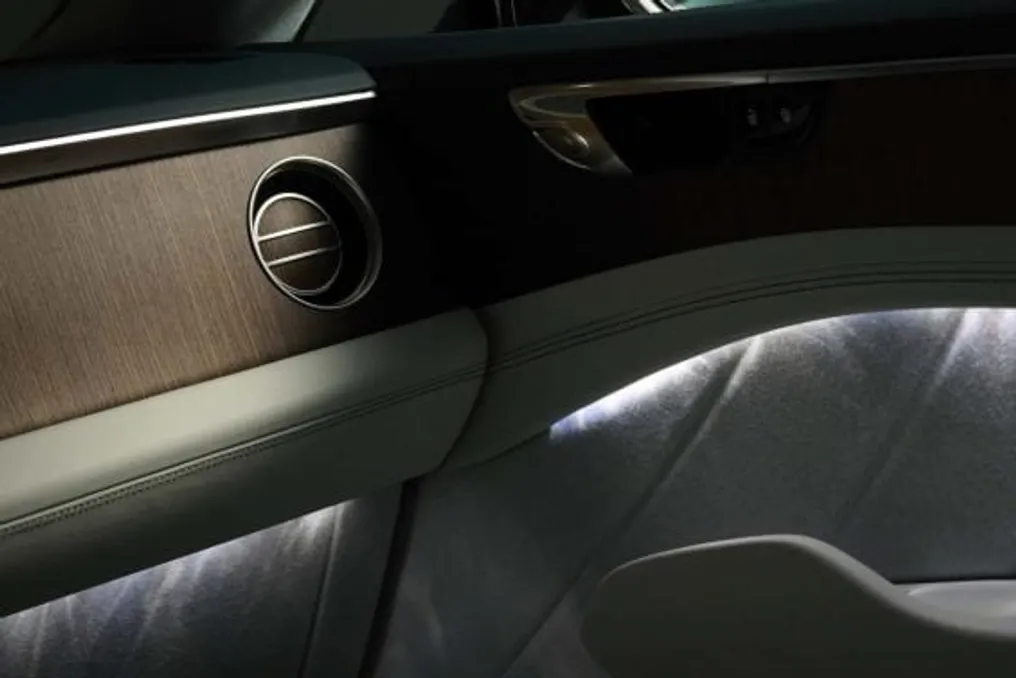
Bentley is beginning to showcase the interior of the Torcal, its first fully electric SUV, ahead of its official launch scheduled for September 23rd in London. Unlike the vegan leather and plastic surfaces common in electric vehicles sold in Brazil, the British manufacturer will offer an option using 100% Merino wool for seating and panels, complemented by wood veneer made from walnut scraps pressed with recycled paper.

This fabric was developed in collaboration with Fox Brothers, a traditional British weaving mill, with the goal of resisting wear and daily use of a car. Historically, this prevented the use of natural fibers in seats. According to Bentley, this is the first pure wool automotive fabric to receive the Responsible Wool Standard certification, which monitors animal welfare and traceability throughout the production chain.

The selection of this material goes beyond just sustainability. Merino wool has fibers with a diameter between 15 and 24 microns, making it significantly finer than human hair, which ranges between 50 and 100 microns. This delicacy eliminates the characteristic itchiness of common wool. Furthermore, its fibers are naturally wavy, allowing them to trap air and provide thermoregulation, preventing the seat from overheating in the sun or getting excessively cold in the morning. The wool also demonstrates the ability to absorb up to 30% of its weight in moisture without appearing wet and offers odor resistance.

This sheep breed originated in Spain in the 13th century and was considered a strategic asset; for centuries, removing a live animal from the country was a crime punishable by death. It was only from the 18th century that flocks were introduced to Australia, New Zealand, and South America, which are now the main production centers. In Brazil, breeding is concentrated in Rio Grande do Sul, where Australian Merino is one of the region's traditional breeds in the Campanha area.

Annual shearing is a necessary procedure, as the wool continues to grow. A notable example is that of Shrek, a New Zealand Merino that remained hidden in caves for six years to avoid shearers. When captured in 2004, he had 27 kg of wool, approximately six times the average for the breed, which would be enough to make 20 men's suits. This event was broadcast live on television.

The finish called Ombre Veneer is created from walnut scraps and recycled paper, which are compacted into up to a thousand layers and subsequently sliced into sheets less than a millimeter thick. These pieces are arranged so that the tone transitions from almost black to the natural color of the wood along the dashboard and doors. The set is finished with Mulliner Sunburst aluminum, brushed in three directions, which evokes the aesthetic of engine-turned panels found in classic models.

The Torcal, which is part of Bentley's fourth product line, alongside the Continental GT, Flying Spur, and Bentayga, will be manually assembled in Crewe, England, with production expected in 2027. The brand confirmed the presence of two electric motors, all-wheel drive, and a range exceeding 480 km, although it has not yet disclosed details about power, battery capacity, or price.

Popular