Prime Minister Modi instructed ministers to interact with students and visit government schools
Read more
The times of India
timesofindia.indiatimes.com

Prime Minister Modi instructed ministers to interact with students and visit government schools

Prime Minister Narendra Modi directed ministers on Wednesday to spend a day in universities, interacting with students, and also to visit government schools in their constituencies to assess the conditions provided to children, including mid-day meals.

These dual directives are aimed at strengthening engagement with Gen Z and Gen Alpha generations (ages 5–15).

During the Cabinet meeting, general information was presented regarding social media activity and a ranking of all ministers. This ranking was based on activity, engagement, and reach across various platforms such as Instagram, X, Facebook, and LinkedIn, for the period from May 1st to August 15th. The Prime Minister ranked first in the list.

Among the ministers who showed high performance were Amit Shah, Rajnath Singh, Nitin Gadkari, Shivraj Singh Chouhan, Piyush Goyal, Ashwini Vaishnaw, and CR Patil.

According to TOI, the Prime Minister asked ministers to improve their social media presence and engage in more interactive communication through these platforms, rather than just publishing or reposting government decisions.

Those aware of the discussion reported that ministers were also provided with a report on the performance of Bharatiya Janata Party (BJP) leaders and other political figures for reference and to evaluate how they could improve their presence and engagement on these platforms.

High-performing participants included Uttar Pradesh Chief Minister Yogi Adityanath, as well as Lok Sabha opposition leader Rahul Gandhi, AAP party chief Arvind Kejriwal, and Tamil Nadu Chief Minister Joseph Vijay.

The metrics considered for compiling the social media ranking and performance report included the average number of daily posts, overall engagement level, average engagement per post, likes, average likes, and follower count across all platforms.

Although the 'One Day, One University' program initiative emerged amidst student protests, the drive to connect with the Gen Alpha generation and visit schools gains particular significance in light of children's demands for basic conditions, teachers, and quality nutrition.

CJP, who led the protests at Jantar Mantar, also launched a program to assess gaps in government schools.

It was also revealed that ministers were instructed to regularly send their local representatives to monitor the functioning and conditions in government schools.

Modi also directed ministers to assess how they can provide youth with artificial intelligence skills, which was part of the Independence Day announcements. Modi urged ministers to focus on the areas he designated under 'Sapta Dhara.'
Similar stories

PM Modi presented a package of initiatives in education and technology to the youth at Rajni-Kille
Read more
www.aajtak.in

PM Modi presented a package of initiatives in education and technology to the youth at Rajni-Kille

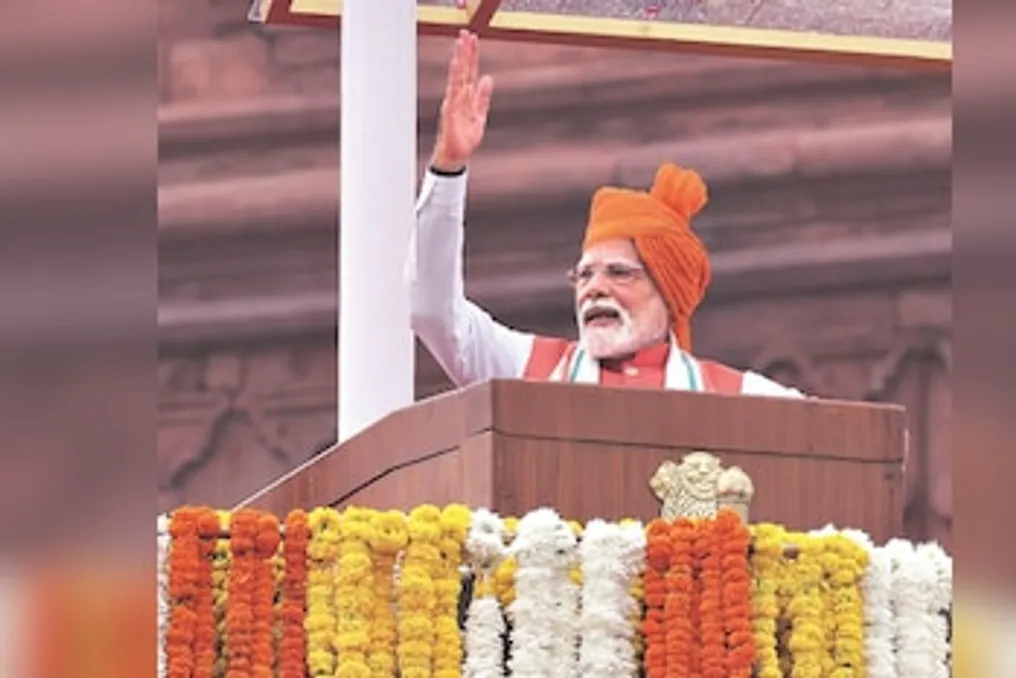
During the celebration of India's 80th Independence Day, Prime Minister Narendra Modi delivered a speech from the Red Fort parapet that was entirely focused on the country's youth, students, and researchers, known as 'Gen-Z'. The Prime Minister emphasized that the key to creating an 'Developed India by 2047' lies in the hands of India's youth and students.

Modi unveiled a large-scale plan for the youth, covering education, research, digital connectivity, and global opportunities. He announced several significant initiatives that serve as a kind of 'gift' for Gen-Z.

For students preparing for competitive exams and youth from low-income families, Prime Minister Narendra Modi announced the creation of a large-scale network of free learning. He stated that the goal is to ensure quality education for all sections of society. Free online preparation and digital resources will be organized for various examinations.

This decision will allow talented students from small towns and villages not to fall behind due to the high cost of paid education. The government is developing a digital and ground network where leading teachers and study materials will be available free of charge for entrance exam preparation.

To transform India from merely a consumer of technology into a 'global innovation hub,' Modi presented a vision for the development of research and R&D. He reported that a fund of one hundred billion rupees has been created to support innovation. It was noted that young people in private startups have shown success by launching prototype satellites, with the average age of these young people being 28 years, and over 250 thousand startups operating in the country.

For Gen-Z dreaming of studying abroad, this was important news. Modi noted that the status of the Indian education system is rising globally. From the Red Fort parapet, he stated that renowned and leading foreign universities are now beginning to open branches in India. This means that Indian students will no longer have to spend huge amounts of money on overseas education; they can obtain an international degree, research infrastructure, and global experience while remaining in India.

The Prime Minister also shared data on revolutionary changes in higher and medical education over the last decade. Narendra Modi reported that 650 new universities have been established in the country over 10–12 years, and the number of seats in medical institutions has increased to approximately 850, compared to about 400 before 2014. Furthermore, Modi highlighted special policies aimed at developing youth skills since 2014.

It was mentioned that the new education policy, introduced after a 35-year hiatus, has moved away from the tradition of rote learning in favor of practical knowledge. It is also noted that accessible internet traffic in India allows Gen-Z to acquire new skills, start startups, and participate in the digital economy while staying at home.

Indian Prime Minister to Deliver Speech on Independence Day, Highlighting the Country's Economic Development
Read more
business-standard.com

Indian Prime Minister to Deliver Speech on Independence Day, Highlighting the Country's Economic Development

Prime Minister Narendra Modi will deliver his thirteenth Independence Day speech on Saturday morning from the ramparts of the Red Fort. In his previous three Independence Day speeches, themes of reforms, job creation for youth, and government efforts to achieve self-sufficiency in the semiconductor, energy, and defense sectors have been actively addressed.

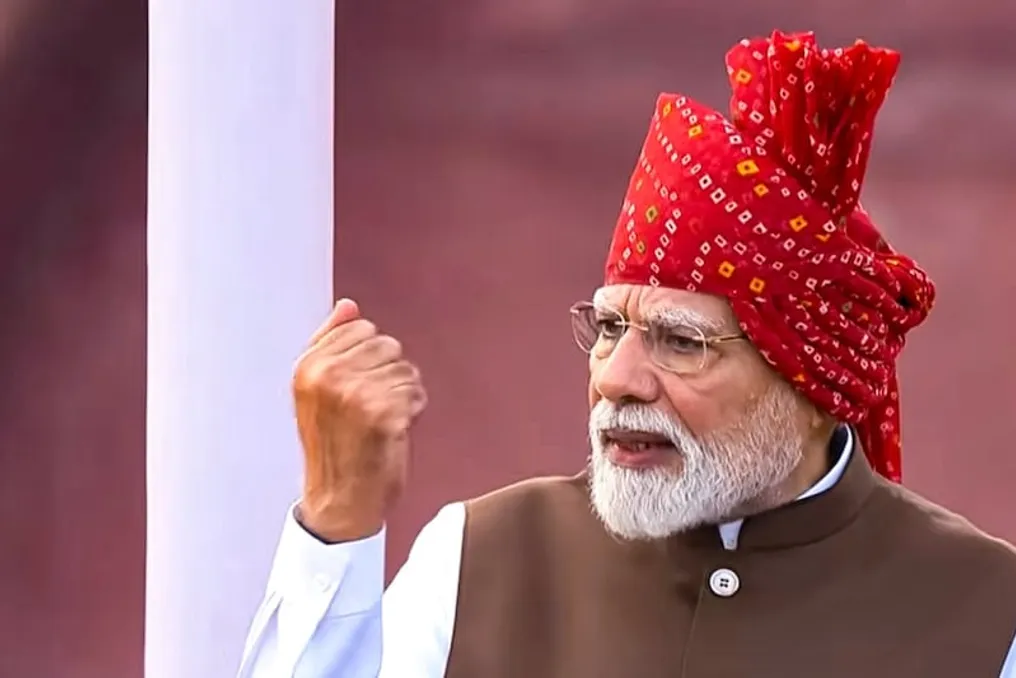
Since Independence Day in 2014, the choice of the Prime Minister's headwear and jackets has drawn constant interest. In 2014, Modi wore a bright red Jodhpuri turban with a green pattern on the tail. The following year, he chose a bright yellow turban with gold embroidery and a green design, and in 2016, a pink-red-orange ombre pagdi, and in 2017, a yellow-red turban.

Subsequently, he wore an saffron turban in 2021 and 2025, a bandhani turban in 2023, and in 2024, a multicolored Rajasthani leheriya print in the colors of the national flag.

Prime Minister Modi addresses IIT Delhi graduates, emphasizing the importance of technological change and curiosity
Read more
timesofindia.indiatimes.com

Prime Minister Modi addresses IIT Delhi graduates, emphasizing the importance of technological change and curiosity

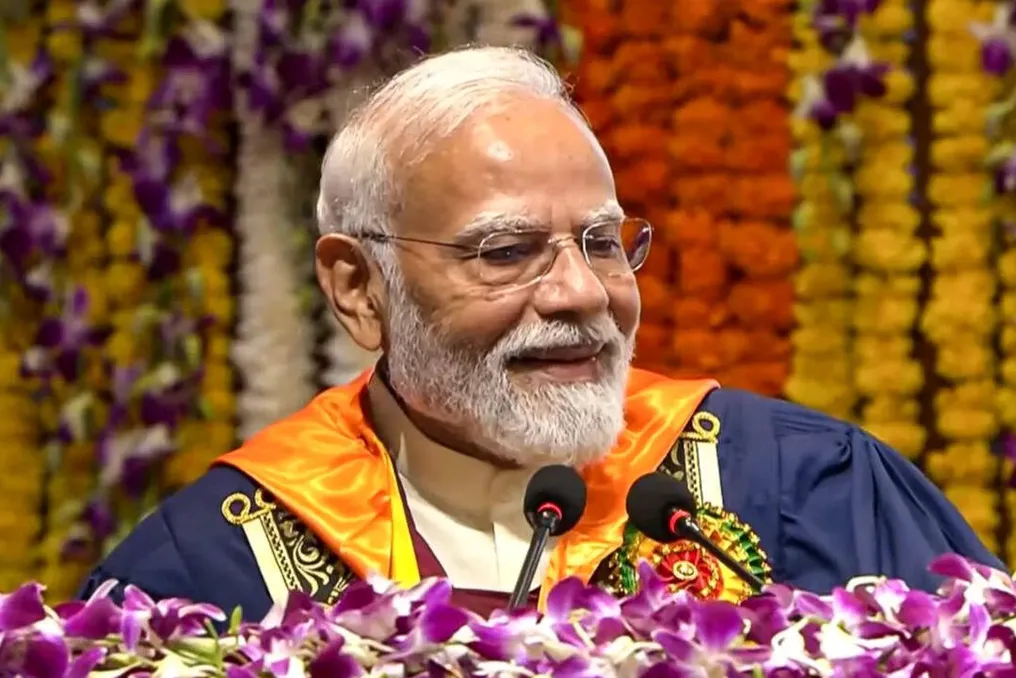
Prime Minister Narendra Modi addressed the 57th convocation ceremony at IIT Delhi, urging graduates to embrace change, continue learning, and remember the mentors who helped them on their journey.

Speaking before over 3000 graduates, including 587 doctoral candidates, as the chief guest, the Prime Minister congratulated them on completing their studies and advised them on entering the next phase of life. Modi noted: 'From orientation to graduation, you should be proud of your journey, but also excited about the start of a new chapter.'

He strongly recommended that students 'savor this moment fully,' mentioning that many of them are preparing to start jobs, move to new cities, launch startups, or take entrance exams.

Furthermore, the Prime Minister urged them not to forget the time spent at IIT Delhi or the people who supported them. He said: 'Carry them as an asset; do not forget them. Before you leave, make sure you have met everyone here.'

Speaking about the rapidly changing world and technology, the Prime Minister asked the students to maintain their curiosity and desire to learn. He stated: 'Today the world is changing very fast. No one can say what will happen in 20-30 years. Keep curiosity in life... Keep the desire to learn. Those who learn win.'

Modi added that people open to new challenges and situations are capable of turning difficulties into opportunities. He emphasized that this is one of the lessons learned by students at IIT Delhi: 'Challenges become chances for those who have the courage to find new solutions.'

He noted that 'the global balance of power changes every minute, and the biggest force behind this is the speed of technology.'

The Prime Minister also highlighted India's course towards self-reliance and the emergence of new industries for the country's youth. Mentioning the semiconductor sector, he announced that India has begun production at its first semiconductor facility. He firmly believes: 'I am firmly convinced that from chips to ships, everything will be made here by your hands.'

The Prime Minister presented the top awards of IIT Delhi, including the President's Gold Medal, Director's Gold Medal, Shankar Dayal Sharma Gold Medal, and 'Perfect Ten' Gold Medals for student achievements.

He expressed pride in the graduates but noted that there should have been 'more' girls among them. Adding: 'Just as your families feel proud today, I am proud of all of you.'

Union Minister of Education, Pradal Joshi, who was also present at the ceremony, stated that Prime Minister Modi's vision has made India's education ecosystem 'student-centric, research-based, and future-ready.'

Earlier, the Prime Minister inaugurated the high-performance artificial intelligence supercomputer, 'Param Pragya,' at the IIT Delhi campus in Sonipat. According to the PMO, this complex will strengthen the institute's capabilities in AI, data science, advanced computing, and interdisciplinary research.

Popular