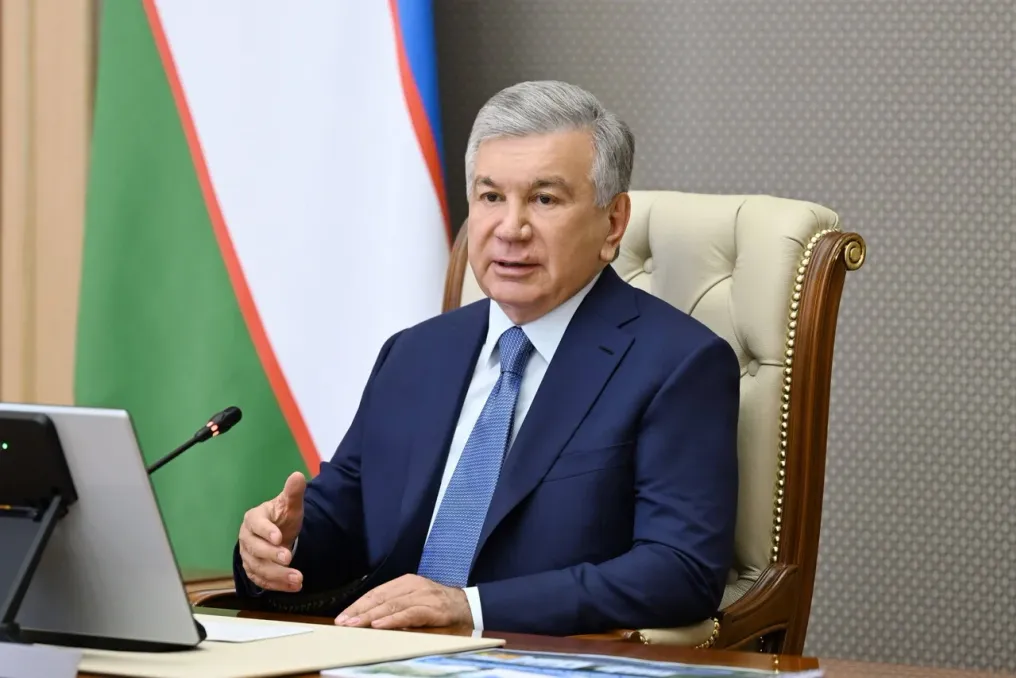
The President of Uzbekistan, Shavkat Mirziyoyev, announced the imminent start of construction work on the country's second nuclear power plant. This statement was made on August 17, 2026, during a ceremony launching new projects and commencing construction of potential facilities in the Khorezm region, according to the president's press service.
The President linked the development of nuclear energy to the need to ensure stable and affordable electricity for the national economy. He noted that potential investors prioritize electricity prices and guaranteed energy supply. Mirziyoyev emphasized that securing reliable energy sources and reducing energy costs are critical for attracting foreign investment and implementing the country's development strategy until 2030.
In his speech, Mirziyoyev mentioned the ongoing integrated nuclear power plant project in the Jizzakh region. Previously, international discussions on the development of nuclear energy in Uzbekistan took place, including at the St. Petersburg International Economic Forum on June 5, 2026, where the president confirmed plans to build a NPP in cooperation with Russia. The President highlighted the strategic importance of nuclear energy for national energy security, as electricity consumption in Uzbekistan is expected to double over the next decade. He also noted that the country ranks tenth globally in uranium reserves and fifth in uranium production.
The current integrated project in the Jizzakh region includes two large-capacity power units with VVER-1000 Generation 3+ reactors and two small modular units with RITM-200N reactors, each rated at 55 MW, providing a total capacity exceeding 2.1 GW. Earthworks at the site began in October 2025, initial concrete works started in March 2026, and the official concrete pouring ceremony for the first unit took place on June 4, 2026.
In December 2025, representatives of the Atomic Energy Agency under the Cabinet of Ministers of Uzbekistan (Uzatom) reported that the existing site in the Farish district of the Jizzakh region has been thoroughly surveyed and possesses the potential to accommodate additional high-power units, making it a suitable location for future expansion of nuclear energy.