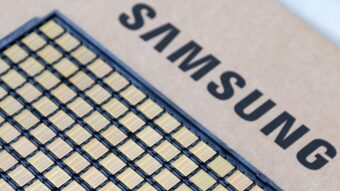
Samsung Electronics has implemented an increase in semiconductor manufacturing costs, which could reach 15%. According to the Reuters agency, this adjustment was applied globally and stems from both the growing demand for artificial intelligence and the exhaustion of production capacity of its main competitor in the chip market, TSMC.
This price hike directly affects corporations that use Samsung's services to produce their chips, although it may indirectly impact consumers through the passing on of these costs in final products. Reuters points out that this price change aims to convert the period of scarcity into an opportunity to strengthen the company's profitability.
The increases in values are determined by the complexity of the lithography process and the location of the contracting company. For example, for components manufactured using the 4-nanometer process, Chinese and American brands will have to pay between 10% and 15% more. Furthermore, the 5-nanometer architecture (SF5) saw a readjustment of 10% to 15%, while wafers based on the older 8-nanometer technology became almost 10% more expensive.
This move occurs at a critical time, as TSMC, the sole leader in the segment, has reached its technical limit on production lines. The Taiwanese company has already reserved all its 3-nanometer component production until 2027 and secured its 2-nanometer capacity until the end of 2026 to serve clients such as Apple, Nvidia, and AMD.
Without the possibility of accepting new orders in the short term, the company is also considering applying increases of up to 10% starting in January 2027. With the rival's operation saturated, Samsung has gained greater negotiating power to optimize its margins.
According to analyst Lee Min-hee of BNK Investment & Securities, usual buyers of TSMC have begun seeking alternative suppliers, such as Samsung and Intel, creating the ideal scenario for the South Korean company to raise its prices. Samsung has a vast clientele and already manufactures chips for Qualcomm on its SF4 line, located in South Korea. Other companies, such as Nvidia, Google, and Broadcom, have also signed or are negotiating agreements to manufacture semiconductors with Samsung.
For instance, Nvidia's new AI processor is expected to be produced at Samsung's facilities. Google is negotiating the use of the SF4 process, and Broadcom has concluded an agreement to manufacture AI chips. Additionally, Meta plans to order over US$6.5 billion (approximately R$33 billion) in AI chips produced on Samsung's 2nm lines. Tesla and Apple also have production agreements with the manufacturer.
To support the high demand for work, Samsung has initiated legal procedures to expand its factory infrastructure at the Pyeongtaek complex and develop an internal project called the 'triple factory'. If the South Korean government approves the expansion, the current production capacity of this site will be multiplied by 1.5. The scale of this plan aligns with the strong forecast for global memory market growth in 2027, driven by the AI race.
The new contracts and price adjustments are already changing the profitability landscape of the chip division. This segment recorded a record operating profit in the second quarter of 2026. The pressure generated by market demand was reflected in financial indicators, resulting in a stock appreciation of over 10% for Samsung during pre-market trading.