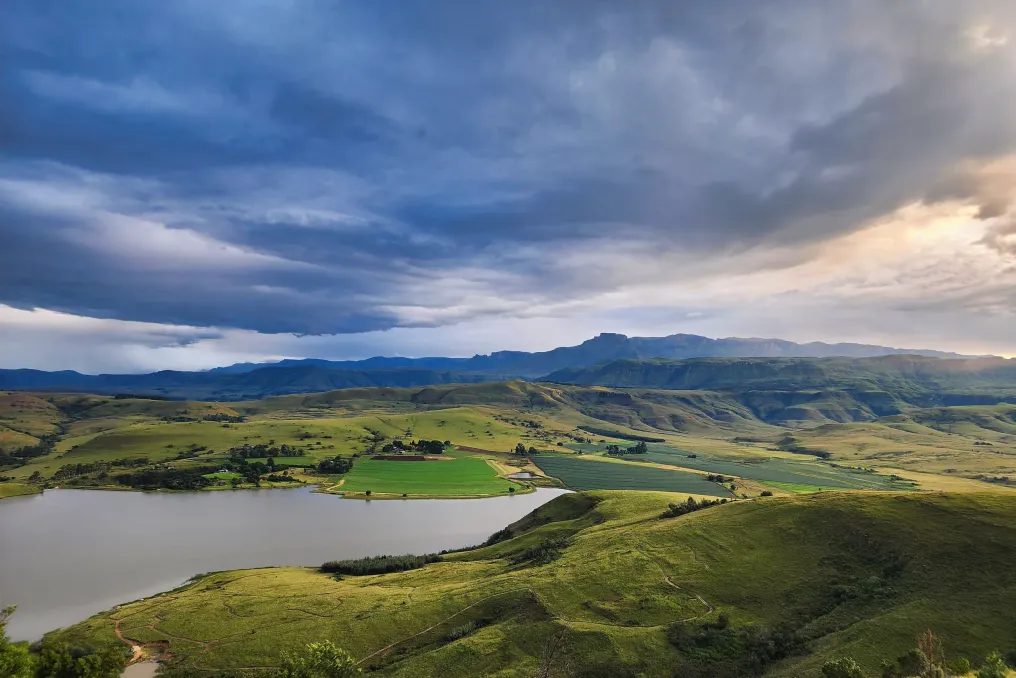
Spring is considered one of the best times for a road trip in South Africa, as the landscapes transform almost instantly: from purple jacarandas in Pretoria to carpets of wildflowers in the Northern Cape. Warmer days make activities such as long lunches, mountain hikes, and countryside drives particularly appealing.
It is not necessary to plan a grand journey across the entire country; some of the most beautiful spring routes can be done over a weekend, while others deserve a longer break. Below are six such routes to include in your spring calendar.
For several weeks each spring, Pretoria turns purple. The jacarandas of this city are so closely associated with Pretoria that it is easy to forget they are not native to South Africa. The first two jacaranda saplings were planted in Sunnyside in 1888 after being purchased by traveling gardener JD Cilliers. In 1911, Frank Jameson became known for planting jacarandas throughout Pretoria. Today, an estimated more than 65,000 trees grow along the city and its surroundings.
The best way to enjoy them is not necessarily to follow an official route. Driving through the old suburbs around Sunnyside, Arcadia, and Brooklyn allows you to see the most beautiful urban landscapes created by the flowering trees. You can then park. An obvious stop is the Union Buildings, and the Pretoria National Botanical Garden offers a chance to replace city streets with local gardens and walking trails. If you want a different perspective, you can head to Klipkop to admire views of Pretoria. This trip is especially pleasant because it does not require leaving the city to feel like you have escaped it. Set aside a morning, roll down the windows, and let the jacarandas do their magic.
City Escape Route: Photos and Gardens
The best time to visit this route is October, when the trees are usually in bloom.
If there is one spring route that must be on any flower lover's list, it is a trip to the West Coast National Park. The blooming season peaks between August and September, when fynbos and veld flowers burst into color. The areas of Sikberg, Muimaak, and Postberg are particularly good for viewing flowers, including species of gooseberry, white daisies, and the characteristic blue sporrel.
The Postberg section is only open to visitors during the blooming season, making this trip more than just a beautiful drive. You gain access to part of the park that is closed for most of the year. Take time to explore, do not rush. Bring a picnic, stop at viewpoints, and look for wildlife among the flowers. The park is home to eland, red hartebeest, and southern antelope, and the lagoon attracts many birds. SANParks recommends spending a full day or staying overnight in the park, and visiting on weekdays if possible. Sunny weekends can be particularly crowded during the blooming season. Since flowers depend on the weather, you can never guarantee what you will see, but that is part of the charm. The landscape itself decides how the show will look each year.
Wildflower, Wildlife, and Leisurely Lagoon Day Route
The best time to visit this route is August–September.
The drive north to Nieuwoudtville is intended for travelers who are happy to organize the entire weekend around flowers. At the Hantam National Botanical Garden, the Bokkeveld Plateau transforms between August and mid-October in spring. Winter and spring rains cause carpets of annuals, geophytes, and succulents to appear, including the famous dark blue Nieuwoudtville Pride.
The garden itself covers over 6,000 hectares and has nine trails through various habitats and soil types. More than 1,350 plant species are registered here, over 80 of which are Bokkeveld Plateau endemics. It is this biodiversity that makes Nieuwoudtville worth a long trip. It is not just a place to stop, take a picture of a field of flowers, and leave. Walk one of the trails. Do not rush. Look closely at the small flowers instead of only searching for the largest flower fields. The wider Namakwa region also brings much joy. SANParks includes the Namakwa National Park among the main destinations for blooming in South Africa, with the peak bloom usually occurring in August and September. Since flowers depend on rainfall and temperature, flexibility is important. Traveling through this part of the country is best experienced as a landscape journey rather than a hunt for one perfect field.
Wildflower, Open Landscape, and Photography Route
The best time to visit this route is August–October.
Three hours from Cape Town, the Cederberg feels significantly more remote. This wilderness area was declared in 1973 and covers over 66,000 hectares of mountainous terrain in the Cape Floristic Region. Its landscape is defined by reddish-brown sandstone formations, mountain fynbos, and dramatic rock formations such as Maltese Cross and Wolfberg Arch.
Spring is a particularly good time for this trip because the Cederberg is not a place visited just to view from a car. There are hiking trails to waterfalls and rocks, and the ancient rock art of the San and Khoi peoples adds another layer to the landscape. CapeNature reports that over 2,500 rock art sites have been found in the wider area, some dating back thousands of years. For more adventurous activities, Rocklands is a world-renowned bouldering center, whose main season runs until October 1st. However, it is important to check conditions before departing. Parts of the Cederberg were affected by a major wildfire in early 2026, and some hiking trails and wilderness areas remain closed while restoration work and safety assessments continue. CapeNature states that Maltese Cross and Wolfberg Arch are currently open for day hikes subject to access requirements. This makes the Cederberg a trip that should be taken slowly and responsibly. Check the latest access information, choose an open trail, and allow enough time to appreciate the mountains.
Mountain, Hiking, and Total Seclusion Route
The best time to visit this route is September–November.
The Midlands Meander proves that a road trip does not need one big attraction. The route started in 1985 when a small group of artists, potters, and weavers gathered at Caversham Mill and decided to invite visitors to their rural studios. What began as a small exhibition eventually turned into one of KwaZulu-Natal's most famous tourist routes. After forty years, the Midlands remains focused on stops, not rushing.
Spring is a good time to explore the countryside, combining farms, forests, rolling plains, and small towns. You can spend the morning walking, stop for a local lunch, visit workshops and farm shops, and then continue driving along the road without worrying about how many kilometers are left to cover. The Meander's offering now includes art and crafts, food, accommodation, and outdoor activities, with over 120 destinations in the current guide. The history of the route is part of its appeal. It was created on the idea that local producers would open their businesses and studios to visitors, and this sense of community still shapes the experience. Come here when you want to have a quiet weekend. The best plan may consist of only three stops a day.
Country Cuisine, Crafts, Hiking, and Unhurried Pace Route
The best time to visit this route is September–November.
Panoramic Route
The Panoramic Route is a trip for those who want to get the maximum amount of spectacular views. Passing through the Mpumalanga ridge, this route connects some of the province's most famous natural attractions, including the God's Window, the Lisbon Falls, Berlin, Bourke's Luck Potholes, and the Blyde River Canyon.
The Blyde River Canyon is the central element. Measuring about 26 km long and averaging 800 m deep, it is one of the largest canyons in the world and is unusual for its lush subtropical vegetation. But don't just drive from viewpoint to viewpoint. Plan time for a hike, stop at the waterfalls, and spend some time in Graskop or Sabie. The Blyde River Canyon Nature Reserve also offers hiking trails and picnic spots. To immerse yourself in history, you can turn off to Pilgrim's Rest, a former gold mining town that is now a national monument and living museum. The history of the gold rush is woven into this landscape, giving the route more depth than just its breathtaking views.
The Panoramic Route is especially well-suited for long weekends, as there is plenty to see without needing to embark on a massive journey. And if you have extra time, Lowveld and Kruger National Park are close enough to extend the trip.
Waterfall, Mountain Landscape, and Adventure Weekend Route
The best time to visit this route is September–November.
There is a reason why spring prompts us to travel. After winter, South Africa feels renewed. The streets of Pretoria turn purple, dry northern landscapes suddenly become covered in flowers, and the Midlands becomes greener, and the mountains call for long walks, not quick photos.
Most importantly, none of these trips should be overly complicated. Choose a direction, leave some room in your plan, and let the road decide where to stop. Because sometimes the best reason to go on a road trip is not where you are going. It is everything you find along the way.