New Trophy Concept for the Springboks vs. All Blacks Match Series
Read more
IOL
iol.co.za

New Trophy Concept for the Springboks vs. All Blacks Match Series

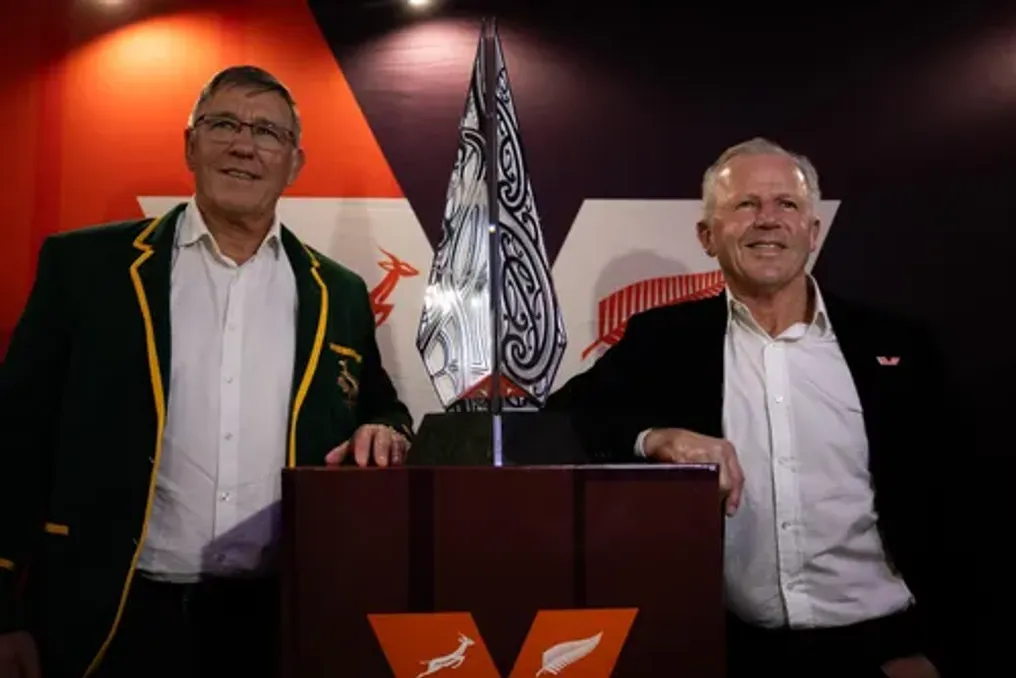
The series of matches between the Springboks and All Blacks, titled 'Rugby's Greatest Rivalry,' unveiled an unusual trophy in Johannesburg on Wednesday. This trophy consists of two half-trophy elements connected by hidden magnets.

The trophy concept is designed to reflect the nature of the relationship between the two national rugby teams: they are characterized by strong independence and pride in their distinct identity, yet they are inextricably linked by one of the greatest rivalries in sports.

The trophy was presented by the captains of the 1996 series—Springboks standout Gary Tahimann and All Blacks legend Sean Fitzpatrick.

The winners of the four-match tour will take both half-trophy elements after the final match, which will take place in Baltimore on September 12th. If the series ends 2–2, each country will retain one half-trophy element.

SA Rugby CEO Rian Oberholzer noted that the decision to divide the trophy was partly due to the possibility of a draw in the series. He stated that the agencies' task was to create a unique trophy that conveys the essence of the rivalry.

Oberholzer added that the development included the premise of dividing the trophy into two parts to symbolize the two sides of the rivalry, or that each nation could keep one half in case of an equal outcome. He also emphasized that since this is the eighth of twelve tours, comprising four matches, it seemed inappropriate to determine a winner based on an arbitrary criterion if each team won two matches.

This trophy is also a tribute to history, as the first two tours between the Springboks and All Blacks, held in 1921 and 1928, also ended in a draw.

The trophy itself is shaped like a blade of grass, symbolizing the experience of every athlete who has participated in this confrontation. It consists of two separate blades of grass: one represents South Africa, and the other represents New Zealand. Each blade separately demonstrates the uniqueness of the culture and history of the two countries, but together they form a single trophy.

Each blade, standing 65 cm tall, is made with high precision from solid aluminum and weighs 7 kg. The base, weighing 9.5 kg, is made from two different stones: black Pakoche from Aotearoa-New Zealand and green Verdite from South Africa. Artistic embellishments from artists from both countries are also placed on the blades.

The South African half is decorated with a work by Bonolo Chepape, whose layered patterns refer to community, culture, and shared experience, reflecting the idea that sporting greatness is never achieved alone. The New Zealand blade features a piece by Kereama Taepa, inspired by the Māori myth of the creation of Tane and Wiremu, two brothers striving for the same goal through different paths.

The design and creation of the trophy took a year, and it will participate in the competition for the first time when the Springboks and All Blacks meet at Ellis Park on Saturday.
Similar stories

Match between All Blacks and Stormers in Cape Town marked the beginning of a great rugby rivalry
Read more
iol.co.za

Match between All Blacks and Stormers in Cape Town marked the beginning of a great rugby rivalry

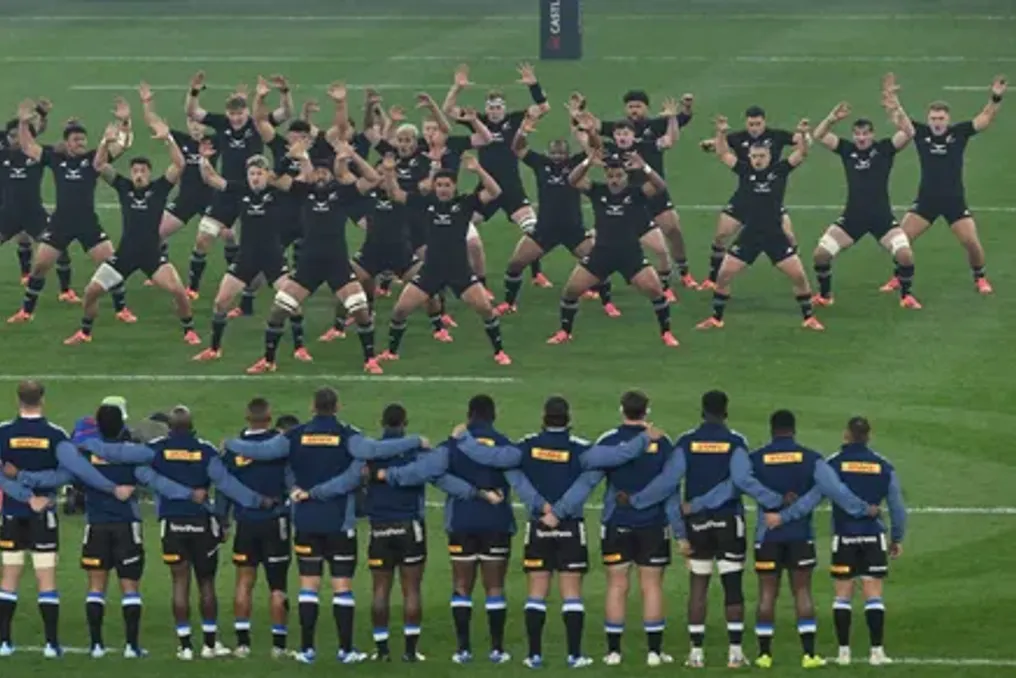
The All Blacks team performed a haka before the match against the Stormers at DHL Stadium on Friday evening. This event was the culmination of a thirty-year wait, as although the All Blacks have visited the Republic multiple times for Tri-Nations and Rugby World Cup matches, a full tour carries special significance.

The choice of Cape Town as the venue for the first match of this great rivalry was appropriate, especially against the backdrop of the majestic Table Mountain fading into twilight. The city has long supported the team from the Land of Long White Clouds, and now fans had the opportunity to see their heroes up close.

A huge crowd gathered at the stadium: a sea of black and white merchandise mixed with three blue and white 'streeptruie', resulting in an overall attendance of 47,130 people. The atmosphere was extremely tense as fans filled DHL Stadium to watch the first match between DHL Stormers and All Blacks.

The energy of the event was further amplified by the participation of a group of 800 students from Wynberg Boys’ High School—the alma mater of Stormers' halfback, Yaqeen Ahmed, and prop Zachary Porthen. The students performed the famous song 'Blue and White' shortly before the game started.

The stadium looked incredibly spectacular: beams of light outlined the pitch, then rose synchronously, creating a feeling of the entire stadium's unified heartbeat before the start. Even for a venue that hosted the FIFA World Cup semi-final and the URC final, this was a special moment, reminiscent of the spectacular light show at Stade de France in Paris before the Boks' victory in the second World Cup.

The climax was the haka ritual. The New Zealand team formed the familiar wedge formation on the center line of the field, focusing their gaze forward. When the challenge was issued, the entire grand stadium fell into absolute silence for a moment. The honor of leading the haka went to winger Rieko Ioane, whose voice cut through the silence, leading the chant on behalf of the team, and his recently bleached hair added to his prominence at the head of the formation.

As the energy among the fans built, Zaahier Adams from IOL Sport illuminated the streets of Cape Town to feel the excitement before the historic first match of DHL Stormers versus All Blacks at DHL Stadium, as the game kicked off at 7:00 PM.

Around him, Cape Town Stadium simply watched, thousands of phones raised before the silence was replaced by a roar as the final blow echoed across the stands. These moments will remain in the fans' memories forever.

The match itself was a cold reminder of the nature of their confrontation in South Africa. Since the New Zealand franchises no longer face their main rivals in Super Rugby, visitors needed time to adapt to the physical play of the Stormers. When the score was tied at 14-14 shortly after halftime, Stormers fans sincerely hoped for an epic comeback and, more importantly, for the conquest of prestige in the Mother City.

Ultimately, it did not end magically for the blue and white team, but it was an ideal start to a tour that already shows signs of living up to its title of Greatest Rivalry.

Popular