South Africa is observing Women's Month 2026 under the slogan 'Building Sustainable Economies for All,' marking 70 years of women's participation in the tool manufacturing industry. In 1956, over 20,000 women marched to Union buildings in Pretoria, protesting against the expansion of pass laws for women.
The author argues that the phrase coined that day—'If you beat a woman, you beat a rock'—is today not just a tribute but a call to action, as a sustainable economy cannot be built on the labor of only half the population. A demographic issue exists within the tool manufacturing sector, which is fundamental to all South African production, and it cannot be postponed.
According to Stats Labour Force Survey, the unemployment rate in South Africa reached 33.6% in the second quarter of 2026, higher than the previous quarter (32.7%), with an increase of 345,000 unemployed people. The situation for women is worse: their unemployment rate stands at 37.5%, significantly exceeding the national average, with 4.4 million women currently seeking employment. Meanwhile, the industry has cut 15,000 jobs during the same period, yet industry representatives continue to face a shortage of skilled specialists.
The problem is not a lack of vacancies, but an insufficient number of trained personnel, the vast majority of whom are men. Furthermore, women constitute only 16% of registered engineering professionals in South Africa. This is not due to a lack of necessary qualifications on their part, but because after obtaining education, they lack mentorship, opportunities to apply for leadership positions, or invitations into a work culture created without considering their needs.
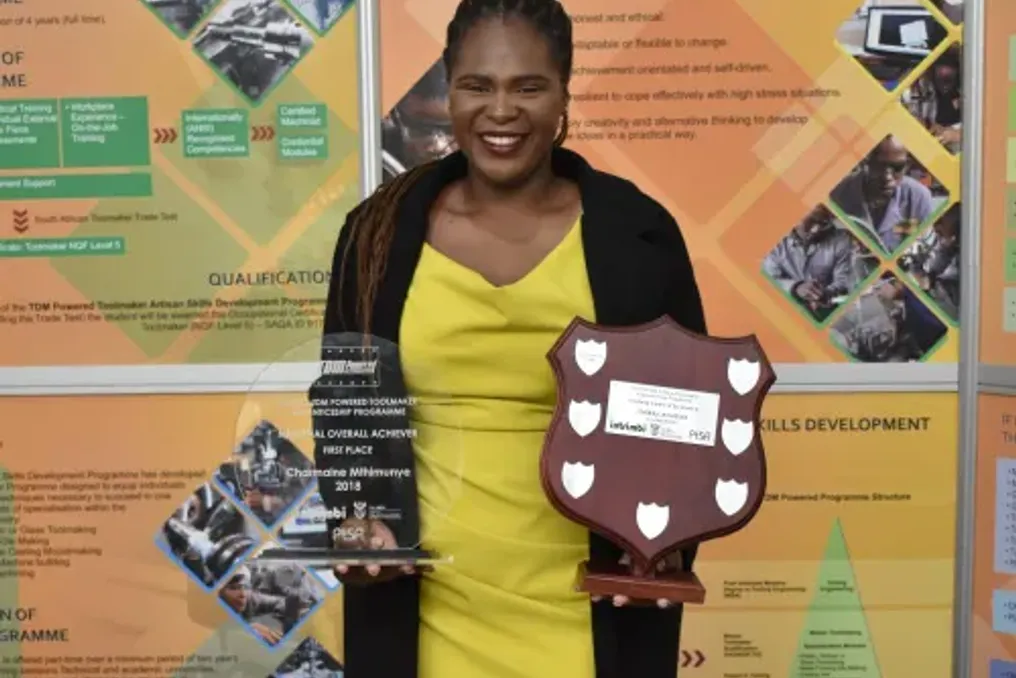
A success story is Shermaine Lebogan Mtimunye, a graduate of the PtSA apprenticeship program who underwent further training at Ford Motor Company, worked as a CNC programmer at Silverton Components, and three weeks ago polished plastic injection molds for cars at Lanulfi Moulds and People in Vicenza, Italy. In 2024, she was recognized as the best PtSA TDM graduate and the best Gauteng graduate. She notes that her technical foundation was built through the PtSA apprenticeship program and reinforced by practical training at Ford.
Another example is Lozien Jarvis, who started as an administrative clerk. In 2018, facing the threat of dismissal, she founded her own company. After being rejected by several banks, she received support from the Industrial Development Corporation (IDC). Today, her company, Equal ELM Trading, manufactures engine protection systems for diesel engines and provides high-precision CNC machining services. Jarvis thanks PtSA for supporting her business development, including market access and quality standardization.
Seventy Years Later: Building Sustainable Economies Through Women in Tool Manufacturing
Another story is Benita Sigavuki, who grew up in Limpopo raising livestock and knew nothing about tool production. In October 2021, she applied for a four-year PtSA apprenticeship program in Gauteng. Despite difficulties and mistakes, she successfully completed the program and is now a junior toolmaker at Tente Castors South Africa, awaiting certification.
These stories demonstrate that regardless of initial experience—whether it is a technical career starting with an apprenticeship and ending in Italy, establishing a manufacturing company from an administrative office, or entering the field without prior knowledge—the common lesson is one: when the industry intentionally opens doors for women, they walk through them and succeed.
These are not just isolated cases. In the automotive sector, which is the main beneficiary of tool manufacturing, women make up almost a third of the approximately 317,000 retail and after-sales workers, and nearly 40% of new master registrations last year. In one trainee cohort, 60% were women. This is the result of the industry's strategic approach to female talent, not chance.
PtSA, as the representative body for the tooling, stamping, mould, and special processing sector, conducts training and apprenticeship programs because organization members constantly point out that the shortage of skilled specialists is one of the main obstacles to their business. The author emphasizes that every young person who is not attracted to, mentored, trained, or funded in this field represents an unresolved skills shortage problem. This is not charity, but a strategy necessary to address structural deficits amid global trade changes and an aging workforce.
In this regard, the author calls upon educational institutions, sponsors, and the government to set real targets for attracting women to apprenticeship programs. Successful women like Mtimunye must be shown to schoolchildren to make the profession of toolmaker seem like a conscious choice. Support is also needed for entrepreneurs like Jarvis in terms of financial resources and market access. Finally, young people like Sigavuki need patient mentors who can help turn mistakes into professional achievements.
South Africa's tool manufacturing industry has played a key role in shaping the country's industrial base. The future depends on whether this base will be built using all available talent or only a part of it.