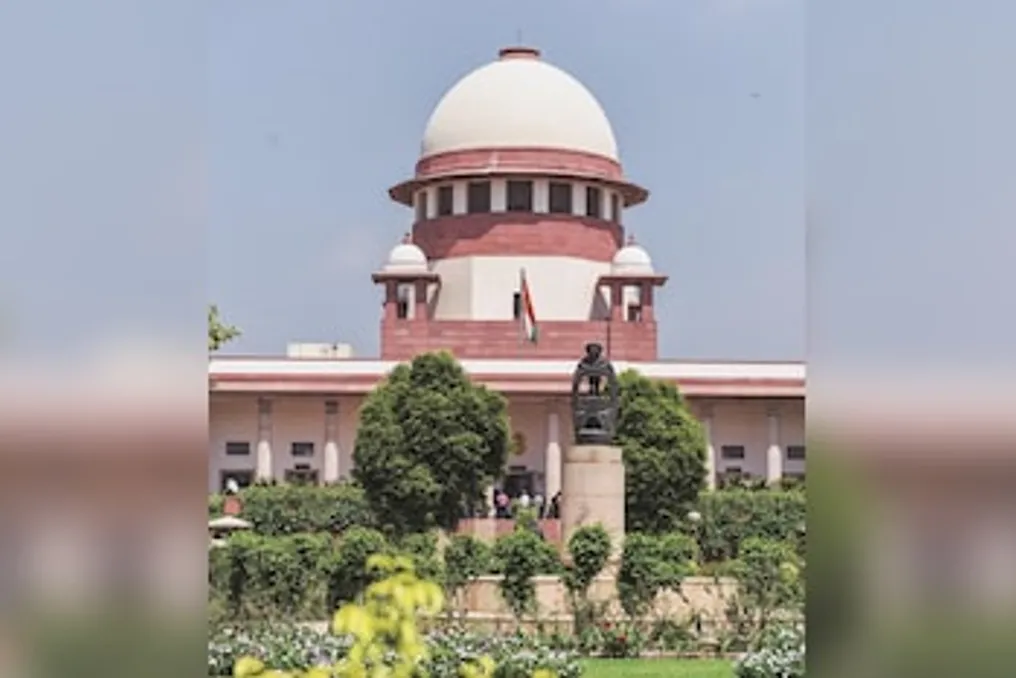
The Supreme Court strongly urged the Center on Wednesday to strengthen the National Testing Agency (NTA), transforming it into a permanent, technologically managed structure. The Court emphasized that measures to protect entrance examinations cannot depend solely on individual employees or existing procedures.
The bench, which included judges P. S. Narasimha and Alok Arathe, stated that NTA requires institutional memory, specialized expertise, and modernized infrastructure to prevent test paper leaks and ensure the credibility of competitive exams.
The Court noted that frequent rotation of experienced personnel can lead to the loss of accumulated knowledge, stressing: 'It is our duty to ensure the existence of a prominent institution that the country can be proud of.'
The Court ordered the Center to submit an affidavit detailing the progress in implementing recommendations from the high-level committee led by former ISRO chairman K. Radhakrishnan, as well as any changes or additions from the Nandana Nilekani committee. The matter will be heard in three weeks.
The Radhakrishnan committee was formed in 2024 following the NEET-UG exam scandal and proposed several measures to strengthen the testing system. Meanwhile, the Nilekani committee, established this year, examined technological reforms, including the potential use of artificial intelligence and blockchain.
The judicial panel required the government to clearly define what permanent infrastructure has been created to ensure examination security, cybersecurity, testing centers, confidential operations, research and development, and other functions.
Furthermore, the court requested information on senior staff and dedicated structures responsible for overseeing exam security. The judges observed that testing technologies will continue to evolve, making it necessary for NTA to have its own R&D capabilities, as well as a secure database and storage infrastructure.
Government Solicitor Tushar Mehta, representing the Center and NTA, informed the court that several levels of precautions already exist. He explained that test papers are generated by multiple moderators, and final versions are selected only at a later stage.
These papers are then printed in specially designated rooms under video surveillance and guard. Printing agencies do not receive information about the exam for which the materials are being prepared. According to Mehta, sealed test papers are transported in secure boxes on GPS-tracked vehicles and stored in bank vaults until the exam date.
The distribution of papers to examination centers occurs only after receiving instructions from NTA, with the entire process being recorded on video. This Supreme Court proceeding began following allegations of violations and test paper leaks related to NEET.
The Court had previously declined to order a re-examination in 2024 because no evidence of widespread leakage was found, but it did mandate reforms in the testing system.
Currently, the court is considering several petitions demanding structural changes in NTA. One, filed by the Federation of Indian Medical Associations, called for the restructuring of the agency, digital locking of test papers, wider implementation of computer-based testing, and publication of results by center. Other petitions call for the creation of an independent statutory examination body.
Notably, the Delhi High Court on Wednesday allowed the withdrawal of a petition concerning the NEET-UG 2026 re-examination after questioning the amalgamation of several unrelated petitioners' demands.
The bench, comprising Chief Justice D. K. Upadhyay and Judge Tejas Karia, considered a petition from two candidates requesting corrections to mark sheets, including marks for missed questions and correction of presumed calculation errors. They also sought the creation of an expert committee and a ban on NTA conducting future public exams. The Court pointed out that the petition contained a 'mixture of various requests' and asked the applicants to clarify the desired measures. The petition was withdrawn with the option to file separate proceedings, including a civil writ and a public interest lawsuit for broader institutional reforms.