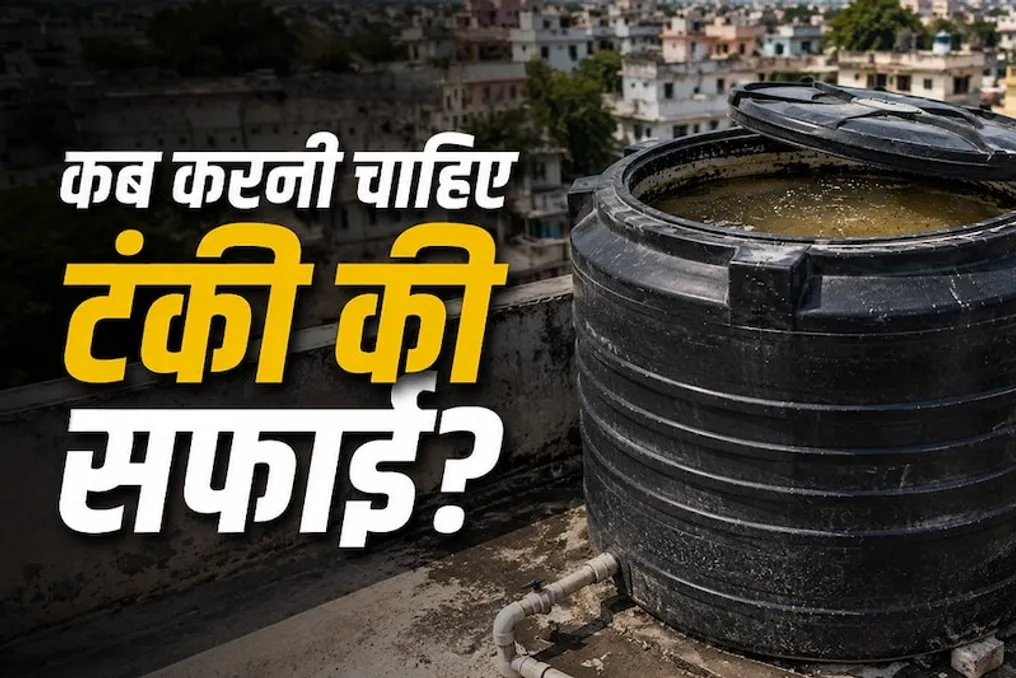
When cleaning residential premises, people usually focus on the floor, kitchen, bathroom, and windows, but there are many areas that often receive insufficient attention. One such area is the water storage tank. Due to the labor intensity, time, and cost of cleaning, many postpone this procedure. Furthermore, because the tank is out of sight, the need for its maintenance is sometimes forgotten.
Over months or even years, dirt, silt, rust, and moss can accumulate in the tank, gradually leading to the contamination of drinking water. Often, the tank itself signals the need for cleaning, but these signs may go unnoticed. If the water in the house starts to smell, changes color, or the water pressure from the tap decreases, it may indicate contamination in the water storage tank.
Firstly, the change in water color. If the water coming from the tap does not look clear but has a yellow, brown, or light green tint, this is a clear sign that it is time to clean the tank. This condition can be caused by the accumulation of silt, dirt, or rust inside the tank, which then enters the pipeline along with the water.
Secondly, the appearance of an unpleasant odor. A smell of earth, dampness, or rot coming from the water is also a serious indicator. Long-term accumulation of dirt and bacteria inside the tank can worsen the taste and smell of the water. If the taste of the water has changed, the tank should be checked.
Thirdly, reduced water pressure. If the water used to flow strongly from the tap, but now the flow is weak, the cause may be sediment and dirt accumulated in the tank. Accumulated dirt can affect both the flow and the pipes, causing an overall decrease in pressure in the house.
The fourth signal is the discharge of dirt and silt particles from the tap. Sometimes small soil particles, pieces of rust, or other dirt begin to come out with the water. This indicates that the contents of the tank are moving through the pipes into the living quarters, and in such a case, cleaning the tank becomes necessary.
The fifth sign is unusual sounds from the tank. If knocking, bubbling, or humming sounds are heard from the water storage tank or water heater, it may indicate layers of minerals or dirt settled inside. Over time, dirt can form a layer that makes noise when the water is heated.
The sixth point concerns water heaters. If hot water from the tank runs out quickly, it may be related to internal contamination. The accumulation of a layer on the surface of the tank affects the heating process, reducing the overall efficiency of the heater.
The seventh point is the long absence of cleaning. If a person does not remember when the tank was last cleaned, it is a reason to consider urgent preventive maintenance. Over time, silt, minerals, and other impurities inevitably accumulate in the tank, so regular maintenance is critical.
The eighth sign is the appearance of rust stains on the tank body. External signs of corrosion should not be ignored. Visible rust stains may indicate that the internal condition of the tank is also deteriorating, requiring a thorough inspection.
Finally, the ninth signal is water accumulation around the tank. If water regularly collects near the water storage tank or leaks are observed, it may indicate a leak in the tank itself or in its connections. Old dirt and rust can contribute to the development of leakage problems.