International buyers face numerous decisions before natural stone reaches the construction site. This article examines how transparent selection of the quarry, technical inspection, quality control, and export coordination can mitigate risks at every stage of material sourcing.
Natural stone is valued for its appearance and performance characteristics. Marble can adorn a hotel interior, travertine can add depth to a facade, and granite can withstand heavy loads. However, project success depends not only on visual selection; the material must be found, specified, inspected, packaged, and delivered according to buyer expectations.
For international buyers, a promising sample must be linked to an accessible source, a defined quality range, working dimensions, clear commercial terms, and a realistic export plan. These elements should be agreed upon before the product selection becomes a costly commitment.
Start with a technical specification, not a general inquiry
Natural stone is a geological material, not a fully standardized product. Even under one commercial name, it can vary depending on the quarry, production batch, cutting, finishing, thickness, color range, and pattern. Therefore, buyers should define the characteristics important for the project instead of relying solely on the product name.
A request for quotation should specify the intended use, material, product form, dimensions, thickness, finish, quantity, destination, and timelines. If visual uniformity is crucial, an exemplary image, sample, or agreed-upon range of color and veining must be provided before selecting the first batch.
This allows both parties to assess whether a specific supply route can meet the required quantity, quality, timeline, and application.
Ensure visibility of the supply chain
Transparency implies the ability to trace an order from the buyer's requirements to the practical source of the material. Buyers must determine if the proposed stone can be linked to a specific quarry, batch, block selection, or inventory, as well as what inspection or documentation information will be available before shipment.
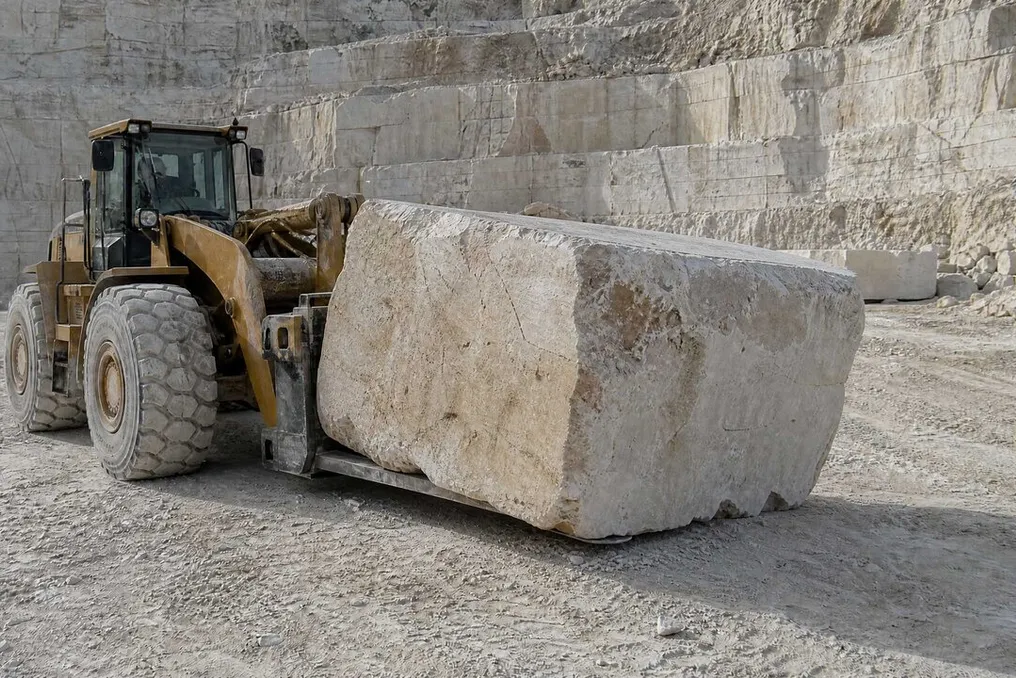
Requirements vary depending on the product form. For blocks, buyers can examine dimensions, weight, visible cracks, color range, and processing method. For slabs, tiles, and cut pieces, the finish, thickness tolerance, dimensions, packaging, and quantity must be confirmed. These details form the basis for comparing offers and managing risks.
A competent natural stone supplier for international projects should help buyers transition from a broad material request to a practical sourcing plan. This may involve identifying suitable options, coordinating with selected suppliers and manufacturers, confirming specifications, and preparing the order for international shipping conditions. The goal is not to guarantee identical stone under all circumstances, but to create an agreed-upon and traceable standard for the supplied material.
Translate linguistic descriptions of quality into verifiable criteria
General descriptions such as 'premium,' 'first grade,' or 'selected' are insufficient on their own. In a professional transaction, quality must be discussed through criteria that both parties can observe and evaluate. Depending on the material and application, this may include color range, background uniformity, veining, surface condition, dimensional tolerance, finish, visible characteristics, packaging condition, and an agreed inspection process.
Natural variation does not disappear with proper order management. The purpose of clear criteria is to define which variation is acceptable for the project and to identify potential issues before loading. For larger or technically sensitive orders, parties may also agree on an independent inspection procedure. Establishing scope in advance makes the inspection more useful and provides all participants with a common basis for approval.
Treat export preparation as part of product quality
The reliability of a stone order is as dependent as its readiness for shipment. Material selection, quality confirmation, packaging, loading, documentation, and logistics must be viewed as interconnected stages, not as separate tasks. Poor packaging, unclear labeling, incomplete documentation, or an unplanned loading scheme can undermine well-chosen material by the time it reaches its destination.
The necessary process will vary depending on the product form and delivery structure. Blocks, slabs, tiles, and cut pieces require different handling, protection, weight distribution, securing, and loading schemes. Buyers must also confirm delivery terms, responsibilities of each party, accompanying documentation, and destination-specific import requirements. These discussions are especially critical when multiple containers, phased deliveries, or multiple stakeholders are involved.
For buyers purchasing goods in Iran, the value of a structured process lies not only in gaining access to a range of materials but also in understanding the control points between quarry selection and international delivery. The company ALPREY has outlined the natural stone export process from quarry selection to shipment to help buyers and industry professionals determine the commercial, quality, and logistical solutions that should be considered before the cargo leaves the country of origin.
Better questions lead to better commercial decisions
A disciplined sourcing process simplifies supplier comparison beyond just price. Buyers can ask: What material and production batch are offered in the quote? What volume is available within the required timeframe? What natural variation should be expected? How will the material be inspected before shipment? How will it be packaged, loaded, and documented? What assumptions underlie the proposed delivery timelines?
Clear answers ensure accurate pricing, reduce the need for rework, and strengthen procurement decisions. They also help suppliers recommend realistic alternatives when the requested material, quantity, or schedule cannot be met as planned.
For architects, contractors, distributors, and importers, transparent sourcing is not a separate service added after stone selection. It is a practical framework that connects design concept, material selection, quality control, export coordination, and delivery. In a market where every stone possesses its natural individuality, it is this framework that transforms a promising sample into a reliable supply chain for the project.