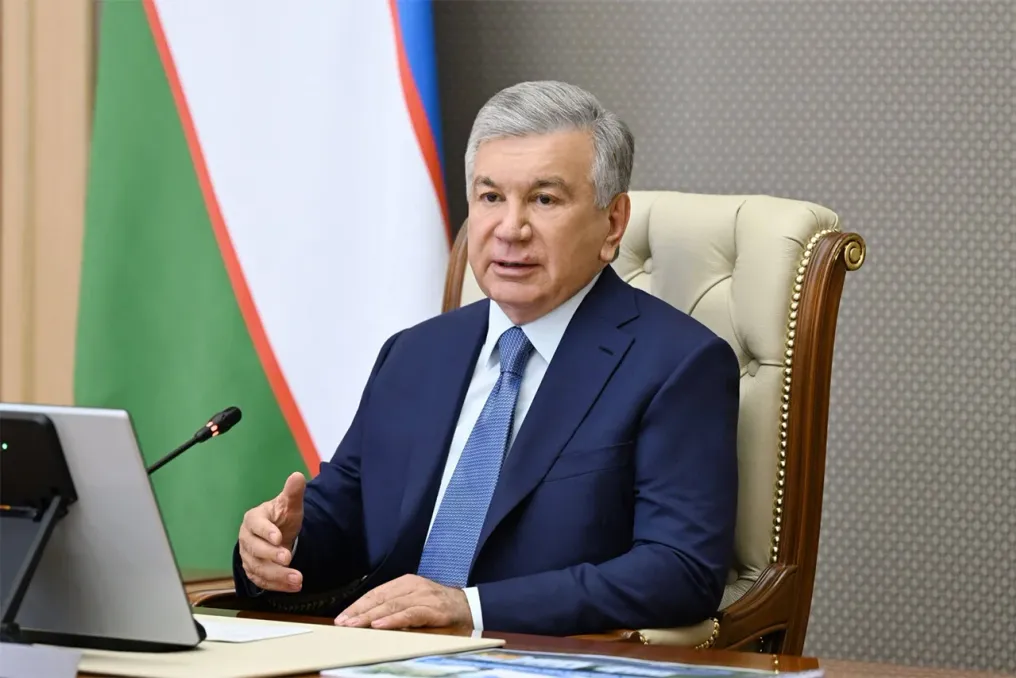
The President of Uzbekistan, Shavkat Mirziyoyev, was informed about measures aimed at accelerating the development of the small and micro-hydropower plant sector. According to the plans, the total capacity of such facilities should reach 204.8 MW by 2030, ensuring an annual generation of 620 million kWh of clean electricity.
The development of small and micro-hydropower plants is viewed as a way to expand the use of renewable energy sources and utilize water resources more efficiently. It is expected that such stations will help supply electricity to remote areas, reduce network losses, and attract private investment.
According to a decree adopted last year, the construction of about 3,000 small and micro-hydropower plants with a total capacity of 164 MW is planned with the participation of the private sector. Currently, 64 facilities with a cumulative capacity of 41.6 MW have been commissioned, but initiators have only been identified for 932 of the planned projects.
At the meeting, the slow implementation of $150 million in preferential financial resources allocated with the participation of the World Bank was also noted. Entrepreneurs and investors continue to ask questions regarding the conditions for building stations and selling the electricity generated by them.
To solve these problems, it was proposed that auctions should establish not only the initial project price but also a minimum tariff for electricity purchase, which should vary depending on the station's capacity. In the opinion of the policy developers, this will prevent projects from winning at a 'zero' price only to subsequently abandon their implementation, while providing investors with clearer operating conditions.
Furthermore, the design and construction of micro-hydropower plants with a capacity of up to 100 kW should transition to a simplified procedure. For facilities with a capacity of up to 50 kW, the authorities propose to waive the review of urban planning documentation and state architectural and construction supervision.
It will also be permitted to modify the structures of canals, rivers, and riverbeds to create additional hydrostatic pressure. The construction of small and micro-hydropower plants on water usage facilities for self-needs will also be allowed without an auction.
The introduction of a digital platform for sector management is planned, which will cover the entire project lifecycle—from site selection to commissioning and operation of the plants. The creation of a unified methodological guide for the design, construction, and operation of facilities, as well as a separate procedure for projects involving the private sector, is also provided for.
One of the existing challenges in the sector remains the dependence on imported equipment. Currently, about 90% of hydrogenerators and components required for small and micro-hydropower plants are imported.
In this regard, the authorities proposed using the experience of JSC Uzbekhydroenergo, which has built 46 small and micro-hydropower plants, and providing entrepreneurs with comprehensive services, including design, construction, installation, and equipment supply. A list of hydrogenerators and components whose production can be localized in Uzbekistan will be prepared.
The potential of small HPPs on canals was also discussed. The network of rivers and canals in Uzbekistan has a total length of over 173,000 km. Relevant bodies were instructed to conduct an inventory of concrete canals and identify additional opportunities for placing small and micro-hydropower plants.
It is expected that the new capacity will provide 'green' energy to 350,000 households by 2030, allow for an annual saving of 187 million cubic meters of natural gas, and prevent emissions of 311,000 tons of carbon dioxide.
The introduction of dual education starting from the new academic year is also planned to train specialists in the field of small-scale 'green' energy. Students will undergo practical training at energy enterprises, including small hydropower plants.
After the presentation, Mirziyoyev instructed officials to accelerate project implementation, expand private investment, ensure the effective use of financial resources, localize equipment production, and train qualified specialists.