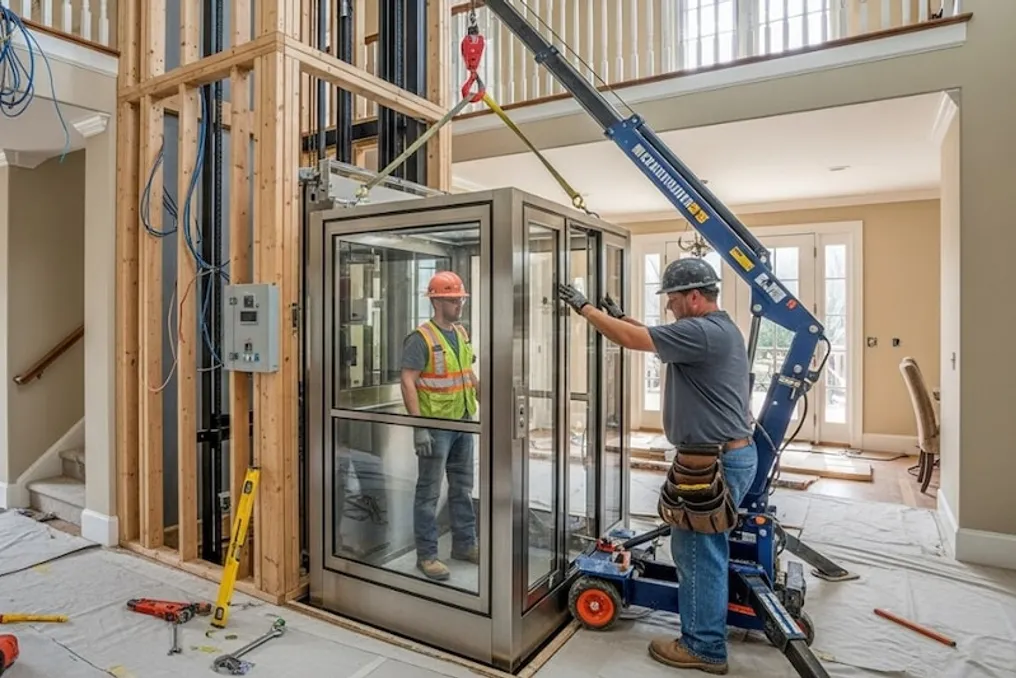
Today, elevators are not only installed in large mansions or luxury villas. If there are elderly people in the house who find it difficult to climb stairs, or if the house has two or three floors, a home elevator can be very useful. This is why small and compact residential elevators are growing in popularity in India.
However, when it comes to installing an elevator in a house, the first and most important question is: what will it cost? If you think that installing an elevator in a house is only accessible to millionaires, that is not true. Currently, the cost of installing a standard home elevator can start from approximately 800 thousand to 3 million rupees or even more.
Nevertheless, costs are not the same for every house. The price depends on the type of elevator, the number of floors, the cabin size, design, and functions, as well as the scope of necessary construction work in the house.
The price of the home elevator itself usually starts from 600 thousand to 2.5 million rupees or higher. This amount includes the elevator equipment, cabin, doors, drive system, and control system. Compact elevators for general use can be cheaper. However, the price increases when installing elevators on more floors, increasing the cabin size, improving the design, adding automatic doors, and other advanced features. Therefore, when determining the budget for purchasing an elevator, one should not base the decision solely on the initial price.
In addition to the purchase cost, there is also an installation fee. Installation can cost from 50 thousand to 200 thousand rupees. This service usually includes delivery of the elevator to the site, its installation, testing, and commissioning. The actual amount may vary depending on the location of the work and the elevator model.
If a space for an elevator is already provided in the house, the costs may be lower. But if a new shaft pit needs to be built, a sump prepared, or structural changes made to the house, the budget can increase significantly. Such construction work can cost from 50 thousand to 5 million rupees or more. This includes shaft creation, sump foundation work, structural modifications, and finishing. These are the expenses that many people do not include in the initial budget, leading to increased overall costs later.
The elevator requires appropriate electrical connections and wiring in the house. This can take from 20 thousand to 1 million rupees. This may include separate power supply, wiring, necessary changes to the distribution board, and other electrical connections. Furthermore, VAT may apply to the price of the elevator and installation. Therefore, when receiving an estimate from a company, it is essential to clarify whether tax is included in the quoted price or if it is paid separately.
Thus, instead of basing the budget solely on the elevator price, it is better to request a full estimate that includes equipment, installation, construction work, electrical installation work, and taxes.
After installation, the work is not over. Regular service and maintenance are required for the safe and proper operation of the elevator. An annual maintenance contract (AMC) for a home elevator can cost from 12 thousand to 40 thousand rupees or more annually. This usually includes regular maintenance, supervision, servicing, and technical support.
If you plan to install an elevator in a house, it is reasonable to budget in the range of 800 thousand to 3 million rupees or more. In small and simple installations, costs may be lower, while premium elevators, more floors, larger cabins, and significant construction work will substantially increase the cost.
The most important thing is to inspect the site before choosing an elevator. This will help determine how much space is needed, what type of shaft needs to be built, and what the costs for construction and electrical work will be. Proper preliminary planning helps avoid unforeseen additional expenses and simplifies the elevator installation process.